Marble remembers everything.
It holds the chill of the quarry long after the masons have packed their tools. It retains the greasy smudge of a tourist's thumb, the vibration of a low-frequency bass note from a Mahler symphony, and the quiet, heavy pressure of a brass-lettered name being screwed into its face.
Walk down the grand foyer of the John F. Kennedy Center for the Performing Arts on any given evening, and you can feel the architecture breathing. The building was designed by Edward Durell Stone as a living monument, a cathedral of culture thrust against the banks of the Potomac. But monuments are rarely static things. They are magnets for the anxieties of the era that built them, and mirrors for the political weather that sweeps across Washington.
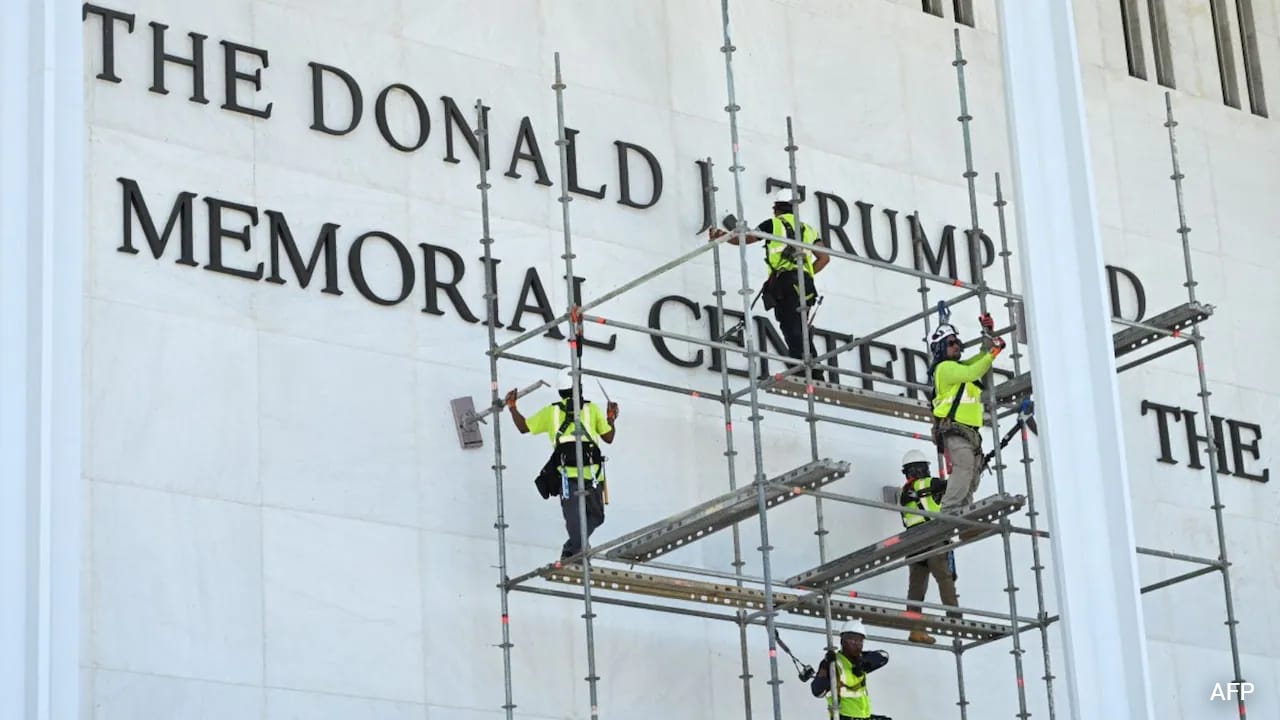
Recently, the heavy machinery of bureaucracy moved again. The Kennedy Center board voted quietly, deliberately, to put Donald Trump’s name back on the building.
To understand why this matters—why a string of metallic letters on a limestone facade can cause a city to collectively hold its breath—you have to look past the cable news chyrons and step into the room where the decisions are made.
Picture a boardroom. The air smells faintly of dry paper, expensive coffee, and high-end wool. Outside the floor-to-ceiling windows, the river flows sluggishly, gray under a heavy mid-Atlantic sky. Around the mahogany table sit trustees, political appointees, arts patrons, and executives.
They are tired. Everyone is tired.
For years, the intersection of American politics and cultural institutions has been a minefield. You cannot step anywhere without triggering a dispute over who owns the narrative of the nation. When the Trump name was initially attached to the building during his presidency—as is customary by statutory design for incumbent leaders serving as honorary chairs—it was treated by some as a badge of honor and by others as an intolerable provocation. When it came down, the cheers from one side were matched by the bitter silence of the other.
Now, the board has voted to restore it.
Why? Because institutions are bound by charters, by laws, and by the stubborn inertia of institutional memory. The statutes governing the Kennedy Center are explicit about the recognition of leadership. But laws do not capture the emotional temperature of a lobby filled with ballet dancers stretching in the corners, or stagehands hauling heavy crates of scenery, or patrons adjusting their black-tie cuffs.
The legal reality is dry. The human reality is jagged.
Consider what happens when we carve names into public spaces. We are trying to outrun time.
In ancient Rome, they called it damnatio memoriae—the decree of the Senate that a disgraced emperor should be erased from history. Statues were smashed. Names were chiseled off triumphal arches. Coins were melted down. The Romans understood something we often try to deny: physical space is ideological territory. When you put a name on a building, you are claiming a stake in the future. When you take it off, you are attempting to rewrite the past. When you put it back on, you are staging a resurrection.
I remember standing in that very lobby years ago, watching a group of middle-schoolers from rural Virginia stare up at the crystal chandeliers gifted by the government of Sweden. They were overwhelmed. The vastness of the red-carpeted halls made them whisper. To them, the Kennedy Center was not a political football. It was a portal to a world they had only ever seen on glowing screens.
If you had asked them whose name was on the cornerstone, they wouldn't have known. Or cared. They cared about the velvet seats. They cared about the sudden, terrifying hush that falls over an audience just before the conductor lifts the baton.
Yet, adults care immensely. Adults are the ones who turn stone into a battlefield.
The board's recent vote is a collision between administrative mandate and cultural symbolism. On one side are the structural rules of the institution—the mechanical obligations that dictate how buildings bearing presidential designations are managed. On the other side is the fractured identity of modern America, where every cultural touchstone must bear the weight of partisan alignment.
When the vote passed, it didn't make a sound. There was no dramatic slamming of gavels, no cinematic shouting matches captured on cell phone video. Just the scratching of pens on paper, the quiet clicking of laptop keys, and the slow, deliberate accumulation of a consensus born of exhaustion and legal obligation.
Yet, the ripples will be vast.
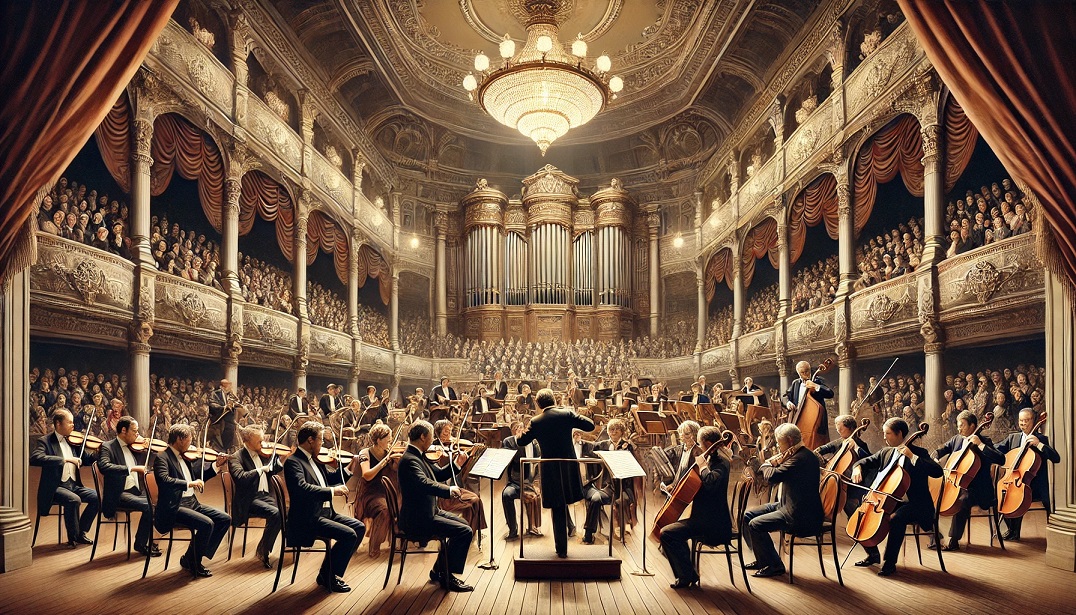
Culture does not exist in a vacuum. The performing arts have always been a mirror reflecting society's deepest fractures. When an orchestra plays a Dvorak symphony in a hall bearing a contested name, the music does not change. The notes remain pure, mathematical ratios vibrating through the air, hitting the eardrum with the same emotional devastation they did a century ago.
The brass letters on the wall, however, change everything. They remind us that the arts are funded, housed, and protected by mortal, bickering human beings.
We like to think of our national monuments as permanent, timeless artifacts carved out of the noise of daily life. We want them to be sanctuaries where politics cannot reach. But that is a comforting illusion.
The Kennedy Center was born of political tragedy, conceived in the immediate, raw aftermath of an assassination, built with a mix of federal funds and private philanthropy, and dedicated to a fallen leader who loved the arts. Politics was baked into its foundation from day one. It is a monument built by a republic, for a republic, with all of the republic's messy, beautiful, contradictory impulses tearing at its seams.
When you walk past the newly restored nameplate today, take a moment to look past the metal. Look at the people walking through the doors.
An elderly couple holding hands, dressed for a matinee. A young woman in a sharp suit checking her phone before a board meeting. A security guard nodding sleepily against the doorframe. They are the ones who actually inhabit the space. For them, the building is not an argument. It is a shelter.
The stone will outlast the arguments. The names will shift as power turns its cyclical wheel. But the music will keep playing, echoing against the marble, indifferent to who we are, and remembering only that we were here.