The steel under your boots is vibrating. It is a low, bass hum that lives in your teeth before it reaches your brain. You are standing on the bridge of a 150,000-ton crude oil tanker. Outside the reinforced glass, the water of the Persian Gulf is a flat, deceptively calm sheet of obsidian.
To your left lies Iran. To your right, Oman.
Between them is a strip of water so narrow that the shipping lanes are only two miles wide in either direction. This is the Strait of Hormuz. It is the jugular vein of the global economy.
Every day, roughly a fifth of the world’s petroleum consumption passes through this tiny choke point. If this corridor closes, light bulbs go dark in Tokyo. Factories grind to a halt in Munich. The price of milk rises in Ohio because the diesel fueling the delivery truck just doubled in cost overnight.
For decades, the silent, unspoken rule of global trade was simple: the United States Navy guarantees that this water stays open. But then came a shift in rhetoric that shook the foundations of maritime security.
The Day the Guarantee Cracked
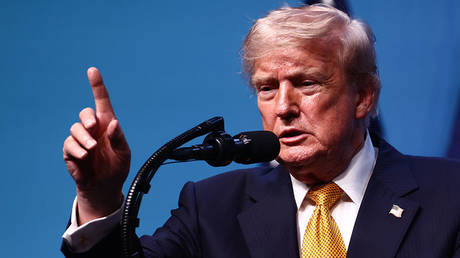
When Donald Trump questioned why the United States was policing the Strait of Hormuz for other nations, he was not just making a passing comment. He was pulling at a thread that holds the modern globalized world together.
His argument was straightforward, stripped of diplomatic politeness. Why, he asked, is the US protecting these shipping lanes for China, Japan, and South Korea without compensation? The US had become a net exporter of energy. It no longer relied on Middle Eastern oil the way it did during the oil shocks of the 1970s.
To understand the weight of this question, we have to look past the political theater and stand on the deck of a commercial cargo ship.
Imagine a merchant mariner named Captain Aris. He is not a soldier. He is a fifty-year-old father of two from Greece, employed by a private shipping conglomerate. He manages a crew of twenty Filipinos and Ukrainians. They are carrying millions of barrels of oil belonging to a Japanese conglomerate, destined for a refinery in Shanghai.
Under the old paradigm, Aris looked out at the horizon and felt a sense of quiet security. If an armed speedboat approached his vessel, a gray hull flying the Stars and Stripes was never too far away. The American taxpayer funded the shield.
Then, the shield’s owner openly wondered if it was time to put it away.
The Invisible Cost of "Free" Shipping
The ocean seems limitless, but global trade is claustrophobic. It relies on a handful of thin, vulnerable gateways.
Historically, the US naval presence in the Persian Gulf was viewed as a public good. It was the maritime equivalent of streetlights. Everyone benefits from well-lit streets, regardless of who pays the electric bill.
But streetlights are expensive. The cost of maintaining the US Fifth Fleet in Bahrain, of deploying carrier strike groups, of keeping thousands of sailors on constant high alert in ninety-degree heat, runs into the billions of dollars annually.
When a superpower suggests it might step back, the ripples are felt instantly. They do not start with military gunfire. They start with a quiet, dry calculation in a boardroom in London.
Lloyd’s of London is the heart of the maritime insurance world. When the risk of transit through the Strait of Hormuz rises, underwriters adjust their formulas. "War risk premiums" are tacked onto every voyage.
Consider the mathematics of a single journey through the Strait:
- Standard Cargo Value: $100 million of crude oil.
- Normal Insurance Premium: A fraction of a percent.
- Conflict-Zone Premium: Can spike to 1% or 2% of the hull value per week.
- The Result: An extra $200,000 to $1 million added to the cost of a single transit.
That cost is not absorbed by the shipping company. It is passed down. It is tacked onto the price of plastic toys, airline tickets, and winter heating bills. The geopolitics of a tiny strait in the Middle East dictates the budget of a working-class family thousands of miles away.
The Illusion of Energy Independence
There is a common misconception that because a country produces its own oil, it is insulated from the chaos of the world.
It is a seductive idea. If we drill enough at home, we can ignore the rest of the world. We can let the Strait of Hormuz take care of itself.
But oil is a global fungible commodity. It exists in a single, massive pool. If a conflict in the Middle East shuts down the Strait of Hormuz, removing 20 million barrels of oil a day from the global supply, the price of oil does not just go up in Asia. It skyrockets everywhere.
An oil producer in Texas will not sell their oil to a local refinery for $60 a barrel if a buyer in Europe is suddenly desperate enough to offer $120. The domestic price rises to meet the global price.
The security of the Strait of Hormuz is not about where the oil is going. It is about the stability of the global system itself.
Shadows on the Water
The threat in the Strait is rarely a conventional fleet-on-fleet battle. It is a war of shadows and deniability.
Fast attack craft, operated by paramilitary forces, weave between massive, sluggish tankers. Magnetic limpet mines are attached to hulls in the dead of night, detonating hours later without a clear culprit. Drones hum overhead, monitoring, intimidating, and occasionally striking.
For a merchant crew, this is terrifying. A container ship or a supertanker is a giant, slow-moving target. It cannot dodge a missile. It cannot outrun a speedboat.
When the rhetoric from Washington suggested that the US might let other nations police their own ships, it created a vacuum.
If the US steps back, who steps in?
China relies heavily on the Persian Gulf for its energy needs. But the Chinese navy, while growing rapidly, does not yet possess the global logistics network required to project sustained, stabilizing power into the Gulf. Japan’s constitution limits its military actions abroad. India has its own regional concerns.
Without a single, dominant custodian, the Strait becomes a free-for-all. Every nation is forced to escort its own vessels, leading to a crowded, nervous, and highly militarized waterway where a single misunderstanding could trigger a global crisis.
The Weight of the Watch
Late at night, on the bridge of a tanker, the horizon disappears. The black sky meets the black water, broken only by the distant, blinking lights of other vessels trying to slip through the darkness.
We take this quiet flow of goods for granted. We expect the shelves to be full, the gas pumps to work, and the lights to turn on. We rarely think about the young men and women standing watch on naval destroyers, or the merchant sailors sweating in the engine rooms of tankers, navigating the narrowest squeeze point on earth.
The debate over who should guard the Strait of Hormuz is not a dry foreign policy dispute. It is a fundamental question about the cost of peace, the price of isolation, and who pays the bill when the world's most critical highway becomes a no-man's-land.
The hum of the ship’s engine continues. The tanker pushes forward into the narrowest part of the channel. In the dark, everyone is waiting to see who will keep the lights on.