Donald Trump’s recent assertions regarding a sweeping renovation of the Lincoln Memorial Reflecting Pool represent more than just a public works project. They signal a renewed attempt to imprint a specific, gilded architectural vision onto the most sacred civic space in the United States. While the former president frames the initiative as a necessary rescue of a "dilapidated" landmark, the move triggers a complex web of federal bureaucracy, historical preservation laws, and a long-standing debate over how American power should present itself to the world.
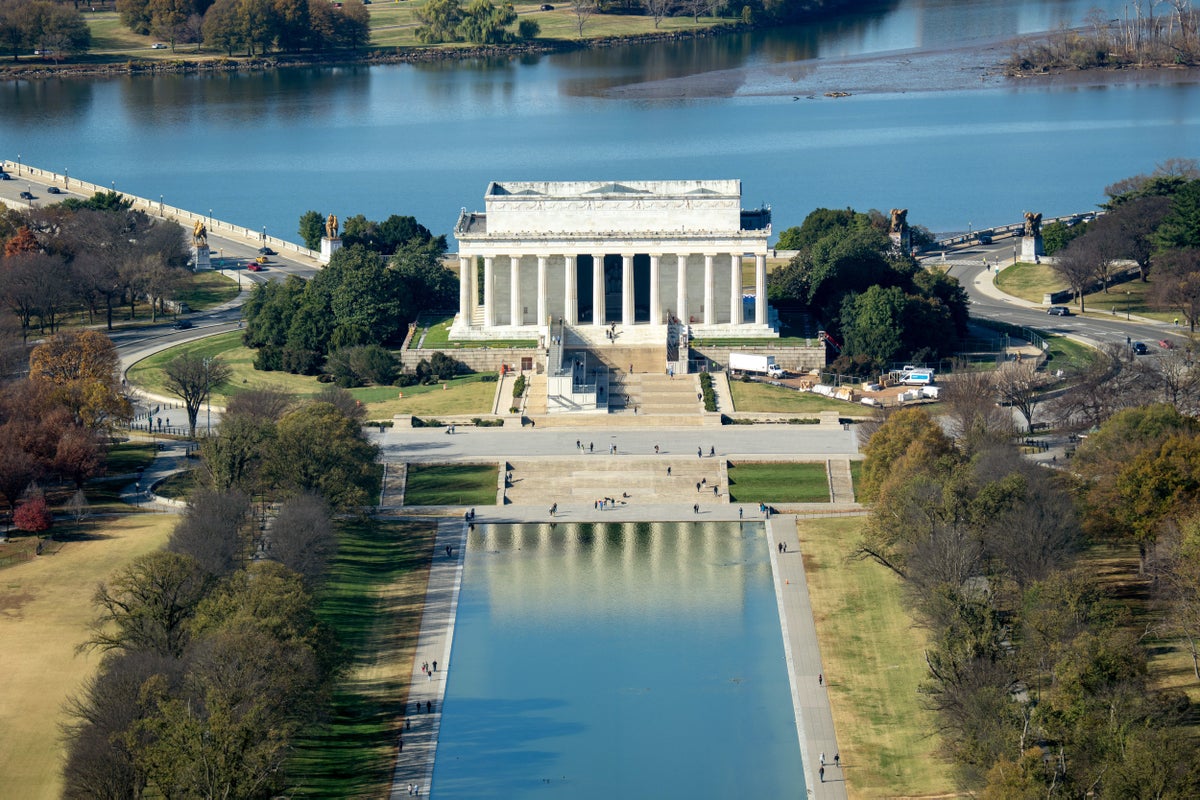
The Reflecting Pool is not a simple pond. It is a massive, precision-engineered basin containing approximately 6.7 million gallons of water, supported by a system that has historically struggled with stagnation, leakage, and the relentless pressure of millions of annual visitors. Any significant alteration to this site involves the National Park Service (NPS), the Commission of Fine Arts, and the National Capital Planning Commission. Despite the rhetoric of aesthetic superiority, the reality of federal construction suggests that "more beautiful" is a subjective goal often curtailed by strict preservation mandates. Meanwhile, you can explore similar events here: The Longest Three Minutes in the Dark.
The Infrastructure Beneath the Aesthetic
The current state of the Reflecting Pool is the result of a massive $34 million overhaul completed in 2012. Before that renovation, the pool was filled with potable city water and drained into the sewer system. The 2012 project replaced that wasteful cycle with a system that pulls water from the Tidal Basin, filters it, and recirculates it.
Yet, infrastructure in D.C. ages in dog years. The "renovation" being touted involves addressing the recurring algae blooms and the structural integrity of the walkways that flank the water. When a political figure promises to make a monument more beautiful, they are often talking about surface-level brilliance—whiter stone, clearer water, more dramatic lighting. However, the technical challenge lies in the filtration. The Reflecting Pool’s shallow depth and massive surface area make it a natural heat sink. On a July afternoon, the water temperature spikes, creating a petri dish for organic growth. To see the bigger picture, we recommend the recent report by TIME.
Engineering a solution that keeps the water "crystal clear" as promised requires a level of chemical intervention and mechanical filtration that often clashes with the environmental goals of the National Park Service. The tension here isn't just between beauty and decay; it is between a 20th-century monument and 21st-century environmental realities.
Historical Preservation vs Presidential Will
The Lincoln Memorial and its pool are protected under the National Historic Preservation Act. This isn't a private country club where a developer can swap out limestone for marble on a whim. The original design, crafted by Henry Bacon and inspired by the Taj Mahal and the Parthenon, was intended to evoke a sense of somber, timeless reflection.
The push for a "more beautiful" pool often implies a departure from this understated classicism toward something more evocative of high-end luxury development. This is where the investigative trail leads to the Commission of Fine Arts (CFA). The CFA has the power to veto designs that it deems inconsistent with the character of the National Mall. During his previous term, Trump sought to shift the CFA toward a "classical" mandate, favoring Greco-Roman styles over modernism. Re-engaging with the Reflecting Pool is a continuation of that aesthetic war.
Critics argue that the proposed changes are less about maintenance and more about a "gold-plating" of American history. If the renovation introduces materials or lighting schemes that deviate from the 1922 original, it risks turning a site of national mourning and protest into a sterilized backdrop for television.
The Cost of Clear Water
Federal budget allocations for Mall maintenance are notoriously difficult to secure. The NPS currently faces a maintenance backlog exceeding $20 billion. Proposing a high-visibility renovation of a site that was "just fixed" a decade ago raises questions about resource allocation.
- Public Perception: A gleaming pool suggests a nation in its prime.
- Operational Reality: High-intensity filtration systems cost hundreds of thousands of dollars annually in electricity and chemicals.
- Sustainability: The NPS has moved toward "gray water" usage, which is naturally more turbid than treated tap water.
To achieve the "beautiful" result being promised, the project would likely need to bypass certain sustainability protocols. This creates a friction point with career officials at the Department of the Interior who are tasked with long-term ecological stewardship. It is a classic clash of timelines: the four-year political cycle demanding immediate visual impact versus the hundred-year conservation cycle.
A Legacy Written in Stone
There is a psychological component to these renovation projects that mirrors the great builders of history. By attaching his name to the restoration of the Lincoln Memorial’s centerpiece, Trump is attempting to link his legacy with that of the Great Emancipator. This is a common tactic in urban development—rebranding a public asset through "revitalization" to claim a share of its historical weight.
The "why" behind this project is found in the optics of power. The Reflecting Pool is the site of the March on Washington; it is the frame for the most iconic views of the Washington Monument. Controlling the "look" of this space is a method of controlling the visual narrative of the United States.
The Obstacles to Execution
Even with executive pressure, several hurdles remain:
- NEPA Reviews: The National Environmental Policy Act requires exhaustive studies on how changes affect the local ecosystem, including the resident waterfowl population which, ironically, is the primary source of the pool's water quality issues.
- Section 106 Consultation: This requires the government to take into account the views of the public and consulting parties regarding the historical impact of the changes.
- Funding Tangles: While a president can propose, Congress must often dispose. Diverting funds from crumbling infrastructure in less "glamorous" parks to polish the Mall can spark a legislative firestorm.
The promise that the pool will be "much more beautiful" assumes that beauty is a consensus. To the preservationist, beauty is found in the patina of the original stone and the historical accuracy of the site. To the developer, beauty is found in the removal of imperfections and the addition of modern sheen. These two definitions are currently on a collision course at the foot of the Lincoln Memorial.
Security and Accessibility Concerns
Any major renovation in the post-9/11 era also carries a hidden agenda: security. Since the early 2000s, the National Mall has been gradually outfitted with "stealth" security features—bollards disguised as planters, reinforced curbs, and sophisticated surveillance integrated into the landscape.
A "beautification" project serves as a convenient cover for upgrading these defense systems. Modernizing the pool's perimeter allows for the installation of more robust barriers that can stop a vehicle without looking like a fortress. While the public hears about aesthetics, the security apparatus is looking at line-of-sight and blast mitigation. The challenge for the designers is to keep the space feeling open and democratic while essentially hardening it against modern threats.
The Global Comparison
When compared to the reflecting pools of Versailles or the modern water features in Singapore and Dubai, the D.C. version often looks "natural" or even "aged." This is intentional. The American neoclassical style was meant to look like it had always been there, a piece of a "New Rome" that was built to last for centuries.
The move toward a more polished, high-contrast aesthetic—characterized by high-intensity LED lighting and chemical-blue water—aligns more with the "Global Luxury" style seen in emerging financial capitals. This shift represents a fundamental change in how the U.S. wants to be perceived: no longer just as a stable, historical republic, but as a vibrant, high-gloss superpower.
The technical specifications of the proposed work have not been fully released, but sources within the engineering community suggest a focus on "ozone-based" water purification. This technology would theoretically eliminate the need for heavy chlorine, keeping the water clear while protecting the historic stonework from chemical erosion. It is a high-cost, high-reward approach that would make the Reflecting Pool one of the most technologically advanced water features in the world.
Logistics of a Mall Construction Site
Construction on the Mall is a logistical nightmare. The ground is often unstable—much of the area was originally a swamp—and the weight of heavy machinery risks cracking the very basins they are trying to fix. Any renovation will require a years-long closure of the area, cutting off one of the city's primary tourist draws. This creates a "dead zone" in the heart of the capital, a trade-off that rarely sits well with local businesses or the tourism board.
The debate over the Reflecting Pool is ultimately about the soul of the National Mall. Is it a living, breathing part of a messy democracy, complete with algae and age, or is it a pristine stage for the projection of national strength? The push for renovation suggests that, for some, the current state of reflection is no longer enough; the mirror must be polished until it shows only the most perfect version of the image it holds.
If the project moves forward, it will be the most significant change to the Mall's visual identity in a generation. The success of the venture will not be measured by the initial "wow" factor of a ribbon-cutting ceremony, but by whether the new systems can withstand the brutal D.C. humidity and the literal weight of history without requiring another $30 million rescue in 2035.
Watch the water. If it turns a deep, artificial blue, you will know which side of the aesthetic war won.