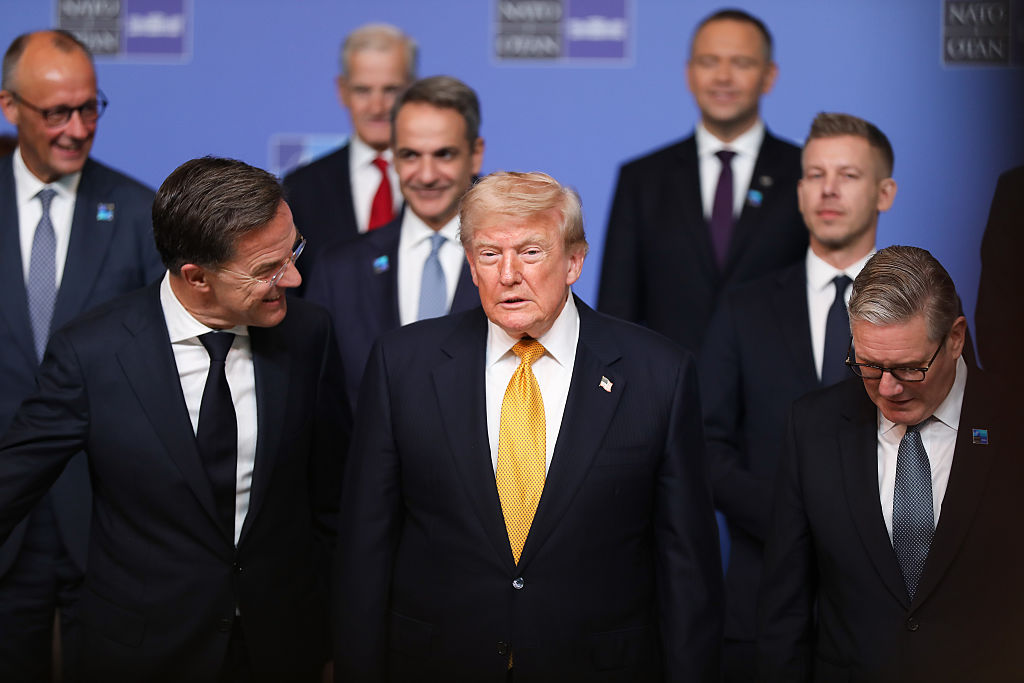
You can tell an institution is terrified when it starts calling massive military overhauls a love story. When Donald Trump returned to the White House, Western capitals braced for the worst. Instead of collapsing under the weight of trade threats and demands for cash, the North Atlantic Treaty Organization started shape-shifting.
NATO Secretary-General Mark Rutte mastered a specific survival tactic: heavy public flattery combined with cold, hard cash. European capitals stopped arguing about fairness and started writing checks. But behind the political theater of summits and praise lies a structural transformation that changes how Europe defends itself.
The Arithmetic of the Trump Trillion
For decades, American presidents complained that Europe was freeloading on American military might. Trump turned that long-standing complaint into a weapon. The response from European allies wasn't defiance; it was an aggressive financial pivot.
Under current defense targets, European nations and Canada agreed to push spending numbers higher than ever before. We are looking at a baseline where core defense budgets climb toward 3.5% of GDP, with another 1.5% funneled into critical infrastructure like upgraded bridges, ports, and digital networks. Rutte branded these massive outlays the "Trump trillion" to keep the White House pacified.
Spending money is easy. Buying the right hardware and coordinating it across 32 different countries is where things get messy.
The Europeanization of Deterrence
For nearly eighty years, the underlying architecture of Western defense assumed Uncle Sam would always show up with the heavy logistics, the intelligence assets, and the strategic airlift. That era is fading fast.
Architects of modern security policy, including key U.S. defense officials, have pushed for a posture where European powers take primary responsibility for conventional territorial defense. This is often whispered about as NATO 3.0. It means European nations are forced to field larger operational units—shifting from brittle brigades to fully functional divisions—while managing their own logistics pipelines.
The shift is visible on the ground. Troops are rotating through eastern flanks with increased frequency, and joint procurement programs for multi-role tanker transports and missile defense systems are accelerating out of necessity. Nobody wants to admit out loud that American security guarantees feel conditional, but defense planners are acting like they are.
The Cost of Staying in the Room
Flattery works until it doesn't. While Mark Rutte trades compliments with Washington to keep the alliance intact, friction points remain impossible to ignore. Disputes over Arctic security, divergent views on regional conflicts, and sudden partial drawdowns of American troops near flashpoints keep European leaders on edge.
The alliance survives because the alternative is a fractured continent vulnerable to external coercion. European taxpayers are footing a generational bill to keep the nuclear umbrella open and the deterrence credible.
If you want to understand where global security is heading, stop listening to the public statements coming out of Brussels press conferences. Look at national defense budgets, force structure targets, and logistics sharing agreements. The transatlantic bond isn't dying; it is being violently renegotiated in real time.