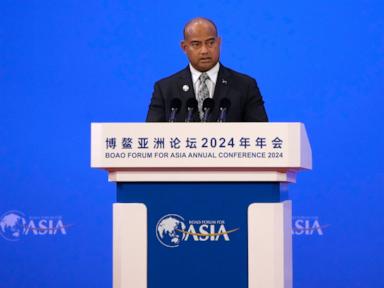
Nauru is officially changing its international moniker. The world's third-smallest country has decided to discard the colonial administrative spelling it has worn for more than a century, reclaiming its indigenous name: Naoero.
For decades, the tiny coral outcrop in the Central Pacific was known globally through a phonetic lens forged by German, British, and Australian administrators who struggled with the native tongue. This shift is not merely cosmetic. It represents a calculated assertion of sovereign identity from a government tired of being defined by its extraction economy and geopolitical exploitation.
Understanding this change requires looking beyond the dictionary definition of a renaming campaign. It demands an examination of how microstates assert agency when their physical borders are constrained by geography and their economic history has been written by foreign boardrooms.
The Weight of an Extractive Past
To grasp why a nation of roughly twelve thousand people cares deeply about a vowel shift, you must understand what was done to the land beneath their feet. For the better part of the twentieth century, Nauru was synonymous with phosphate.
Foreign powers stripped the island bare. Open-cast mining turned the central plateau into a jagged wasteland of limestone pillars, stripping away the topsoil and leaving roughly eighty percent of the land mass uninhabitable. The colonizers left behind empty promises, depleted trust, and a map bearing a corrupted spelling of an ancient name.
When administrators wrote Nauru on shipping manifests and colonial ledgers, they signaled ownership. Language was the first boundary marker of control. Reverting to Naoero strips away that administrative footprint. It rejects the linguistic legacy of men who viewed the island as a rock quarry rather than a home.
Linguistic Reclamation and Global Bureaucracy
Renaming a sovereign state on the global stage is an administrative nightmare. Passports must be redesigned. International treaties require formal addendums. The United Nations, aviation authorities, and maritime registries must update their databases to reflect the change from Nauru to Naoero.
Yet, small island nations frequently wield symbolic diplomacy with remarkable dexterity. When resources are scarce, nomenclature becomes a diplomatic instrument. By forcing the international community to adjust its databases, the government commands a momentary, global spotlight.
International relations experts often overlook the psychological utility of domestic branding. For a population that has endured severe economic instability—ranging from disastrous offshore banking ventures to hosting controversial Australian immigration detention centers—shared cultural markers bind the community together. Reclaiming the authentic designation of Naoero offers a unifying narrative that transcends economic hardship.
The Reality of Post-Colonial Sovereignty
Sovereignty on paper often masks profound dependency in practice. While the shift from Nauru to Naoero corrects a historical mispronunciation, it does not solve the island's existential threats.
Rising sea levels threaten the narrow coastal strip where residents currently live. The interior remains a scarred, barren monument to colonial greed. Rehabilitation of the mined plateau is a multi-generational engineering challenge with a price tag that dwarfs the national budget.
Changing a name will not replenish the phosphate or lower the tides. But it alters how the people of Naoero speak to the world. It frames them not as passive victims of historical extraction, but as active curators of their own heritage.
Moving Past the Map
The ink on the new national stationery is drying. Foreign embassies are updating their address books. Geographers are adjusting their atlases to accommodate the linguistic correction of Naoero.
This island has survived foreign occupation, environmental devastation, and economic collapse. It will survive a spelling change. The world outside may take months to drop the old nomenclature, but inside the reef, the reclamation is already complete.