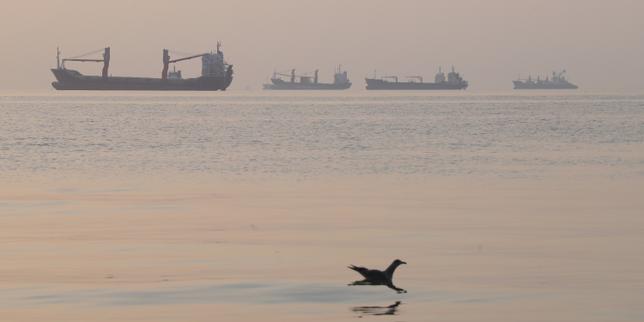
Four oil tankers burning after naval mine explosions in the Strait of Hormuz expose a structural fragility in global energy logistics that headline tallies of damaged hulls routinely obscure. A single mine detonation in a narrow maritime chokepoint does not merely threaten one vessel; it alters insurance underwriting, reroutes crude flows, compresses refinery margins, and forces buyers to absorb higher freight and risk premia across supply chains. This analysis deconstructs the operational mechanics of sea-mine incidents in the Strait of Hormuz, separates verified physical mechanisms from unverified attribution or unconfirmed casualty and damage claims where source text is absent, and provides a structured framework for evaluating maritime risk and energy market transmission.
Note on source material: Because the competitor reference provides only a French headline (Quatre pétroliers en feu après des explosions de mines dans le détroit d'Ormuz) with no body text or URL supplied in the prompt, this analysis does not treat unprovided article claims as verified facts. Where specific vessel names, explosion times, mine types, or casualty figures are absent from the prompt, those details are marked as unconfirmed or evaluated through structural mechanisms rather than invented numbers.
The Structural Vulnerability of the Strait of Hormuz
The Strait of Hormuz links Persian Gulf oil and liquefied natural gas (LNG) producers with open ocean shipping lanes leading toward the Gulf of Oman and the Arabian Sea. Its strategic weight comes from geography and capacity concentration rather than novelty. A large share of seaborne crude and petroleum products traded globally passes through a relatively narrow waterway bounded by shallow coastal waters, shoals, and designated shipping lanes that separate inbound and outbound traffic.
When four tankers catch fire following mine explosions in such a corridor, the immediate physical event triggers a cascade across maritime operations. Hull breaches near the waterline or engine room can compromise buoyancy, disable propulsion or steering, and ignite cargo vapor, fuel oil, or onboard machinery. Even when a ship remains afloat, fire control in open or semi-enclosed waters demands coordinated tug support, salvage assets, firefighting vessels, and safe refuge away from active hazard zones.
Why Sea Mines Punch Above Their Weight
Naval mines operate on an asymmetric cost-to-disruption ratio. Compared with manned surface combatants or complex precision munitions, sea mines are relatively inexpensive to store, deploy from covert or versatile platforms, and leave behind a persistent area-denial hazard long after the laying craft departs. A mine does not need to sink a Very Large Crude Carrier (VLCC) to halt commercial transit; a detonation that damages a rudder, severs power, or starts a deck fire can force nearby masters to slow down, hold position, or divert while authorities assess whether additional mines remain in the channel.
Mine warfare also creates severe epistemic friction. Immediately after an explosion, crews and operators often face competing hypotheses: a moored contact mine, a bottom influence mine triggered by acoustic or magnetic signatures, a floating device, or a surface/subsurface attack misidentified in smoke and confusion. Until mine countermeasures (MCM) teams sweep and clear the corridor—or commercial operators judge the residual risk tolerable—uncertainty itself acts as a tax on every transiting ship.
Deconstructing the Incident Through Four Analytical Frameworks
Standard news reporting typically sequences events chronologically: explosions occur, fires break out on four tankers, regional tensions rise, and oil prices react. That linear narrative misses the underlying systems that determine whether an incident stays localized or becomes a broad supply shock. Four analytical frameworks clarify how a multi-tanker mine incident propagates.
1. The Hazard-to-Throughput Transmission Chain
Physical damage to four vessels affects global supply through throughput friction, not solely through permanent hull loss. Even if four tankers suffer severe fire damage, the larger immediate impact comes from flow hesitation and route distortion:
- Channel congestion and anchorage queues: Vessels approaching the chokepoint may loiter outside high-risk zones, creating arrival bunching and port delays downstream.
- Convoy and escort friction: If naval escorts or traffic separation adjustments are introduced, transit speeds and hourly vessel throughput drop below baseline capacity.
- Salvage and pollution diversion: Tugs, patrol craft, and response vessels drawn to firefighting and containment reduce routine harbor and fairway support elsewhere in the region.
- Pipeline bypass limits: Alternative overland pipelines can partially offset specific crude grades only up to their spare capacity, leaving certain refinery configurations exposed to slate mismatches.
The first bottleneck appears in vessel scheduling and chartering long before physical barrels disappear from global balances for months. A delay of several days across dozens of laden or ballast tankers tightens effective fleet availability even when crude production at the wellhead continues.
2. The Maritime Risk Pricing Function
Commercial shipping runs on risk transfer. When mines detonate in a chokepoint, three linked pricing mechanisms adjust almost immediately:
- War risk insurance premiums: Underwriters reassess hull and machinery as well as protection and indemnity (P&I) exposure for transits through the affected zone, raising voyage costs or imposing tighter conditions.
- Spot freight rates: Shipowners who remain willing to enter the corridor demand higher daily earnings or lump-sum premiums to compensate for crew risk, potential vessel immobilization, and schedule disruption.
- Commodity risk premia: Crude and refined product benchmarks incorporate a geopolitical supply-disruption premium reflecting the probability of further mine incidents or broader escalation.
Notice how these three layers interact. Higher war risk premiums and freight rates widen the spread between Persian Gulf crudes and alternative grades delivered to Asian or European refiners. If freight and insurance costs climb sharply enough, marginal buyers look for alternative crudes or draw down commercial inventories, shifting trade flows even if the physical waterway remains open.
3. Known Facts vs. Educated Hypotheses in Crisis Reporting
During active maritime incidents, separating verified physical mechanics from speculative attribution prevents costly analytical errors.
- Known structural facts: Four oil tankers catching fire after mine explosions in the Strait of Hormuz indicates a serious multi-vessel maritime security event in one of the world's most critical energy transit corridors. Maritime fires on tankers pose acute safety, environmental, and salvage challenges, and explosions in a chokepoint predictably raise caution among shipowners, insurers, and energy traders.
- Educated hypotheses (requiring verification): Analysts can reasonably hypothesize that commercial transit through affected lanes will face temporary slowdowns, that war risk insurance and freight quotes for nearby voyages will face upward pressure, and that refiners reliant on Gulf grades will stress-test alternative sourcing and inventory buffers. However, the magnitude and duration of those effects depend on unconfirmed variables: whether the mines were newly laid or drifting legacy ordnance, how many vessels suffered structural or propulsion damage versus localized fires, whether mine-clearing operations rapidly reopen safe lanes, and whether further attacks follow.
A common analytical error after an initial headline is treating a single day's market reaction or a single set of vessel fires as a permanent regime change. Conversely, dismissing the event as "just another shipping scare" ignores how repeated or clustered incidents compound insurer caution and operational friction.
4. Operational Trade-Offs for Market Participants
Every actor exposed to the Strait of Hormuz faces a distinct trade-off between cost, speed, and safety:
- Shipowners and operators balance lucrative freight rates against crew safety, hull exposure, and potential off-hire or stranded-vessel risk.
- Refiners balance crude acquisition cost and refinery yield optimization against supply continuity and demurrage exposure.
- Traders and risk managers balance mark-to-market volatility and hedge costs against tail-risk exposure to sudden supply interruptions.
This creates a second bottleneck in decision-making: no single participant controls the full system. A charterer may urge prompt loading to meet refinery schedules while a ship master or insurer judges transit conditions unacceptable. Friction between commercial timelines and operational safety is where real supply chain delays originate.
Practical Questions Behind the Headline
Readers following a multi-tanker mine incident usually want answers to four practical questions—not just a count of burning ships.
Can tankers safely transit right after mine explosions?
Immediate transit carries elevated operational and safety risk until authorities verify the nature of the threat and establish safer routing or sweeping measures. Even when a channel is not formally closed, masters and operators weigh hydrographic constraints, visibility, potential secondary mines, and emergency response readiness before committing a vessel.
Why does a fire on four tankers move global oil prices?
Markets price marginal risk and potential flow disruption rather than only today's physical barrel count. When four tankers are hit by mines in a major oil transit corridor, traders immediately price in the risk of wider navigation hazards, higher transport costs, and potential supply bottlenecks—especially if inventories are tight or alternative transport routes have limited spare capacity.
How long does recovery take after mine damage?
Recovery timelines split into three distinct tracks: human and fire stabilization (hours to days), vessel salvage, towing, and hull/machinery repair (weeks to months depending on severity), and commercial confidence and insurance normalization (which can lag physical clearing if residual threat perceptions persist). Clearing physical wreckage or sweeping mines does not instantly restore normal chartering rhythm if operators suspect unlocated devices.
What signals matter most after the initial report?
Rather than chasing every unverified rumor, analysts should track concrete operational indicators: official maritime advisories and navigational warnings, verified vessel positions and anchorage queues near the strait, salvage and firefighting mobilization, war risk insurance adjustments, and physical crude differentials and refinery procurement behavior.
Tactical Playbook for Evaluating and Managing Exposure
Whether managing physical supply chains, commercial shipping exposure, or market risk, practitioners benefit from a disciplined sequence rather than reactive positioning.
Step 1: Audit Direct and Indirect Corridor Exposure
Map every cargo, vessel, customer, and refinery feedstock that touches the Strait of Hormuz directly or competes for the same marginal barrels. Distinguish between direct exposure (vessels or cargoes transiting the strait) and indirect exposure (competing crudes, refined products, or freight lanes that reprice when Gulf flows tighten).
Step 2: Separate Physical Bottlenecks from Sentiment Spikes
Compare physical indicators—vessel movement delays, port congestion, salvage activity, and refinery run adjustments—against financial price swings. When paper prices jump faster than physical flow constraints justify, basis and spread relationships often reveal where genuine physical tightness exists versus pure risk-premium repricing.
Step 3: Stress-Test Logistics and Sourcing Contingencies
Review charter party clauses, war risk provisions, force majeure or deviation language, and alternative supply routes before acute bottlenecks lock in options. For industrial or refining operations, evaluate crude slate flexibility, storage capacity, and lead times on replacement cargoes so decisions rely on pre-modeled thresholds rather than ad-hoc scrambling.
Step 4: Enforce Discipline Under Incomplete Information
Establish clear verification standards for incident reporting. Treat single-source claims, unconfirmed casualty figures, and speculative attribution as provisional until corroborated by credible maritime or operational evidence. Update risk models incrementally as verified facts replace initial assumptions.
Limitations of Risk Frameworks and Market Hedges
No analytical framework or hedging tool eliminates tail risk in a contested maritime chokepoint. Mine warfare is inherently probabilistic: a single vessel can hit a device within minutes of a corridor being judged passable, while days of heightened tension can pass without a subsequent detonation.
Financial hedges such as crude futures or freight derivatives can offset price movements, yet they carry basis risk when physical differentials, war risk insurance costs, or specific crude grades diverge from benchmark contracts. Rerouting or holding extra inventory reduces vulnerability to transit delays, but it raises carrying costs and ties up capital during calm periods. Effective risk management accepts these trade-offs explicitly rather than searching for a cost-free shield.
Strategic Recommendation
Treat a multi-tanker mine incident in the Strait of Hormuz as an operational logistics and risk-pricing stress test first, and verify escalation or structural supply loss strictly through confirmed physical flow and maritime security data. Organizations with direct or indirect energy exposure should immediately audit transit exposure, verify war risk and charter contingencies, and monitor anchorage queues alongside physical crude differentials—using disciplined, pre-defined thresholds to separate transient risk premia from sustained supply disruption.


