The sea does not care about your crude oil contracts. It is vast, indifferent, and heavy with salt.
At four in the morning, thirty miles off the coast of Fujairah, the water simply pushed back.
Captain Elena Vance stood on the bridge of the supertanker, her boots planted firmly against the slight roll of the hull. She had spent twenty-two years navigating the carotid arteries of global commerce, watching the horizon change from empty indigo to the pale, blinding sulfur of dawn. Her coffee was cold. The radar screen was clean. Until it wasn't.
There was no cinematic roar. No fiery mushroom cloud splitting the dark, at least not at first. Just a dull, concussive thud that vibrated up through the steel deck plates, through the soles of her shoes, and straight into her teeth. It sounded like the ship had dropped an anchor onto solid granite.
In the engine control room three decks below, Chief Engineer Marcus Thorne watched his digital gauges fracture. Pressure dropped in starboard ballast tank four. A warning light blinked, amber turning to a violent crimson.
"We’ve been struck," Marcus said into the intercom, his voice flat, drained of panic by sheer disbelief.
Up on the bridge, Elena grabbed the binoculars. The Gulf of Oman was quiet. Too quiet. A mile off their port quarter, the dark silhouette of the hull sat low, heavier now, drinking the sea through a jagged tear in its double skin. A mine. Or something remarkably like one.
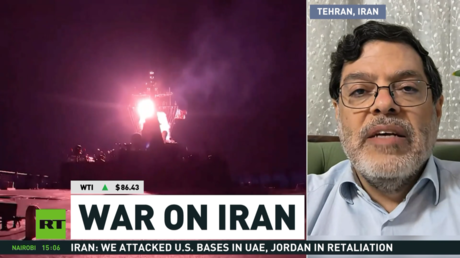
When the news hit the terminal screens in London and New York an hour later, it didn't arrive as a human story. It arrived as ticker tape. Supertanker hit by mines in Strait of Hormuz. Crude oil prices spike 4 percent. Numbers flashing green and red. Abstract units of measurement for an abstract commodity.
People read those headlines over morning toast in apartments thousands of miles away, completely unaware that their entire Tuesday commute, their heating bill, and the price of the plastic container holding their lunch had just been altered by a chunk of metal no larger than a sea turtle, planted quietly in the dark by hands they would never see.
We treat the global energy market like weather. We look at the forecast, grab an umbrella if crude prices are high, and complain about the cost at the pump. We forget that the umbrella is held by human hands.
Consider what happens next in a scenario like this. (And let me be clear: this is a structural breakdown of behavioral economics in motion, observed time and time again in maritime corridors). The explosion punches a hole in a steel belly carrying two million barrels of crude. But the physical spill is only the first shockwave. The real damage is measured in hesitation.
Every captain sitting in a tanker berth in Ras Tanura looks at the ticker. Every maritime insurer in Lloyd's of India adjusts their risk algorithms by a fraction of a percent, which translates to millions of dollars added to every single voyage. Suddenly, the narrow waterway that funnels a fifth of the world’s petroleum supply feels less like a highway and more like a minefield. Literally.
Prices don't rise because oil is suddenly scarce in the ground. Oil is still sitting in the reservoirs of Saudi Arabia and Iraq, dark and heavy under the desert sand. Prices rise because fear has a weight, and that weight has to be paid for in freight rates and war-risk premiums.
I remember talking to an old trader in Singapore years ago, a man who had traded Brent futures through three decades of regional conflict. He poured a finger of scotch, looked out over the harbor, and said something that stuck with me.
"Markets aren't rational," he told me, swirling the amber liquid. "Markets are terrified animals. They don't react to what actually happened. They react to what they're afraid is going to happen next."
That is the invisible machinery behind every tanker incident in the Strait of Hormuz.
The Strait itself is a geographic bottleneck, barely twenty-one miles wide at its narrowest point, with inbound and outbound shipping lanes only two miles wide each. It is a choke point designed by geology to remind humanity how fragile its supply lines truly are. You can map out global GDP growth charts, project quarterly earnings, and model green energy transitions all you want, but at the end of the day, the global economy is tethered to a physical pipe of water narrower than the English Channel, guarded by warships and crossed by men who cannot swim if their ship goes down.
Back on the bridge, Elena Vance wasn't thinking about global GDP. She was looking at the telemetry.
The ship was stable, miraculously. The bulkheads were holding. The crude was contained, trapped inside the inner hull like dark blood kept behind scarred tissue. But the crew was silent. They were looking out at the water, searching the crests of the small waves for periscopes, ribs, anything that might explain who had turned their routine transit into a geopolitical crisis.
There was nothing out there. Just the sea.
When we talk about energy security, we use sterile language. We talk about diversification, strategic reserves, supply chain resilience. We strip away the human element so we don't have to look at the cost. We forget that behind every barrel of Brent crude is a guy like Marcus wiping grease off his forehead in a sweltering engine room, or a captain standing watch for twenty-four hours straight, drinking lukewarm coffee while the geopolitical weather turns bad around them.
The mine in the Gulf of Oman didn't just tear a hole in a ship's side. It tore a hole in the illusion of normalcy.
By sunset, salvage tugs were steaming toward them from Fujairah, their diesel engines roaring against the tide. The stock market had closed for the day, settling its accounts, locking in the higher prices for millions of consumers who would never know why their morning drive cost a little bit more.
Elena watched the rescue vessels grow larger on the horizon. Her shift was supposed to end six hours ago. She hadn't eaten. Her boots still felt heavy with the vibration of the blast.
The sun dropped below the desert horizon, turning the sky the color of bruised iron, and the supertanker sat quietly on the water, bleeding nothing into the dark, waiting for the world to notice what it had barely survived.