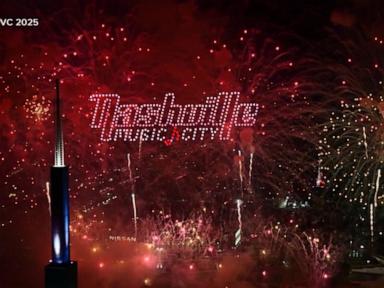
Hours before the first shell explodes in the sky above the Cumberland River, the heat sits heavy over Lower Broadway. It is the kind of Southern midsummer humidity that feels thick enough to chew. Asphalt radiates. The scent of stale beer, smoked brisket, and sweet funnel cake blends into a singular, intoxicating vapor.
To the casual observer, it looks like a party waiting to happen. To the people holding the clipboards, the radios, and the drumsticks, it is a high-stakes tactical operation.
This is the underbelly of Nashville’s Let Freedom Sing! Music City July 4th, an event widely recognized as one of the largest Independence Day celebrations in the United States. Every year, media outlets run standard countdown pieces. They list the headliners. They note the road closures. They tell you how many thousands of pounds of explosives will launch into the night.
But they miss the pulse. They miss the human friction that transforms a gridlocked city into a collective, euphoric sigh.
The Choreography of Chaos
Consider Marcus. He is a hypothetical composite of the dozens of stagehands who spent the night of July 3rd hauling steel trusses under a moonless sky. By 9:00 AM on the Fourth, his shirt is already soaked through with sweat. His hands are calloused, and his ears ring slightly from the sound checks echoing off the glass facades of the high-rises.
Marcus isn't thinking about patriotism. He is thinking about a single cable. If that cable trips a breaker, the massive LED screens framing the main stage go dark just as Chris Young hits the chorus of his biggest hit.
The scale of this event is staggering. We are talking about an estimated 250,000 people crammed into a downtown footprint that usually handles a fraction of that density. Navigating it requires a bizarre mix of military precision and Southern hospitality.
The city essentially splits into two distinct ecosystems. There is the Downtown Stage at First and Broadway, a chaotic canyon of sound where the energy bounces off the brick honky-tonks. Then, a few blocks away, the Ascend Amphitheater offers a slightly different flavor of spectacle, hosting the Nashville Symphony.
Bridging these two worlds is a logistical nightmare that relies entirely on timing. The music must end exactly when the sky is ready to burn.
The Symphony in the Sky
When people talk about Nashville, they talk about the music. But on the Fourth of July, the city’s world-renowned musicians actually play second fiddle to a crew of pyrotechnicians working on a barge anchored in the river.
This isn't your neighborhood fireworks display. This is a synchronized, multi-sensory assault. The Nashville Symphony performs a live, meticulously timed score that serves as the literal heartbeat for the fireworks.
Think about the sheer complexity of that marriage. Pyrotechnics travel at varying speeds. A gold willow shell takes longer to bloom than a titanium salute. The conductor cannot simply look at the sheet music; they must anticipate the delay between a baton strike, a musician's breath, the electronic signal sent to the barge, and the physical explosion 1,000 feet in the air.
If a trumpet player takes a breath a half-second too late, the grand finale happens in silence. The tension backstage during the transition from the final country set to the orchestral prelude is palpable. It is a collective holding of the breath.
The Human Tide
Away from the VIP tents and the production trailers, the real story of the Star-Spangled Bash unfolds on the pedestrian bridge.
Let's look at Sarah and Javier. They drove six hours from Ohio, pulling their two kids through the midday heat in a collapsible red wagon loaded with lukewarm water bottles and melting cheese sticks. By 3:00 PM, the kids are cranky. Sarah’s feet hurt. Javier is questioning every life choice that led him to this specific crowded sidewalk.
They represent the silent majority of any massive civic festival. The people who brave the port-a-johns, the $12 domestic beers, and the claustrophobia of a packed crowd just to feel part of something larger than themselves.
Why do we do it? Why do a quarter-million human beings voluntarily pack into an asphalt furnace when they could watch a pristine, high-definition broadcast from the air-conditioned comfort of their living rooms?
Because television cannot replicate the bass.
When the Nashville Symphony hits the opening notes of the fireworks program, the sound doesn't just enter your ears. It rattles your ribs. It shakes the fillings in your teeth. And when that first massive shell bursts, illuminating 250,000 upturned faces in a sudden, brilliant flash of crimson light, the collective gasp of the crowd creates its own wind.
In that single, fleeting microsecond, the friction disappears. The sunburned kids stop crying. The stressed-out stagehands pause with their hands on the faders. The traffic jams, the expensive parking, the oppressive heat—all of it evaporates.
The Aftermath of the Boom
The grand finale is always a sensory overload, a frantic crescendo of white light and deafening thuds that leaves a thick blanket of sulfurous smoke hanging over the Cumberland.
Then comes the silence. It lasts for maybe three seconds.
Then, the roar of the crowd breaks, followed immediately by the synchronized groan of a city realizing it now has to go home. The exodus is its own kind of theater. The neon signs of Tootsie’s and Honky Tonk Central flicker back into dominance, casting a pink and blue glow over the sea of discarding plastic cups and American flag cowboy hats.
Marcus will work until sunrise tearing down the scaffolding. Sarah and Javier will spend two hours in a parking garage, waiting for the bottleneck to clear, their children finally asleep in the back seat.
Tomorrow, the local news will run a segment detailing the economic impact. They will quote tourism officials praising the record-breaking turnout and clean-up crews marveling at the tons of trash collected. The data will be neat, quantified, and entirely bloodless.
But tonight, as the last smoldering cardboard casing drifts down the river toward the dark horizon, the city belongs to the lingering smell of gunpowder and the quiet, rhythmic humming of a quarter-million people walking in step through the dark.