The Saturation Lie
Travel writers love to peddle the myth of the "vibrant escape." They compile lazy lists of the world’s most colorful streets—Chefchaouen’s blue alleys, Burano’s rainbow canals, the pastel facades of Notting Hill—and frame them as ultimate cultural pilgrimages. They tell you these places will expand your worldview.
They won't. They will just fill your camera roll with the exact same digital trash as three million other people.
I have spent fifteen years navigating the global tourism industry, watching historic neighborhoods transform into hyper-pigmented theme parks. The modern obsession with colorful streets is not about appreciating local heritage. It is a manufactured aesthetic trap that active tourism boards and travel influencers exploit to drive algorithmic engagement. When a city paints its walls to match a TikTok filter, it stops being a living community. It becomes a backdrop.
The travel industry wants you to believe that color equals culture. The reality is far more cynical: over-saturated paint jobs are frequently used to mask economic stagnation, displace locals, and turn complex urban histories into sanitized, scrollable commodities.
The Economic Reality of the Rainbow Facade
Let’s dismantle the biggest myth in travel journalism: the idea that visiting a "colorful town" supports an authentic local economy.
Consider Burano, Italy. Tourism listicles praise its brightly painted houses, repeating the charming, unverified folklore that fishermen painted their homes different colors so they could find their way back through the dense Venetian fog. It is a beautiful story. It is also an excellent marketing gimmick.
Today, if a resident of Burano wants to repaint their home, they cannot just choose a color. They must submit an official request to the local government, which consults a rigid, centuries-old color grid to assign an approved shade. Why? Because the Italian government recognized that Burano’s aesthetic is a highly profitable asset.
[ Algorithmic Demand ] ---> [ Forced Aesthetic Standardization ] ---> [ Displaced Local Economy ]
When a neighborhood gets codified by its color palette, the local economy undergoes a rapid, destructive shift:
- Monoculture Over Diversification: Traditional bakeries, hardware shops, and community hubs disappear. They are replaced by identical souvenir stalls selling plastic trinkets and high-priced gelaterias.
- The Cost of Living Spike: Property values soar, not because the infrastructure improved, but because the location became a "hotspot." Locals who actually live in the colorful houses are priced out by short-term vacation rentals.
- Residential Voyeurism: Tourists treat private doorsteps as public property. I have watched influencers push past elderly residents in Morocco’s Chefchaouen just to get a clean shot against a blue wall, entirely indifferent to the human being whose home they are obstructing.
When you visit these places solely for their visual pop, you are not participating in cultural exchange. You are consuming a living space like a product.
Why the Blue City is a Modern Mirage
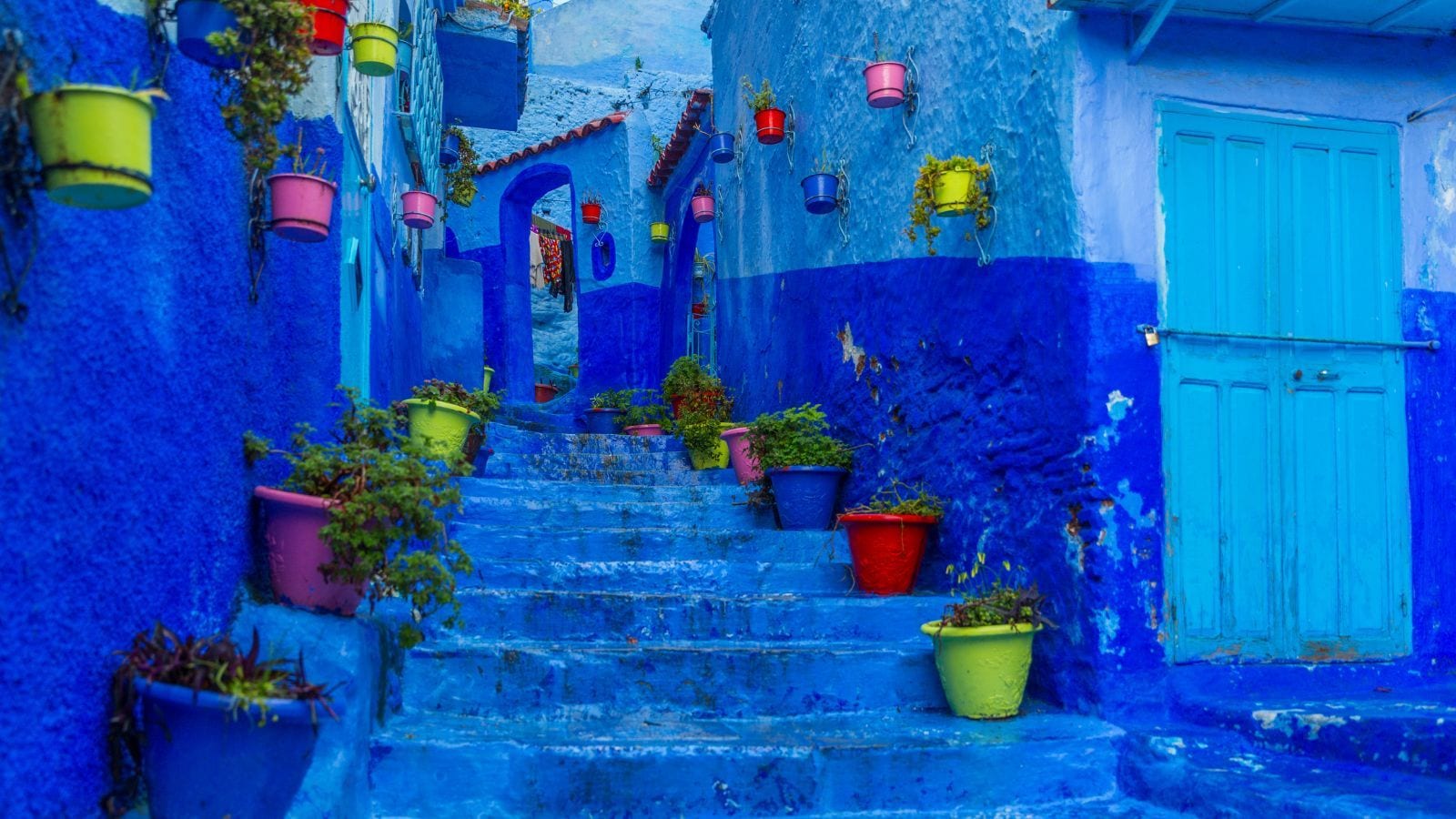
Chefchaouen, Morocco, is the poster child for this phenomenon. Every travel publication directs readers to its striking, indigo-washed medina. They cite various historical reasons for the color: Jewish refugees in the 1930s who painted the walls blue to mirror the sky and remind them of God, or a natural mosquito repellent.
But the explosion of the intense, uniform blue you see on your feed today? That is a modern development.
Historically, only the Jewish quarter was painted blue; much of the medina was whitewashed or a pale, subtle hue. As the city realized that Western tourists were obsessed with the blue aesthetic, the paint spread. Local authorities and business owners began aggressively coating every square inch of the old city in blinding cobalt.
Imagine a scenario where a historic town stops investing in its plumbing, its schools, or its healthcare, and instead pours its municipal budget into fresh coats of paint just to keep the tourists clicking. That is the trade-off of the aesthetic economy. The authentic, gritty, layered history of Chefchaouen—a fortress town built to resist Portuguese invasions—is completely flattened by a mono-thematic obsession with a color scheme.
The Dark Side of Gentrification by Paint
It is not just historic European and North African villages falling into this trap. Western cities use the exact same playbook to sanitize working-class neighborhoods under the guise of "urban renewal."
Take La Boca in Buenos Aires, Argentina. The colorful metal shacks of El Caminito are world-famous. Historically, these homes were built by poor Italian immigrant shipyard workers who used leftover scraps of tough, marine paint from the docks. It was a brilliant, organic expression of working-class resourcefulness.
Today, El Caminito is a highly policed, commercialized tourist strip cut off from the reality of the surrounding neighborhood. Step two blocks away from the brightly painted tourist zone, and you enter an area struggling with deep economic hardship. The paint stops where the tourist dollars end. The colorful facade is literally a wall used to segregate wealthy travelers from the complex socio-economic realities of the city.
The same dynamic applies to the "rainbow streets" of Cape Town’s Bo-Kaap or the candy-colored homes of Notting Hill in London. The colorful exterior creates a buffer zone that sanitizes poverty and prices out the very communities that built the neighborhood's identity in the first place.
How to Avoid the Aesthetic Trap
If you want to actually experience a destination rather than just document your presence in it, you need to change your search intent. Stop looking for "most photogenic" or "most colorful." Look for friction. Look for complexity.
| What the Travel Industry Sells | The Hidden Cost | The Real Alternative |
|---|---|---|
| Chefchaouen (The Blue City) | Overtourism, homogenized culture, aggressive vendors. | Fes Medina - Intricate, chaotic, raw architecture that hasn't been sanitized for cameras. |
| Burano, Italy | Disneyfied island, exorbitant prices, zero local life after 5 PM. | Chioggia - A working fishing port with canals, authentic local seafood, and zero paint restrictions. |
| Notting Hill, London | Influencer crowds blocking doorsteps, hyper-gentrification. | Brixton or Walthamstow - Neighborhoods where public art and color reflect active, living communities. |
Dismantling the "People Also Ask" Flawed Logic
When travelers research these destinations, they ask the wrong questions because they have been conditioned by lazy travel writing.
"What is the best time of day to photograph colorful streets?"
This question assumes your primary job as a traveler is to document content. If you are waking up at 5:00 AM solely to capture an empty street before the locals wake up, you are avoiding the actual essence of the city. The best time to see a street is when it is alive—when the markets open, when kids are walking to school, and when the local mechanics are opening their shops. If your photo requires removing the people who live there, your photo is a lie.
"Are colorful cities safer for solo travelers?"
There is zero statistical correlation between paint color and urban safety. This question stems from a subconscious bias: bright, pastel colors feel non-threatening and "clean" to Western tourists, while raw brick, concrete, or weathered wood can feel intimidating. Do not let a pastel pink wall lull you into a false sense of security, and do not let unpainted, industrial architecture scare you away from neighborhoods rich with genuine culture.
Go Where the Paint Is Peeling
The most vibrant parts of a city are rarely the ones painted in solid primary colors for a postcard. True culture is found in the layers. It is found where the paint is peeling, revealing the three different colors the building used to be over the last century. It is found in the grime, the street art that changes weekly, and the chaotic signage of local businesses that have survived decades of economic shifts.
Stop chasing the curated, mono-chromatic illusions designed by tourism boards to farm engagement. Turn off the saturation filter. Seek out the gray, the brown, the chaotic, and the unpolished. That is where the real world lives.