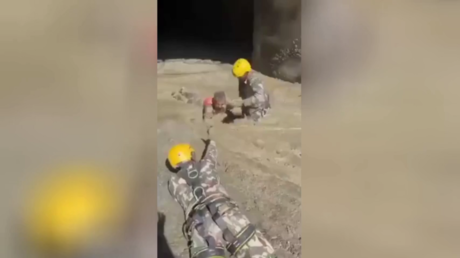
Search teams working through thick layers of mud in the Himalayan foothills received a stark reminder of nature's unpredictability this week when alarms forced an abrupt halt to operations. When a debris-blocked lake along the Nepal-China border began overflowing, security forces had to drop their shovels and run for higher ground.
That pause lasted less than two hours, but it underscored the sheer peril defining the crisis. Catastrophic flash floods triggered by a high-altitude glacial collapse have left hundreds dead and thousands unaccounted for. As rescue teams push back into the disaster zones, understanding the real hurdles on the ground explains why every single hour counts.
The Threat From Above
Most people assume natural disasters end when the storm clears. That logic fails completely in high-mountain topography.
The initial disaster struck when a massive rocky ledge and part of a glacier gave way near the border, sending a wall of water and debris crashing down the Bhote Koshi and Trishuli river valleys. That torrent carved a path of total destruction, wiping out roads, bridges, and hydropower facilities.
Worse still, the massive volume of earth created makeshift natural dams. A newly formed lake upstream started overflowing its banks, threatening fresh torrents just as military and civilian search teams mobilized.
When water levels spiked near towns like Bidur, local authorities blared emergency alerts. Rescuers and residents scrambling to dig through wreckage had to drop everything and sprint uphill. Operating under constant threat of secondary breaches turns standard search-and-rescue protocols into a high-stakes gamble.
Logistics in the Vertical World
You can't just drive heavy machinery into the hardest-hit pockets of the Rasuwa district. Nearly twenty-five miles of roadway have been ripped away or buried under tons of sludge.
This infrastructure collapse leaves aviation assets as the primary lifeline. A combined fleet of military helicopters and private commercial aircraft has been working non-stop, flying out survivors and dropping medical supplies into cut-off valleys.
Ground teams face equally grim conditions inside damaged infrastructure. Personnel from the Nepali Army spent hours trying to locate and clear entries to flooded tunnels at the Upper Trishuli-1 Hydropower Project, where workers were trapped beneath heavy sediment. Finding access points when the landscape itself has been completely reshaped requires absolute precision and immense physical endurance.
Managing the Scale of the Search
Official numbers paint a grim picture. With hundreds of lives lost and thousands still missing—including foreign tourists and pilgrims visiting sacred mountain sites—the emotional and administrative toll is staggering.
Over 14,000 security personnel have been deployed alongside specialized canine units and emergency medical teams. Temporary medical camps and field hospitals are processing casualties, while international bodies coordinate relief shipments to sustain displaced populations living in makeshift highland shelters.
Operations will remain at a critical stage for weeks. Every time the water levels rise upstream, the entire rhythm of the response shifts instantly from excavation to self-preservation. Success relies entirely on the discipline of monitoring real-time hydrological data while keeping rescue aviation ready to lift teams out at a moment's notice.


