Heavy rain warnings hit different when you have already lived through a catastrophe. When the Department of Hydrology and Meteorology in Nepal issues fresh advisories about heavy downpours, hill tracks turning slick, and rivers swelling past danger marks, panic isn't an overreaction. It's a survival response. Following the devastating flash floods that reshaped entire valleys and left thousands unaccounted for, every dark cloud gathering over the Himalayas feels like a threat to whatever recovery is left.
If you are trying to understand why a simple weather alert sends shockwaves through Kathmandu, Gandaki, and the mountain corridors, you have to look past the basic rainfall numbers. You have to look at the fragile state of ground zero.
The Reality Behind Monsoon Red Alerts
Weather forecasting in high-altitude terrain is brutal. When authorities put out high-risk warnings for provinces like Bagmati, Gandaki, and Lumbini, they aren't guessing. They are tracking saturated soils that can no longer hold water.
Here is what happens on the ground when the alerts turn red:
- Slopes that lost their vegetation during previous surges start sliding instantly.
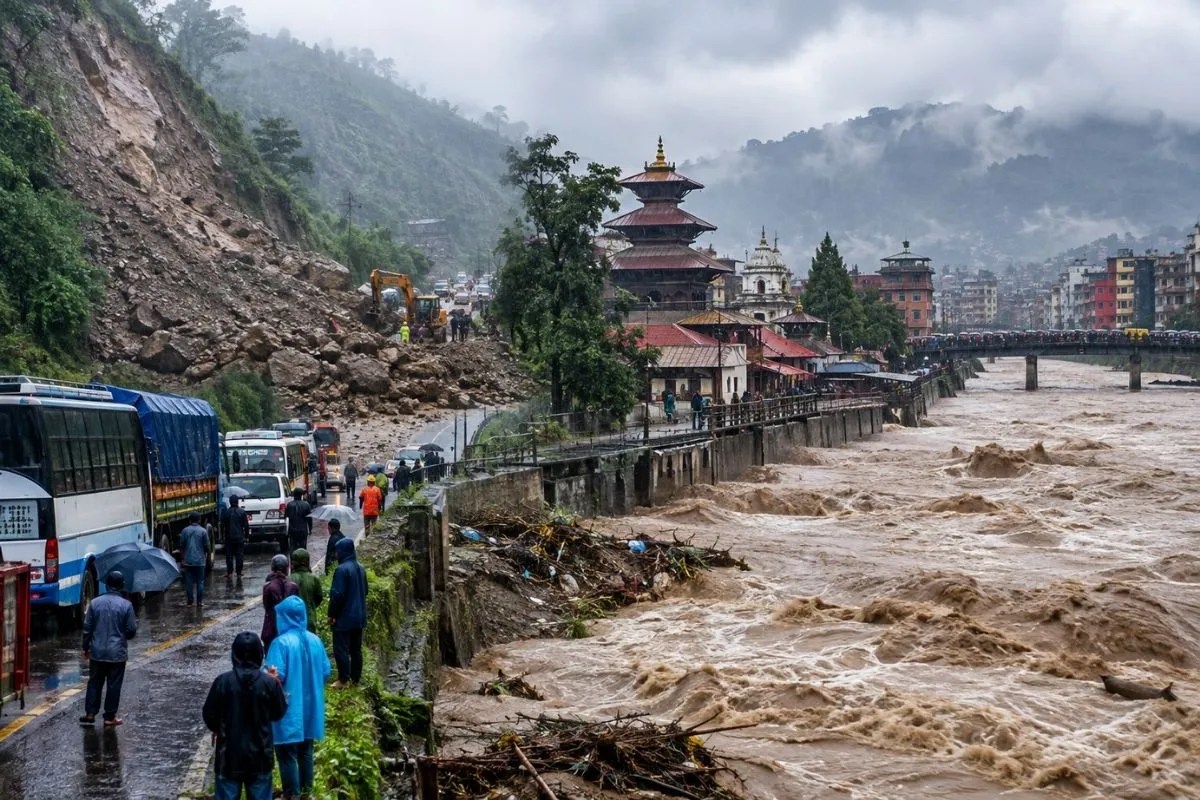
- Major lifelines like the Prithvi Highway face immediate blockages from debris and mudflows.
- Local authorities restrict heavy transport and passenger movement to prevent vehicles from getting trapped in narrow gorges.
People ask why roads close at the slightest hint of precipitation. Anyone who has driven through Dhading or watched the Trishuli and Bhote Koshi rivers rise knows the answer. Roads don't just get wet; sections of the asphalt simply vanish into the ravine.
Why Previous Disasters Changed Everything
The psychological weight of weather warnings changed permanently after the massive glacial and debris flows. When an entire mountain slope or debris dam lets go upstream, downstream communities have precious few minutes to react.
That leaves scars. Families who spent weeks digging through meters of silt or searching for missing relatives don't wait for second instructions when rain starts pooling on tin roofs. They pack light bags, move livestock uphill, and check on neighbors.
Official bulletins emphasize that routine monsoon storms aren't automatically repeats of catastrophic flash floods, but the distinction gets blurry when your home has already been compromised. Infrastructure repairs take months, meaning a moderate storm today can trigger a severe blockage that a fully intact highway would have shrugged off.
Practical Steps When Traveling or Living in High-Risk Zones
If you are navigating Nepal during an active weather advisory, standard travel plans do not apply. Throw away your rigid itineraries.
- Monitor real-time river gauges: Keep track of official updates through local disaster management portals rather than relying solely on generic weather apps.
- Avoid night driving on mountain corridors: Landslides rarely schedule themselves for daytime. If a route like the Narmuglin or Prithvi highway is flagged, stay put.
- Keep emergency contacts handy: Memorize local rescue numbers, including the national disaster hotline 1234, and keep your phone charged.
- Listen to local authorities immediately: If police or district officers tell you to evacuate an area near a riverbank, do not go back for valuables. Minutes matter when slopes give way.
Recovery takes years, but fear responds in real time. Staying safe means respecting the mountain's new geometry and taking every warning seriously before the water starts rising.