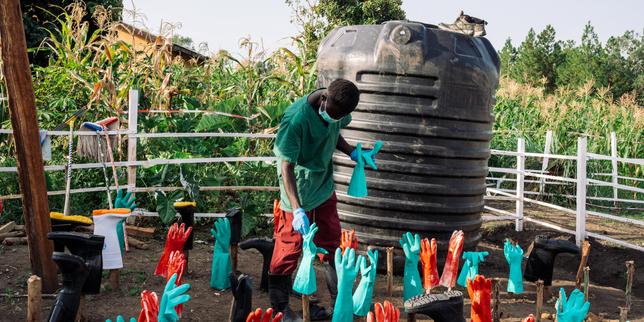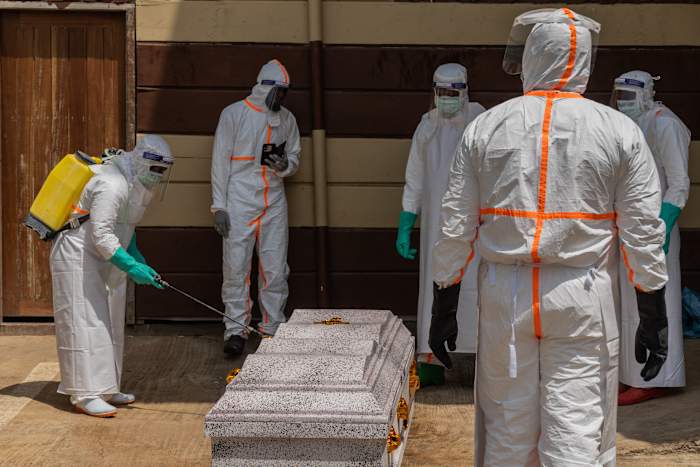
The numbers coming out of the Democratic Republic of Congo are bad. They're getting worse fast.
On June 14, 2026, the Congolese Ministry of Health announced that confirmed Ebola cases have reached 782. The death toll stands at 181. Just a single day prior, authorities registered 72 new cases. That is one of the highest single-day spikes since the outbreak was declared on May 15.
If you think you know how this plays out because you remember past outbreaks, you are mistaken. This isn't the familiar script. The ground has shifted, and the tools we usually rely on aren't working here.
The primary reason to worry is the specific pathogen behind the panic.
The Bundibugyo Problem
Congo has survived 16 previous Ebola outbreaks. Most of those were caused by the Zaire ebolavirus. Because of that brutal history, scientists developed highly effective weapons against the Zaire strain. We have Ervebo, a proven vaccine. We have monoclonal antibody treatments like Ebanga and Inmazeb that save lives if given early.
This outbreak is different.
The current nightmare is driven by the Bundibugyo virus. It's a rare strain of Ebola.
There is no approved vaccine for the Bundibugyo virus. There is no approved antiviral treatment.
When a patient tests positive in Ituri province today, doctors cannot reach for the specialized vials that tamed previous outbreaks. They rely on supportive care. Hydration. Managing symptoms. Hoping the patient's immune system wins the fight. Currently, 56 people have recovered, putting the recorded fatality rate at 23%.
But that percentage is deceptive. The real math is likely much uglier.
Why the Official Count Lies
The official tally sits at 782 cases, but nobody on the ground believes that number. The outbreak was officially declared in mid-May, but local health officials suspect it was quietly spreading for weeks before anyone noticed.
By the time laboratories confirmed the virus, the spark had already caught.
To stop Ebola, you need contact tracing. You track down every single person an infected patient touched, monitor them for 21 days, and isolate them the moment a fever spikes. If you trace 90% or more of contacts, you kill the chain of transmission.
Right now, Congo's contact tracing coverage has plummeted to 56%.
That means nearly half of the people exposed to the virus are slipping away. They are moving, working, and potentially bleeding into the community without any monitoring.
It is not a failure of will. It's a logistical impossibility caused by a brutal convergence of geography and human misery.
Blind Spots in the Jungle
The epicenter is Ituri province, located in eastern Congo. Over 90% of the cases are clustered here. It is a region fractured by violence.
According to the United Nations humanitarian office, armed conflict has displaced nearly a million people in Ituri. Think about what that means for a medical team. You find a patient. You write down the names of their family and neighbors. The next day, an armed militia attacks the village. Everyone scatters. The people you need to track are now part of a massive, moving sea of humanity fleeing through dense tropical forests.
They move along terrible roads. Some remote villages require days of hiking just to reach.
Then you have the economic drivers of the region. Ituri is mineral-rich. Thousands of artisanal miners constantly migrate between informal, remote mining camps. They don't register their movements. They live in crowded, basic conditions ideal for a hemorrhagic virus. If a miner gets sick, they might hop on a motorbike taxi to another camp miles away, seeding a new cluster before anyone realizes they are ill.
The virus is already moving outside Ituri. Confirmed cases have shown up in North Kivu and South Kivu provinces. More alarming still, the outbreak has crossed the international border into neighboring Uganda.
The Breakdown of Trust
You cannot fight an epidemic if the population thinks you are the enemy.
Public health teams are facing intense community resistance. Some locals are deeply skeptical that the virus is even real, viewing it instead as a political conspiracy or a moneymaking scheme for international organizations. This distrust boils over into violence. Angry residents have attacked health workers trying to safely bury bodies or transport patients to isolation units.
When people fear the medical workers more than the disease, they hide their sick relatives. They bury their dead secretly at night, touching the highly infectious bodies during traditional rituals, which accelerates the spread.
The international response is also hitting strange political roadblocks. Last month, United States officials announced a plan to send any Americans exposed to Ebola while abroad to a newly constructed 50-bed quarantine facility at the Laikipia Air Base in Kenya, rather than flying them back to the US. The move triggered intense local protests in Kenya over safety fears, and Kenyan courts quickly stepped in to halt the project.
While international entities bicker over where to isolate their own personnel, the actual fire in eastern Congo burns unchecked.
The World Health Organization and the Africa Centres for Disease Control and Prevention say they are stepping up case findings, laboratory support, and community engagement. Jean Kaseya, head of the Africa CDC, has issued an urgent call for donors to mobilize resources.
Money alone won't fix a 56% contact tracing rate in a war zone, but without a massive influx of field personnel who understand local languages and customs, the standard playbook will continue to fail.
If you are tracking global health security, forget the old assumptions. Watch the border crossings. Watch the tracking percentage. If that tracing number doesn't climb back up significantly above 80% within the next few weeks, the Bundibugyo virus will continue to outrun the response.
To minimize your own vulnerability if operating in or near the region, avoid non-essential travel to Ituri and border zones of Uganda. For organizations deployed on the ground, prioritize localized peer-to-peer education instead of top-down mandates. Work directly with community elders and mining camp leaders rather than arriving with heavily armed escorts, which only validates local suspicion. The only way to track a mobile population is to have the population actively cooperating with you.