The global arms market used to follow a predictable script. Western conglomerates built massively expensive, overly engineered hardware and sold it to developing nations. Those buyer nations then spent decades trapped in expensive maintenance cycles, utterly dependent on foreign engineers for the simplest software patches or spare bolts.
That old script is dead.
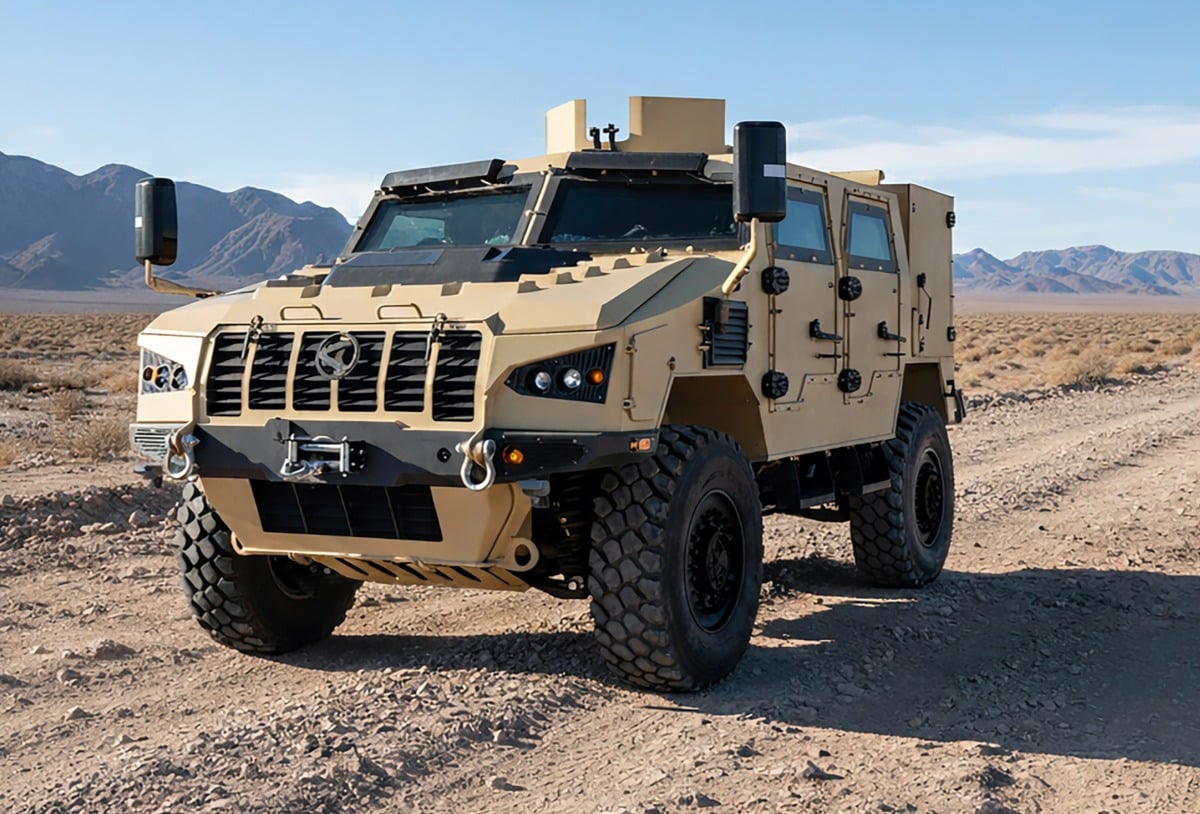
At the Eurosatory 2026 defense expo in Paris, an alliance between India's Kalyani Strategic Systems Limited (KSSL) and South Africa-founded global firm Paramount pulled the curtain off the Simha 4x4. The name means lion in Sanskrit. It isn't just another armored car designed to survive an improvised explosive device (IED). The vehicle represents a massive structural shift in how nations buy, build, and maintain military hardware. Instead of selling a finished product, Kalyani and Paramount are pitching an entirely different idea: sovereign manufacturing on your own terms.
Breaking the Colonial Supply Chain
Modern militaries face a brutal dilemma. Buying off-the-shelf armor from traditional superpowers leaves you vulnerable if diplomatic winds shift. If a supplier country disagrees with your foreign policy, they can simply halt the supply of spare parts, effectively grounding your fleet.
The Simha is an "ab initio" design, meaning it was engineered completely from a blank sheet of paper rather than adapting a legacy commercial truck chassis. The core philosophy here focuses heavily on what defense folks call "local industrialization." The vehicle is deliberately built to allow partner nations in Africa, South Asia, and beyond to set up their own domestic assembly lines rapidly.
If a government purchases this platform, they aren't just buying steel and glass. They're buying the ability to manufacture it locally, use local labor, and establish an independent supply chain. This completely removes the bottleneck of waiting for critical parts to ship across oceans during an active conflict.
The Legos of Modern Warfare
Military procurement officers usually hate buying multi-role vehicles because they often end up being mediocre at everything. A vehicle heavy enough to protect against major roadside bombs is usually too sluggish for narrow urban alleys. A light scout car gets torn to shreds in a high-intensity firefight.
The Simha tries to fix this through a modular setup built around NATO-qualified aggregates. That is industry jargon for standard, battle-tested mechanical components like the engine, drivetrain, and suspension that already pass strict Western interoperability benchmarks. Think of it as a highly secured, armored Lego base platform. Because the underlying skeleton uses standard components, a military can buy one fleet of vehicles and configure them for completely different jobs.
- Urban Warfare & Scouting: The short wheelbase and tight turning radius allow it to maneuver through tight streets.
- Border Patrol & Security: Upgraded sensors, cameras, and long-range optics can mount directly to the roof nodes.
- Troop Transport: The interior cabin modules swap out to prioritize seating space and blast-attenuating seats for infantry squads.
- Command and Control: The rear bay accepts heavy communications gear and ruggedized tactical workstations.
This modular design drastically cuts down on Maintenance, Repair, and Overhaul (MRO) complexity. Mechanics only need to learn one engine type and one chassis layout, even if the fleet handles six completely different mission profiles.
Digital Speed vs Military Bureaucracy
Traditionally, bringing a brand-new armored vehicle from a drawing board to an international trade show took anywhere from five to ten years. Bureaucracy, physical prototyping, and endless red tape slowed the process to a crawl.
Kalyani claims they developed the Simha in record time by leaning heavily on advanced digital engineering and virtual validation tools. Before a single sheet of steel was actually cut or welded, the vehicle went through thousands of hours of simulated stress tests, blast modeling, and terrain tracking inside a virtual space. By the time physical prototypes hit the testing tracks, the major design flaws had already been scrubbed out in software.
This speed tells us where the market is going. Threat environments change in months now, not decades. The emergence of cheap first-person-view (FPV) loitering munitions on modern battlefields has made legacy armor configurations obsolete almost overnight. A vehicle platform that takes a decade to develop is already ancient history by the time it reaches the field.
Real Independence Beats Big Brand Names
Let's look at the financial reality. Developing nations don't have the budget to purchase fleets of American or European armored vehicles at peak prices, nor do they want to deal with the political strings attached to buying from authoritarian states.
The KSSL and Paramount alliance hits a sweet spot. You get Indian industrial scale mixed with Paramount's decades of battle-proven armored vehicle engineering experience (the company behind legendary platforms like the Marauder). By explicitly making the Simha "Europeanized by design" with NATO-certified components, they are aiming directly for international markets that want Western reliability without the associated Western price tag or political baggage.
If you are a defense planner looking to upgrade a legacy fleet of aging armored personnel carriers, the smart move isn't just comparing armor thickness or top speeds anymore. You need to look at lifecycle support and technology transfers. The immediate next step for procurement teams evaluating the 4x4 market is demanding local assembly rights and open-architecture electronics packages. The Simha proves that the companies willing to share their blueprints are the ones that will win the global market.