Washington and Manila just shifted their defense relationship from "it's complicated" to "it's serious." The planned fuel depot in the Philippines isn't just a construction project. It's a loud statement. For decades, the alliance felt like a relic of the Cold War, often bogged down by domestic politics in Manila or shifting priorities in D.C. Now, we're seeing something different. This isn't just about joint drills or fancy photo ops anymore. It’s about the boring, gritty, and incredibly vital world of logistics.
If you want to know if two countries are actually ready to fight together, don't look at their treaties. Look at their gas tanks.
The plan to establish a major fuel storage facility at Subic Bay—a former US naval base with deep history—marks a move toward what officials call a more "mature" alliance. In plain English, that means they’re stoping the talk and starting the preparation. Logistics win wars. Without fuel, those billion-dollar destroyers and stealth jets are just very expensive paperweights. By prepositioning fuel on Philippine soil, the US is ensuring that its "pivot to Asia" has the literal grease it needs to function.
Why Subic Bay matters again
Subic Bay is a natural deep-water harbor. It’s perfect. During the Cold War, it was the logistical heartbeat of the US Navy in the Pacific. When the US left in 1992, many thought that chapter was closed forever. They were wrong. The geography hasn't changed, even if the politics have.
The decision to put a fuel depot here is strategic genius. It sits right on the edge of the South China Sea. If a conflict breaks out, ships won't have to retreat all the way to Guam or Hawaii to refuel. They can top off right there, stay in the fight longer, and project power where it's needed. This isn't just about the US either. The Philippine military needs this infrastructure too. Their own modernization has been slow, and piggybacking on US logistical chains gives them a massive leg up.
I’ve watched these ties fluctuate for years. Under the previous Philippine administration, the relationship was on thin ice. There was talk of scrapping the Visiting Forces Agreement (VFA). Fast forward to 2026, and the vibe is completely different. President Marcos Jr. has leaned hard into the US alliance, and the US is reciprocating with more than just words. They’re putting down roots.
Moving past the colonial baggage
The "maturity" mentioned by diplomats refers to a change in how both sides view the partnership. For a long time, the Philippines felt like a junior partner, almost a subordinate. There was a lot of resentment about sovereignty. You still see it in some protest groups. But the current reality is that Manila realizes it can't face Beijing alone.
China’s "gray zone" tactics—using coast guard ships and maritime militia to harass Filipino fishermen—have forced Manila’s hand. They don't have the luxury of being "neutral" anymore. By hosting this fuel depot, the Philippines is asserting its right to choose its partners. It’s a sovereign move, not a submissive one.
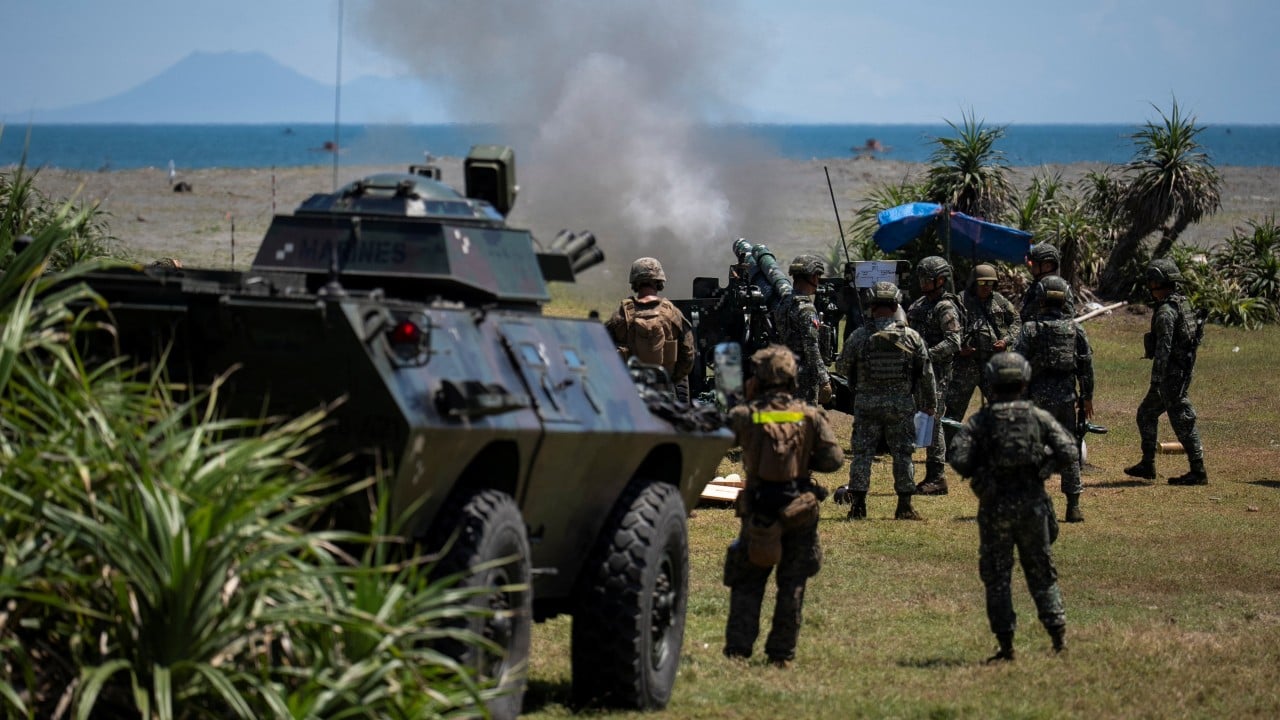
The US is also being smarter. They aren't asking for a permanent "base" in the old sense. They’re using the Enhanced Defense Cooperation Agreement (EDCA) to build facilities on Philippine bases that the Philippine military technically owns. It's a clever workaround. It respects local laws while providing the same operational benefits.
The logistics of deterrence
Deterrence is a psychological game. You want your opponent to look at your setup and think, "Not today." A fuel depot is a massive "Not today" sign.
Think about the math. A carrier strike group consumes millions of gallons of fuel. If that fuel has to come from thousands of miles away, the "turnaround time" is a vulnerability. Beijing knows this. They’ve spent years building "unsinkable aircraft carriers" (man-made islands) in the Spratlys. If the US and Philippines don't have their own logistical hubs, they’re at a disadvantage from day one.
- Prepositioned Stocks: Having fuel, ammo, and spare parts ready to go.
- Interoperability: Making sure US and Filipino pumps actually fit the same hoses.
- Resilience: Spreading assets across multiple sites so one lucky strike doesn't end the party.
This depot is part of a larger web. It connects with other EDCA sites across the archipelago. It creates a distributed network that is much harder to take out than one single giant base. It’s a move away from the "sitting duck" strategy of the past.
Domestic pushback and the China factor
It’s not all smooth sailing. You can bet Beijing is annoyed. They’ve already warned Manila about "stoking tensions." Some local politicians in the Philippines are also worried. They fear that hosting US assets makes them a target.
They’re not entirely wrong. In a full-scale war, a fuel depot is a high-priority target. But the counter-argument is simple: without these assets, the Philippines has no defense at all. It’s the difference between being a target with a shield or a target without one.
We also have to consider the economic side. Subic Bay is a freeport. It’s a commercial hub. Bringing in massive military infrastructure can be a double-edged sword for local business. However, the sheer amount of money the US is pouring into these "EDCA projects"—hundreds of millions of dollars—is hard for any local government to turn down. It means jobs, better roads, and upgraded ports.
Realities of the 2026 security environment
We aren't in the 1990s anymore. The South China Sea is the most contested waterway on the planet. Over $3 trillion in trade passes through here every year. If it gets blocked, the global economy hits a wall.
The US-Philippines alliance is the cornerstone of keeping those lanes open. For a few years, people wondered if the US was actually committed. "Will they really show up if a Filipino ship gets rammed?" That was the big question.
Building a fuel depot is a pretty good answer. You don't spend that kind of money and effort if you plan on packing up and leaving the moment things get hairy. It shows a long-term commitment that goes beyond whoever is in the White House or the Malacañang Palace.
The technical side of the fuel depot
We aren't just talking about a few rusty tanks. Modern military fuel storage is high-tech. It involves:
- Hardened Infrastructure: Tanks that can survive nearby blasts or cyber-attacks.
- Rapid Refueling Systems: The ability to get fuel into a ship or plane in record time.
- Environmental Protections: Making sure a leak doesn't ruin the local ecosystem, which would be a PR nightmare and a legal disaster.
When you see the specs for these projects, you realize the level of integration. We’re talking about shared sensors and integrated security. It’s a level of "closeness" that hasn't existed between these two militaries since World War II.
What you should watch for next
The fuel depot is the start, not the finish line. Keep an eye on the "Pacific Deterrence Initiative" funding. If the numbers keep going up, the US is doubling down. Also, look at how many other countries start joining these drills. We’re already seeing Japan and Australia get involved in what used to be strictly bilateral US-PH exercises.
If you're following regional security, don't get distracted by the fiery speeches. Watch the construction permits. Watch the fuel tankers. The real story is written in concrete and diesel.
Manila is finally playing its hand. They’ve realized that their geography is their greatest asset and their biggest liability. By leaning into the US alliance through logistical hubs like the Subic fuel depot, they’re trying to make sure that geography works for them, not against them. It’s a risky move, but in a neighborhood that’s getting increasingly crowded and aggressive, it’s likely the only move they have left.
Don't expect the tensions to die down. If anything, this depot will make the South China Sea even more "crowded." But for the first time in a long time, the Philippines isn't just a spectator in its own backyard. It’s a player. And it has the gas to stay in the game.