New York City just pulled the plug on generative artificial intelligence for roughly 600,000 public school students.
If you thought tech integration in classrooms was an unstoppable freight train, Mayor Zohran Mamdani just threw a massive anchor overboard. Under a newly announced policy taking effect for the 2026-2027 school year, students from early childhood programs through the eighth grade are barred from using generative AI tools on school devices and networks.
It is the largest school district in America. It is a bold, disruptive move. And honestly, it forces a long-overdue conversation about what we actually want schools to achieve.
Why the Nation Capital of Public Education Hit Pause
The policy is not a subtle restriction. City officials confirmed that automated components within nearly four dozen previously approved learning programs will be deactivated or entirely discontinued. Companion chatbots are banned outright across all grade levels.
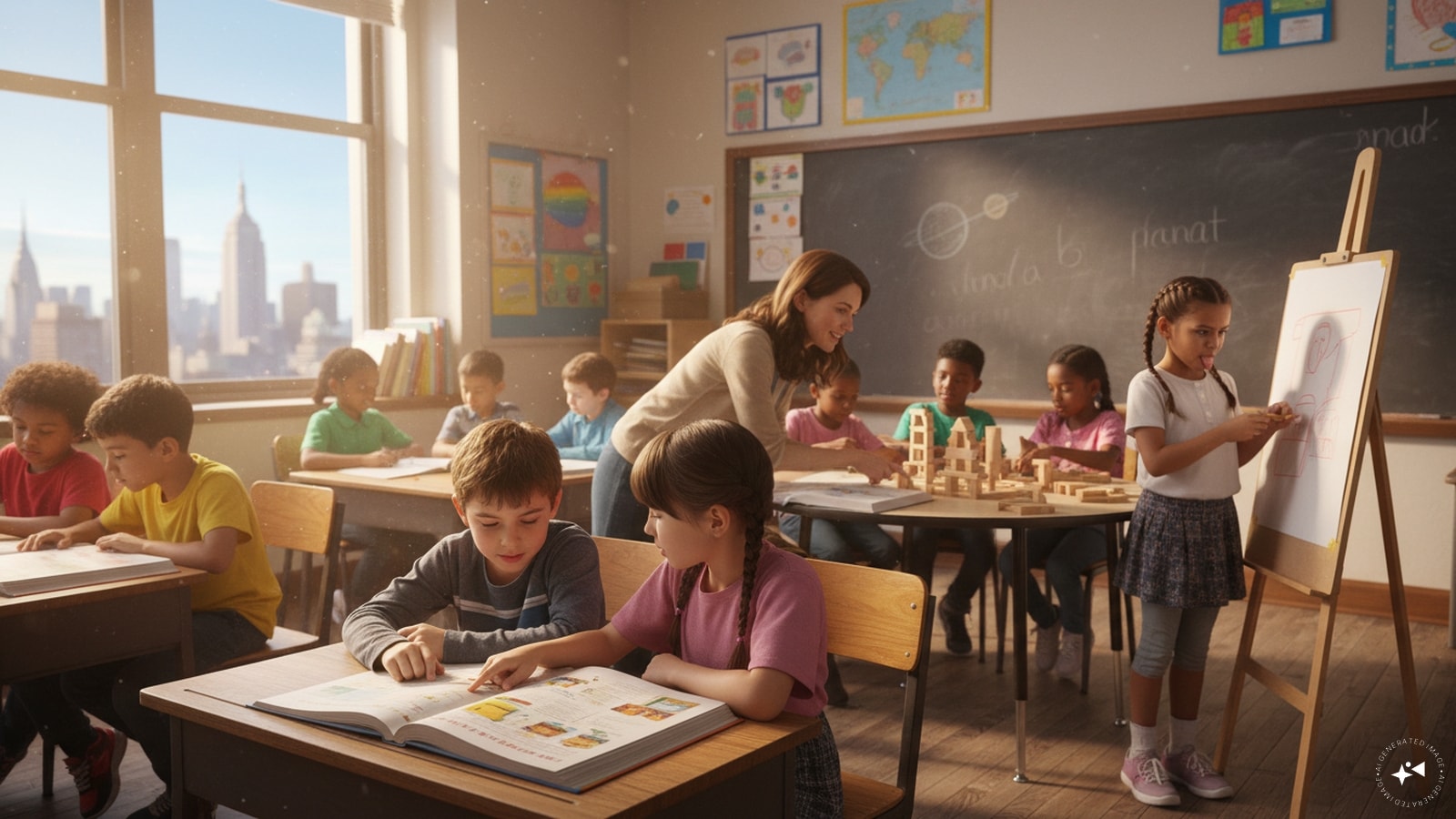
Children need human interaction, real friction, and actual peer-to-peer problem solving to develop cognitive resilience. When a chatbot writes an essay or solves a multi-step math equation in half a second, the student misses the mental workout.
Mamdani put it plainly during the policy rollout. The tech sector wants everyone to believe that automated early education is mandatory and inevitable. New York City clearly disagrees.
What the Rules Actually Look Like on the Ground
If you are trying to figure out how this plays out in actual classrooms, the mandates vary depending on the grade level and who is holding the device.
- Early Childhood and Elementary: Students in second grade and below face a strict ban on individual screen time, while children in grades three through five are capped at 30 minutes of daily screen time.
- Middle School: Students in grades six through eight receive a maximum cap of 45 minutes of daily screen time, alongside a total blackout of student-facing generative text and chat tools.
- High School Exceptions: High schoolers are largely exempt from the outright ban, but they will participate in mandatory AI literacy classes twice a year. A select group of up to 50,000 general education high school students will test tightly supervised pilot programs.
- Teacher Usage: Educators are still permitted to use artificial intelligence for operational duties like lesson planning and scheduling, though using automated tools for student grading and formal assessments remains off-limits.
This multi-tiered strategy separates standard administrative efficiency from raw student dependency. Teachers can use software to save time on paperwork, but young children cannot use it to bypass thinking.
The Pushback and Real-World Friction
Naturally, tech developers and free-market advocates are pushing back hard. Critics argue that shielding students from emerging software leaves them unprepared for a workforce that relies heavily on digital automation. Some educational technology leaders claim that a one-year moratorium is too blunt an instrument, preferring iterative safety patches over sweeping government bans.
At the same time, parents are exhausted. Teacher unions and advocacy groups report surging complaints regarding digital fatigue, plummeting attention spans, and an over-reliance on quick-fix answers. When children use autocomplete engines for basic literacy and math, foundational skills erode.
New York is not acting in a vacuum. Los Angeles Unified School District recently moved to restrict classroom screen time and block unauthorized generative tools, while international bodies in places like Europe are rolling out strict consent frameworks for minors.
What This Means Moving Forward
A newly formed advisory coalition featuring parents, educators, and students will spend the next twelve months monitoring the impact of the moratorium. They will evaluate whether cognitive stamina and baseline literacy metrics improve once the automated crutches are removed.
If you are an educator, a parent, or a policy maker watching this unfold, take inventory of how much digital outsourcing you allow in everyday learning environments. Start by auditing your own children's daily screen habits, strip away passive automated helpers, and force the hard mental reps back into the daily routine.