The air inside a military barracks in the Kuwaiti desert has a specific, synthetic smell. It is a mixture of industrial air conditioning, floor wax, scorched dust, and the stale aroma of instant coffee. To the young men and women stationed there, this scent eventually becomes the smell of safety. It means you are off the line. It means the armor is off, the boots are unlaced, and the relentless heat of the Persian Gulf is, for a few hours, kept at bay behind thick concrete walls.
Then the concrete screams.
When an Iranian-backed missile strikes a military installation, there is no cinematic buildup. There is no rising crescendo of music to warn the occupants. There is only a sudden, violent tearing of the atmosphere, followed by a shockwave that travels through the soles of your feet before the sound even registers in your ears. The lights flicker and die. Dust, dried paint flecks, and fiberglass insulation rain down in the darkness. In that single, fractured second, the abstract chess game of geopolitics becomes brutally, undeniably physical.
The recent strike on a US base in Kuwait, which left several American servicemen injured, barely registered as a blip on the 24-hour news cycle. It was swallowed by economic reports, political bickering, and the endless scroll of social media feed updates. To the world, it was a headline: US servicemen injured in Iranian strike on Kuwaiti base. A standard data point in an ongoing regional friction.
But headers do not bleed. Headlines do not stare at a cracked ceiling in the dark, waiting for the secondary impact, wondering if their lungs are full of smoke or blood.
To understand what actually happened in Kuwait, we have to look past the sterile language of press releases. We have to look at the invisible stakes.
Consider a hypothetical soldier. Let’s call him Specialist Miller. Miller is twenty-two years old, from a small town in Ohio where the biggest employer closed five years ago. He joined the Army to see the world, to earn a college degree, and to find a sense of purpose. When his family thinks of him, they picture him in a vague, generalized "Middle East," a place they associate with sand and perpetual conflict. They reassure themselves with the knowledge that Kuwait is a stable host nation, a logistics hub far removed from the active firing lines of Iraq or Syria. Kuwait is supposed to be safe.
That safety is an illusion sustained by distance.
When the alert sounded, Miller wasn't thinking about regional hegemony or the collapse of international nuclear accords. He was thinking about his left boot, which had a broken lace he hadn't replaced yet. He was thinking about his mother’s upcoming birthday. The blast changed his universe instantly. It threw him against a metal wall locker, the impact rattling his teeth and twisting his shoulder in a way that signaled immediate, searing damage.
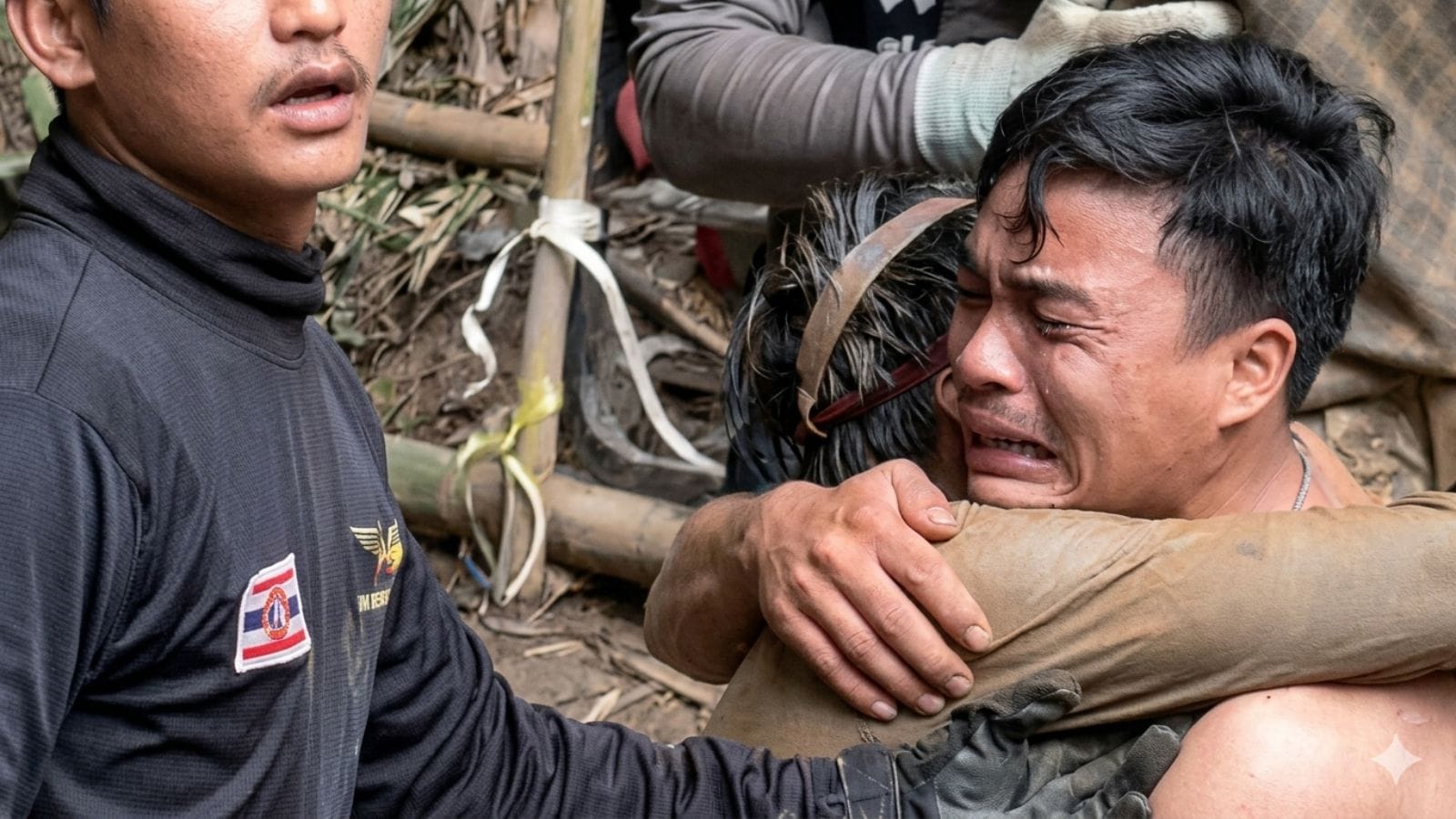
He survived. Others were carried out on stretchers, their faces masked by grey dust and blood, their injuries ranging from severe concussions to shrapnel wounds that will require months of surgeries.
The real tragedy of these strikes is not just the physical shrapnel; it is the psychological fragmentation. A soldier who survives an attack in a designated combat zone expects the violence. It fits the narrative they prepared for. But an attack in a rear-guard logistical haven like Kuwait shatters the fundamental contract of military life. It proves that the frontline is no longer a geographical line on a map. The frontline is wherever an adversary can guide a drone or a ballistic missile.
This is the new reality of modern asymmetric warfare. For decades, the United States maintained global dominance through massive conventional superiority. Aircraft carriers, stealth bombers, and armored divisions ensured that adversaries thought twice before engaging in open conflict. But the geometry of deterrence has shifted.
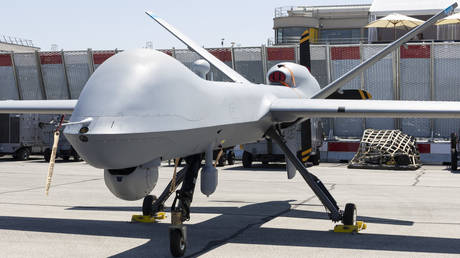
Now, sophisticated guidance systems can be bolted onto relatively cheap projectiles. A militia operating thousands of miles away can project lethal power across borders, bypassing traditional defenses to strike at the soft underbelly of coalition infrastructure.
Kuwait has long served as the quiet backbone of American operations in the region. Since the Gulf War, it has provided the vital staging areas, ports, and airfields necessary to sustain tens of thousands of troops. It is a partnership built on mutual strategic interest and decades of shared history. Yet, precisely because of its importance, it has become a lightning rod.
When an Iranian-aligned group launches a strike here, they are not trying to win a conventional military victory. They know they cannot match the sheer destructive capability of the US military. Instead, they are playing a psychological game. They are testing boundaries. They are sending a message to Washington, to the regional capitals, and to the American public: You are not safe anywhere. We can touch you whenever we want, and the cost of your presence will be paid in the blood of your children.
It is easy to get lost in the vocabulary of statecraft. Analysts talk about "proportional responses," "red lines," and "deterrence architectures." These terms are useful because they insulate us from the raw reality of the situation. They turn human suffering into a grand game of risk.
But the real problem lies elsewhere. It lies in the quiet rooms of military hospitals where the true cost of these policy decisions is tallied. It lies in the frantic phone calls placed across nine time zones to families who were told their loved ones were in a non-combat zone.
The human mind is remarkably resilient, but it demands predictability. When you remove predictability, the stress becomes corrosive. A soldier can endure incredible hardships if they know when the danger starts and when it ends. But when the danger is ambient, omnipotent, and entirely unpredictable, the mind begins to eat itself. Every sudden noise becomes a mortar launch. Every flickering light is the prelude to an explosion. This is the invisible trauma that these low-intensity, high-frequency strikes inflict on an entire generation of service members.
We often treat these incidents as isolated events. We wait to see if the administration will retaliate, if the rhetoric will escalate, or if the news will simply drift to the next crisis. But these events are connected by a thread of escalating calculation. Every strike that passes without a decisive shift in the strategic landscape normalizes the behavior. It lowers the bar for the next attack. It expands the permissible zone of violence.
The men and women stationed across the network of small bases and outposts in the region know this. They watch the news just like everyone else, but they read it through a completely different lens. They don't see geopolitical maneuvers; they see target acquisition.
Consider what happens next: the dust clears, the sirens fall silent, and the broken glass is swept into neat piles. The injured are evacuated to higher-echelon medical facilities in Germany or the United States. The damaged buildings are patched with plywood and sandbags. The routine resumes because the routine is the only thing that keeps the chaos at bay.
But the atmosphere inside the barracks has fundamentally changed. The synthetic smell of air conditioning and dust is now laced with something else—the sharp, lingering metallic tang of cordite, and the heavy, unsaid realization that the walls are not as thick as they used to be.
The next time you read a headline about a distant strike, about a few servicemen sustaining non-life-threatening injuries in a place you rarely think about, look closer. Do not let the brevity of the report deceive you. Behind those few lines of text is a room that was suddenly turned inside out, a group of young Americans whose lives were permanently altered in a fraction of a second, and a quiet desert night that will never feel entirely safe again.