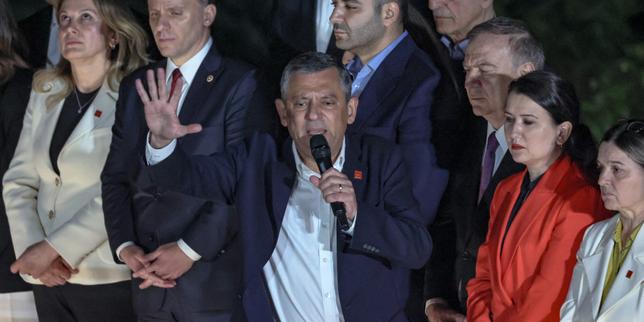
The ink on a judicial decree dries quickly, but its weight can crush a political movement overnight.
In Ankara, the air in autumn bites early. Inside the headquarters of the Cumhuriyet Halk Partisi (CHP), the lights usually burn well past midnight. Staffers drink bitter black tea from tulip-shaped glasses, argue over polling data, and draft press releases that challenge the iron-fisted rule of the government. It is a house built on friction. But on a Tuesday that felt deceptively normal, the friction stopped. The state stepped in, replaced the locks, and rewrote the rules of engagement.
When a Turkish court issued a ruling to revoke the leadership of the main opposition party, it wasn't just a bureaucratic shuffle. It was a surgical strike disguised as a legal procedure. To understand what happened, you have to look past the dense legalese of the magistrates and look at the faces of the people who suddenly found themselves locked out of their own democracy.
The Quiet Power of the Gavel
Imagine spending decades building a fortress, stone by stone, only for a judge miles away to declare that the foundation belongs to someone else.
The CHP is not just any political party; it is the oldest in modern Turkey, founded by Mustafa Kemal Atatürk himself. It carries the weight of the republic’s secular history. For the current government, controlling the CHP isn't about winning an election. It is about neutralizing the very concept of a viable alternative.
The legal mechanism used was subtle. A court ruling questioned the internal alignment and validity of the party's recent leadership elections. By declaring the leadership invalid, the state effectively decapitated the opposition. In an instant, the elected leaders became trespassers in their own offices.
Consider the immediate, tactical chaos this creates. If the leadership is revoked, who signs the checks? Who authorizes the campaign spending for the upcoming regional elections? Who speaks for the millions of citizens who cast their ballots hoping for change? The answer is a suffocating silence.
The Anatomy of a Judicial Coup
To the outside world, Turkey often maintains the facade of a functioning democracy. There are ballot boxes. There are campaigns. There are rallies that fill city squares with a sea of red and white flags.
But true authoritarianism rarely arrives with tanks in the streets anymore. It arrives in manila envelopes. It wears a robe and speaks in the calm, measured tones of a courtroom. By utilizing the judiciary to dismantle the opposition, the ruling power avoids the international backlash of a military crackdown while achieving the exact same result.
Let us look at how this plays out on the ground. A local party organizer in Izmir wakes up, checks their phone, and realizes their regional director no longer has legal authority. The permit for a weekend rally is suddenly revoked because the signatory "does not exist" in the eyes of the state. Activists who spent months organizing voters are left adrift, wondering if their names are now on a watchlist.
The psychological toll is immense. It breeds a specific, paralyzing paranoia. When the state can retroactively cancel your leadership, every decision you make feels like a trap.
The Strategy of Forced Incompetence
There is a deliberate cruelty to this strategy. By forcing the opposition into a endless loop of legal battles, the government ensures that the CHP cannot focus on the crises actually impacting Turkish citizens.
- The soaring inflation that makes buying basic groceries a daily humiliation.
- The collapsing value of the lira.
- The lingering trauma of mismanagement in the wake of natural disasters.
Instead of debating economic policy or proposing healthcare reforms, opposition lawyers are trapped in wood-paneled courtrooms, arguing over bylaws and the definitions of internal party quorums. The government then turns to the public and asks a devastatingly simple question: If they cannot even manage their own internal paperwork, how can they run a country?
It is a masterful, sinister piece of political theater. The state breaks the opposition's legs, then mocks them for limping.
Voices in the Corridor
Behind the headlines are the people who have invested their lives into the belief that a peaceful transition of power is possible.
Think of a hypothetical staffer—let's call her Leyla. She is twenty-six, highly educated, and could have taken a lucrative job in the private sector. Instead, she chose to work for the CHP because she wanted her future children to grow up in a free Turkey. She spent the last three years analyzing voter demographics in rural Anatolia.
On the day of the ruling, Leyla stood in the hallway of the Ankara headquarters, watching police officers stand guard near the building's entrance. Her computer files, her strategies, her hopes for the next election cycle—all frozen. The state didn't just revoke a leadership council; it revoked Leyla’s agency. It told an entire generation of politically active youths that their efforts are irrelevant because the house always wins.
This is the true cost of the judicial decree. It is the erosion of hope. When people lose faith in the ballot box, the social contract doesn't just bend—it snaps.
The Ripple Effect Beyond Ankara
What happens in Turkey rarely stays in Turkey. The country stands as a bridge between East and West, a geopolitical hinge point. When the main opposition party is systematically dismantled through judicial warfare, it sends a green light to autocrats around the globe. It provides a blueprint for how to neutralize dissent without drawing the ire of international sanctions.
The message is clear: democracy can be tolerated, but only if the ruling party is guaranteed to win.
But the human spirit is notoriously difficult to regulate via judicial decree. History shows that when you close every legal avenue for dissent, you do not destroy the dissent. You merely force it underground, into the cafes, the living rooms, and the quiet corners of the internet where the state's microphones cannot reach.
Outside the CHP headquarters, the police cars remain parked, their blue lights flashing against the cold stone walls. Inside, the desks are empty, and the phones ring out into unanswered rooms. The state has won this specific round on paper. But as the night deepens over Ankara, the quiet anger of a sidelined populace begins to harden into something far more durable than a court order.


