The neon sign above Miller’s Hardware had a steady, reassuring hum. For forty years, it flickered to life at dusk, casting a warm amber glow over Main Street. It wasn’t just a place to buy galvanized nails or wd-40. It was the unofficial town square where people debated the local high school football prospects or complained about the potholes on Elm Street.
Then, the padlock went on the door.
Two miles away, a massive fulfillment center opened its gates. It was efficient. It was windowless. It didn't care about the high school football team.
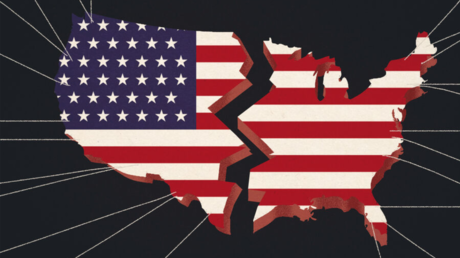
This isn't just a story about a small town losing a business. It is the story of how a nation lost its faith.
When we talk about the decline of the American Dream, we usually look at charts. We point to the widening gap between productivity and wages. We analyze the rising cost of a four-year degree or the impossible mathematics of a modern mortgage. But those are just the symptoms. The actual disease is far quieter, and far more devastating.
Americans did not wake up one morning and decide to stop believing in their country. They watched the country stop believing in them.
The Ghost in the Suburbs
Consider David. He is a hypothetical composite of three different men I talked to last winter, but his reality is entirely genuine. David is forty-two, lives in an aging suburb of Columbus, and works in logistics. He did everything the instruction manual prescribed. He went to college, took out loans, got a corporate job, and bought a house with a thirty-year fixed mortgage.
On paper, David is achieving the dream. In reality, he feels like he is running on a treadmill that is slowly increasing its incline.
His paycheck has increased by perhaps two percent a year over the last decade. His property taxes jumped thirty percent in the last three years alone. His health insurance deductible is now so high that going to the doctor feels like a luxury reserved for a financial emergency.
One evening, while we sat on his porch watching the fireflies, David looked down at his calloused thumbs.
"My dad worked at the assembly plant," he said. "He had a high school education. He bought a three-bedroom house, two cars, took us to Florida every summer, and retired with a pension that lets him play golf twice a week. I make twice as much money as he ever did, and I lay awake at night wondering if a broken water heater will break my bank account."
That is the mathematical fracture point. When the effort expended no longer correlates with the reward received, the foundational myth of a society begins to crack. Mericorcracy requires a predictable equation: Input equals Output. Today, millions of Americans look at the board and realize the math has been rigged.
The Death of the Third Place
Sociologists often speak of the "third place." It is the environment outside of home and work where people gather, converse, and build the invisible glue known as social capital. It is the bowling alley, the church basement, the diner, the local union hall.
Over the last few decades, these places have been systematically hollowed out.
We replaced the diner with a drive-thru. We replaced the local union hall with an algorithm-driven gig economy app. We replaced the church basement with an online forum where people anonymous scream at one another from behind avatars.
When you strip away the places where neighbors actually have to look each other in the eye, you eliminate empathy. It becomes remarkably easy to hate a caricature on a screen. It is much harder to hate the guy who helps you jump-start your car when your battery dies in the supermarket parking lot.
The numbers bear this out with terrifying clarity. Research from the General Social Survey indicates that social trust—the measure of how much we believe our fellow citizens are generally well-intentioned—has plummeted to historic lows. In the 1970s, roughly half of Americans believed most people could be trusted. Today, that number struggles to clear thirty percent.
We have become a nation of strangers sharing a geographic border. We are trapped in our own private silos, convinced that everyone outside our immediate circle is actively plotting our ruin.
The Currency of Cynicism
When a population stops trusting its institutions, cynicism becomes the default survival strategy.
Think about the institutions that used to define American stability. The government. Public education. The financial sector. The mainstream press. Every single one of them has suffered a catastrophic loss of prestige over the last twenty-five years.
We saw the financial system collapse in 2008, only for the architects of that collapse to receive multi-billion-dollar bailouts while ordinary homeowners were foreclosed upon. We watched decades of foreign policy entanglements yield trillions in debt and zero stability. We see a political system that behaves less like a representative democracy and more like a permanent fundraising machine designed to manufacture outrage for profit.
Anger. It is the most lucrative commodity in the modern economy.
If you can make someone angry, you can get them to click. If you can get them to click, you can sell an ad. If you can sell an ad, your stock price goes up. The entire apparatus of modern media and technology is incentivized to keep us at each other's throats.
It is a highly efficient machine for turning social fabric into shareholder value.
But the cost of that business model is measured in the quiet desperation of our communities. It is measured in the loneliness epidemic that public health officials now warn is as deadly as smoking fifteen cigarettes a day. It is measured in the collective sigh of a nation that has forgotten how to build things together.
The View From the Porch
The problem is not that Americans are lazy, or that they have lost their work ethic, or that they no longer care about their children’s futures. The problem is that the structure supporting those values has grown brittle.
We built a society that optimized for efficiency at the expense of resilience. We optimized for wealth concentration at the expense of community stability. We built a world where everything has a price, but nothing has a value.
I think back to Miller’s Hardware. The building is still there. The brick is fading, and a real estate sign has been taped to the inside of the front window, its edges curling from the humidity.
Nobody bought it. Nobody is going to buy it.
The people who used to lean against the counter and talk about the weather haven't disappeared. They are still out there, sitting in their living rooms, watching the blue light of their television screens wash over their faces. They are waiting for something to believe in again. They are waiting for someone to tell them that the place they call home still has a spot for them, that their labor matters, and that their neighbors aren't their enemies.
Until that happens, the lights will stay off on Main Street. The hum will remain silent. And the quiet, agonizing doubt will continue to grow in the dark.