The air inside MetLife Stadium did not feel like North Jersey in July. It felt like the inside of a furnace, thick with the sweat of eighty thousand people and the residual heat of a World Cup final that had just pushed humanity to its absolute limits.
If you stood near the tunnel, the noise was a physical wall. It wasn't just cheering; it was a low, vibrating hum born from ninety minutes of collective cardiac arrest. The grass on the pitch was torn, stained with the green of desperate slides and the white chalk of lines that had defined the destiny of nations just an hour prior. Recently making waves in this space: The Microeconomics of Local Culture: Deconstructing the Generative AI Friction in Regional Music Scenes.
Then, the lights shifted.
The stadium screens flickered, transitioning from the cold, clinical replays of standard broadcasting to something vastly more chaotic. A familiar, hyperactive rhythm began to pump through the massive sound system. It was "Champions." More details on this are explored by Entertainment Weekly.
Most of the suits in the VIP boxes probably looked at their programs, confused. But the kids in the upper tiers—the ones who had spent the last five years watching the world through a vertical five-inch screen—knew exactly what was happening.
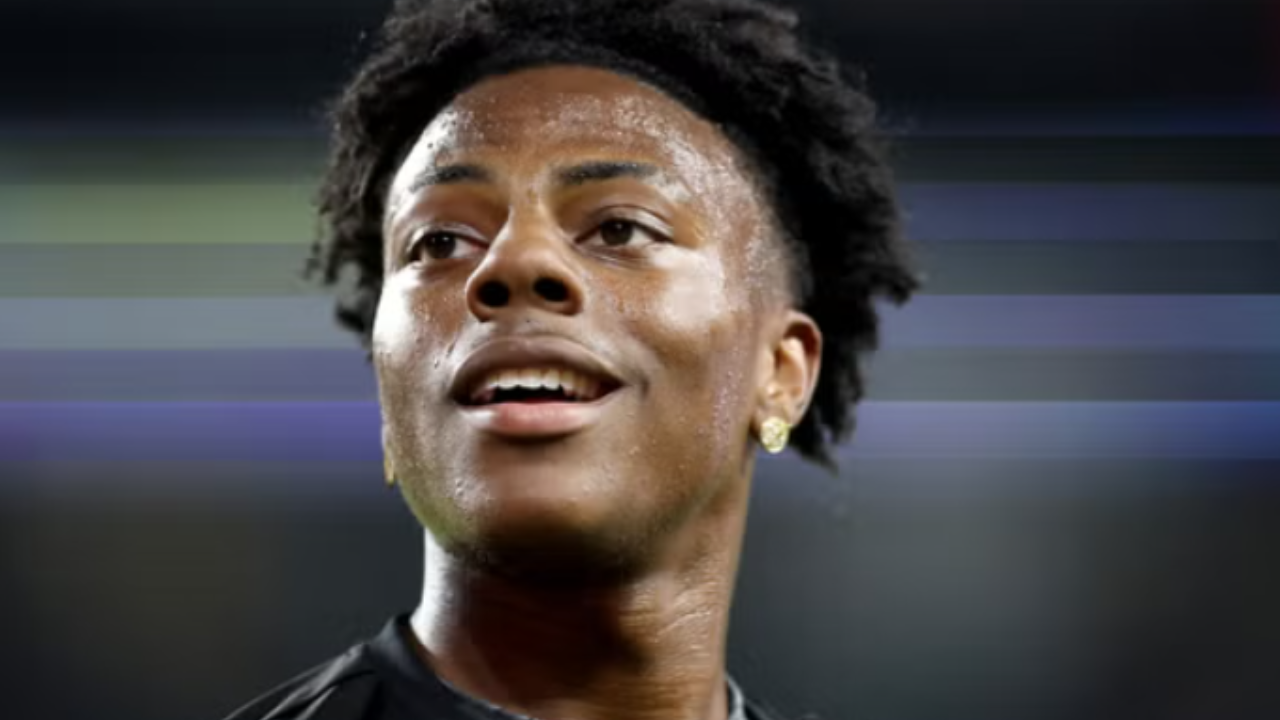
A figure sprinted onto the pristine, billion-dollar grass. He wasn't wearing a kit. He wasn't a tactical mastermind. Darren Jason Watkins Jr.—known to a hundred million people simply as IShowSpeed—had just taken over the biggest sporting event on Earth.
From the Bedroom to the Center of the Earth
To understand how a nineteen-year-old from Ohio ended up commanding the closing ceremony of a FIFA World Cup, you have to look past the official press releases. The official narrative says it was a strategic partnership, a calculated move by FIFA to capture a younger demographic.
That narrative is completely wrong.
This wasn’t a corporate strategy. It was a cultural hostile takeover.
Five years ago, Speed was screaming at a webcam in a dimly lit bedroom, playing video games and failing to control his own frantic energy. He was a meme. He was the kid who barked at people on the internet. Traditional media executives looked at him and saw a fleeting digital anomaly, a blip in the attention economy that would burn out before the next fiscal quarter.
But they misunderstood the nature of modern worship.
Speed didn’t build a fan base; he built a global collective consciousness. His obsession with football—specifically his borderline religious adoration of Cristiano Ronaldo—wasn't a gimmick. It was a raw, unfiltered manifestation of the way an entire generation experiences passion. It is loud. It is irrational. It is entirely devoid of irony.
When he stepped onto that pitch in 2026, he wasn’t just a performer. He was the avatar for every kid who ever recorded a TikTok in their backyard trying to mimic a knuckleball.
The Subversion of the Spectacle
Closing ceremonies are traditionally sterile affairs. They are corporate, choreographed, and deeply safe. They feature pop stars who have been scrubbed clean by public relations teams, performing tracks designed to please everyone from a nine-year-old in Tokyo to a sixty-year-old dignitary from Zurich.
Speed shattered that mold the moment his boots hit the turf.
He didn't just sing "Champions." He lived it, violently. He threw himself across the stage with the same reckless abandon that made him a streaming phenomenon. His voice cracked. He missed cues. He barked.
And it was magnificent.
Consider the juxtaposition. On one side, you have FIFA, an organization defined by its rigid protocols, its Swiss bank accounts, and its decades-long history of polished, bureaucratic control. On the other side, you have a teenager who became famous for accidentally setting off fireworks inside his own house.
The tension was palpable. You could almost hear the collective intake of breath from the marketing executives in the lower bowls. They had handed the microphone to the unpredictable. For three minutes, the most controlled sporting event in human history belonged to pure, unadulterated internet chaos.
The New Currency of Authority
We often talk about the democratization of media, but we rarely see its final form. This was it.
In the past, to reach the stage of a World Cup final, you needed a record label, a massive distribution network, and the approval of a dozen gatekeepers. Speed bypassed every single one of them. He used nothing but a smartphone, an internet connection, and an personality so loud it could pierce through the digital noise of the twenty-first century.
An analogy helps clarify the scale of this shift. Traditional celebrities are like oil paintings; they are crafted over time, carefully framed, and hung in galleries for people to admire from a distance. Streamers like Speed are like graffiti on a subway car. They are fast, immediate, public, and impossible to ignore. FIFA didn't invite Speed because they wanted to honor his musical talent. They invited him because he possesses the one thing their billions of dollars cannot buy: authentic attention.
The stadium didn't just watch him; they matched him. When he hit his trademark poses, tens of thousands of people in the stands mirrored him. These weren't just internet junkies. These were ordinary families, hardcore football ultras, and casual tourists who had been sucked into the vortex of his energy.
The Ghost in the Stadium
As the performance reached its crescendo, the cameras caught a glimpse of Speed's face on the stadium's massive overhead display. Underneath the bravado, the sweat, and the manic grin, there was a flash of something else.
Disbelief.
For a fraction of a second, the character dropped. You could see the kid from Cincinnati looking out at the vast sea of humanity, realizing that the digital world he had conquered had finally manifested into physical reality. The billions of views were no longer just numbers on a dashboard. They were real lungs, screaming back at him.
It was a terrifyingly beautiful moment of vulnerability. It proved that despite the algorithmic calculation that dominates modern entertainment, the human heart still recognizes the sheer weight of a dream realized.
The song ended not with a polite bow, but with an explosion of sound that seemed to shake the very foundations of East Rutherford. Speed didn't walk off the pitch; he practically vibrated away, leaving behind an arena that felt fundamentally altered.
The suits will write their reports. The analysts will calculate the social media impressions and the spike in youth engagement metrics. They will try to quantify what happened, to turn it into a formula that can be replicated at the next tournament, or the next Olympics.
But they will fail to capture the essence of that night. You cannot manufacture lightning. You cannot corporate-sponsor a riot of joy.
Long after the turf is replaced, the stadium lights are turned off, and the World Cup trophy has traveled to its new home, that three-minute stretch will remain as a marker of the day the old world finally stopped fighting the new one. The screen hadn't just reflected the culture anymore. It had broken through the glass, stepped onto the field, and claimed the crown.