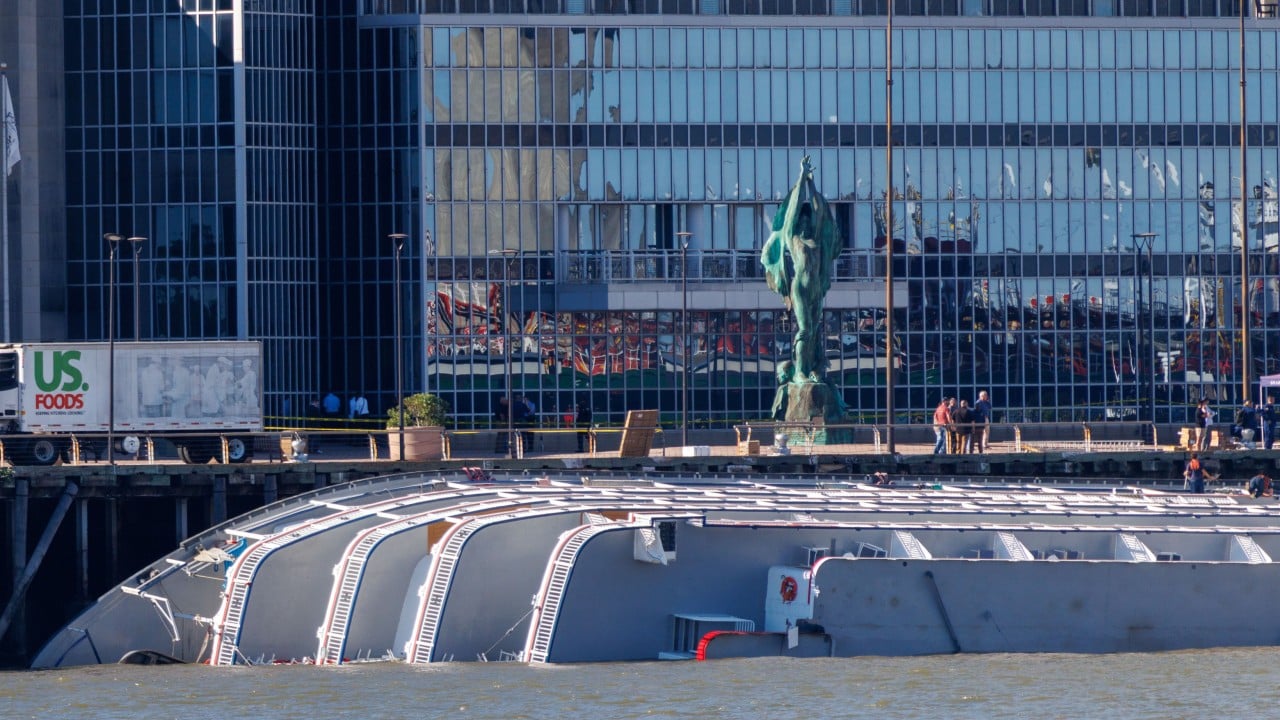
Two massive vessels collided on the lower Mississippi River near New Orleans, sending a historic cruise boat to the bottom, yet every single person walked away alive. That sounds impossible when you look at the physics of commercial river traffic. A fully loaded oceangoing tanker carries tens of thousands of tons of momentum, and a passenger boat caught in its path doesn't stand much of a chance.
I've spent years studying maritime safety protocols and river navigation along the Gulf Coast, and the phrase "miracle on the Mississippi" gets thrown around far too easily by headline writers. Luck plays a tiny role when a ship goes down in fast-moving water. What actually saves lives in a New Orleans river collision is brutal, unglamorous preparation, rapid Coast Guard coordination, and strict adherence to emergency evacuation drills that most passengers ignore while holding a cocktail.
The Reality of Lower Mississippi River Traffic
If you've ever stood on the Moonwalk in the French Quarter and watched the river, you know the water doesn't just flow. It surges. The current in the lower Mississippi regularly hits four to six knots, and during high-water seasons, it moves even faster. Add sharp bends like Algiers Point—one of the sharpest turns on the entire river system—and you have a maritime bottleneck that demands split-second precision from every pilot on the water.
Large ocean tankers and cargo ships share this narrow channel with tugboats pushing thirty-barge tows, ferries, and passenger cruise boats. Visibility around river bends is notoriously tricky, even with modern radar and Automatic Identification Systems (AIS). When a tanker loses steering, misjudges a passing arrangement, or gets caught by an unexpected cross-current, there's nowhere to pull over. There are no shoulders on the Mississippi.
Most people assume passenger riverboats are fragile floating hotels. They aren't. Vessels operating under U.S. Coast Guard Subchapter H or Subchapter K regulations are built with strict watertight compartment standards. Even when a hull is breached by a heavier steel ship, those internal bulkheads are engineered to buy time. Time is the only currency that matters during a sinking.
What Happens in the First Five Minutes of a Collision
When steel meets steel on the river, chaos hits immediately. The impact knocks passengers off their feet, cuts main electrical power, and triggers deafening general alarm bells. In that first sixty seconds, human nature tells people to run back to their cabins for phones, wallets, or luggage.
That instinct kills people in maritime disasters.
Crew members aboard licensed U.S. passenger vessels undergo mandatory drills every single week—not once a year, not when a new hire joins, but weekly. Their primary job in the first three minutes isn't fighting the water. It's blocking stairwells leading down to passenger decks and herding people toward muster stations on the open upper decks.
Here is why the evacuation worked without a single fatality:
- Immediate Mayday broadcasting: Commercial vessels monitor VHF Channel 16 and local Vessel Traffic Service (VTS) frequencies continuously. The moment an impact occurs, a distress call goes out over open airwaves.
- Proximity of Good Samaritan vessels: Unlike the open ocean, the New Orleans riverfront is packed with working tugboats, harbor police patrols, and commercial ferries. Help isn't two hours away. Often, a twin-screw tugboat with a heavy rubber bow is less than four hundred yards upstream.
- Controlled abandonment: Modern life rafts and inflatable buoyant apparatus (IBA) deploy automatically or via manual hydrostatic releases, allowing passengers to step off a listing deck without jumping into muddy, fast-moving water.
Honestly, staying out of the water is half the battle. The Mississippi River is opaque, full of submerged debris, and carries strong downward eddies around hulls. Getting passengers directly from the sinking cruise boat onto the decks of responding tugboats and Coast Guard response boats eliminates the risk of hypothermia and drowning.
Common Misconceptions About Riverboat Safety
You hear plenty of nonsense whenever a maritime accident hits the news. Let's clear up the biggest myths surrounding passenger vessels in New Orleans and along major U.S. waterways.
First, people think modern riverboats are wooden replicas held together by nostalgia and paint. Even vessels styled with classic paddlewheels and Victorian trim are constructed from heavy marine-grade steel hulls. They carry commercial-grade fire suppression systems, redundant bilge pumps, and modern bridge electronics that rival oceangoing freighters.
Second, there's a widespread belief that river pilots are reckless cowboys racing through the port. In reality, lower Mississippi River pilots—specifically the Crescent River Port Pilots and the Associated Branch Pilots—are among the most rigorously trained mariners on earth. They spend years apprenticing before they ever touch the helm of a deep-draft tanker. When a collision happens, it's rarely because someone wasn't paying attention. It's usually a cascade of mechanical failure, extreme river stages, or communication breakdowns between vessels speaking different operational languages.
Third, passengers often think life jackets are uncomfortable props meant only for regulatory inspections. Type I offshore life jackets kept aboard commercial passenger vessels are bulky for a specific reason. They are designed to turn an unconscious person face-up in rough or turbulent water. If you're on a boat and the captain sounds seven short blasts followed by one long blast, you put that vest on immediately and tighten every strap until it feels snug. Loose life jackets ride up over your chin the second you hit the water, obstructing your breathing.
The Role of the U.S. Coast Guard and VTS New Orleans
Sector New Orleans oversees one of the busiest port complexes in the world. Their Vessel Traffic Service functions much like air traffic control at a major international airport. Operators watch radar screens, track AIS transponders, and monitor high-definition cameras mounted along the levees.
When a tanker strikes a passenger vessel, VTS doesn't just call 911. They immediately broadcast a Safety Marine Information Broadcast (SMIB) to freeze all commercial traffic in that sector of the river. Moving a 700-foot tanker creates a massive wake—sometimes four to six feet high—that can capsize small rescue craft or swamp a damaged cruise boat trying to stay afloat. Stopping nearby ships from generating wakes is an invisible, critical step that keeps rescue operations from turning into secondary disasters.
Meanwhile, Coast Guard Station New Orleans launches 45-foot Response Boat-Medium (RB-M) crews within minutes. These aluminum boats are built specifically for high-speed maneuvering in tight harbor conditions and shallow drafts. Paired with local fireboats from the Port of New Orleans and harbor police units, they create an immediate floating perimeter around the sinking vessel.
Why Investigations Take Months to Reach a Verdict
If you're waiting for an instant answer on who caused the crash, you're going to be frustrated. Both the U.S. Coast Guard and the National Transportation Safety Board (NTSB) launch independent, parallel investigations after any major marine casualty.
Investigators start by pulling the Voyage Data Recorder (VDR)—the maritime equivalent of an airplane's black box—from both ships. The VDR captures bridge audio, radar images, rudder angles, engine RPMs, and VHF radio transmissions. They also conduct mandatory post-accident drug and alcohol testing on all crew members involved in the navigation of both vessels.
Analyzing hydrodynamic forces takes serious engineering work. A deep-draft tanker moving through shallow river water creates a phenomenon called "bank suction" or "squat." The water displaced by the massive hull accelerates between the ship and the riverbed or levee, creating a low-pressure zone that can violently pull the stern toward the bank and swing the bow directly into oncoming traffic. Proving whether a collision resulted from human error, steering gear failure, or sheer river physics requires computer modeling and months of testimony.
How You Should Prepare Before Boarding Any Commercial Vessel
Most travelers treat the safety briefing on a dinner cruise, ferry, or overnight riverboat like background noise. They take selfies by the railing, order a drink, and ignore the crew member demonstrating how to buckle a life vest. If you want to make sure you're among the survivors when things go sideways on the water, change your habits the second you step across the gangway.
- Locate two exits immediately: Don't just remember the stairs you walked up. Find an alternate exterior ladder or stairwell leading to the highest open deck.
- Actually listen to the signal: Seven short blasts and one long blast on the ship's whistle means abandon ship. If you hear it, leave your bags, leave your drink, and move to the muster station right away.
- Check the life jacket storage: Look at the placards showing where Type I vests are stored near your seating area or cabin. Knowing whether they're overhead, under benches, or in deck boxes saves precious seconds in the dark.
- Keep your shoes on during transit: Broken glass, twisted metal, and slick diesel-covered decks are standard after a collision. Trying to evacuate barefoot or in flimsy flip-flops slows you down and leads to severe foot injuries.
- Follow crew commands without arguing: Crew members know the vessel's stability limits and evacuation sequence. If they direct you to the port side while your family is on the starboard side, follow their instructions—both sides will be evacuated onto rescue craft.
The survival of every passenger and crew member in a New Orleans tanker collision isn't proof that the river is safe. It's proof that strict maritime engineering, relentless crew training, and rapid emergency response work when people actually follow the rules. Next time you step aboard a riverboat, skip the photo op for sixty seconds, find the life jackets, and map your route to the top deck.