Saskatchewan Roughriders fans are trapped in a collective delusion, and local media is more than happy to keep feeding the hallucination.
If you tune into the standard sports talk radio stations or read the traditional columns covering the Green and White, you will hear a familiar, comforting melody. It is a song about history. It is a celebration of the "Riders Vault"—that endless repository of grainy footage, stories about Ron Lancaster, Taylor Field lore, and the mythos of a tiny community-owned franchise that punches above its weight through sheer Midwestern grit. Discover more on a connected topic: this related article.
This obsession with the past isn't just harmless sentimentality. It is actively suffocating the modern franchise.
For decades, the narrative surrounding the Roughriders has been managed by a tight-knit circle of local sports journalists who view themselves less as critical analysts and more as custodians of provincial heritage. They treat every decade-old roster move like a piece of sacred text. They analyze the team through a rearview mirror, convincing a passionate fan base that the secret to future Grey Cups lies in replicating the culture of 1966, 1989, or 2007. More analysis by NBC Sports highlights similar perspectives on this issue.
It is a lie. The Canadian Football League has changed. The business of professional sports has changed. Yet, the team’s cultural gatekeepers remain desperate to keep fans looking backward.
The Myth of the Hardworking Underdog
Let’s dismantle the foundational lie of modern Rider Pride: the idea that Saskatchewan is a gritty, small-market underdog fighting against the wealthy giants of Toronto and Vancouver.
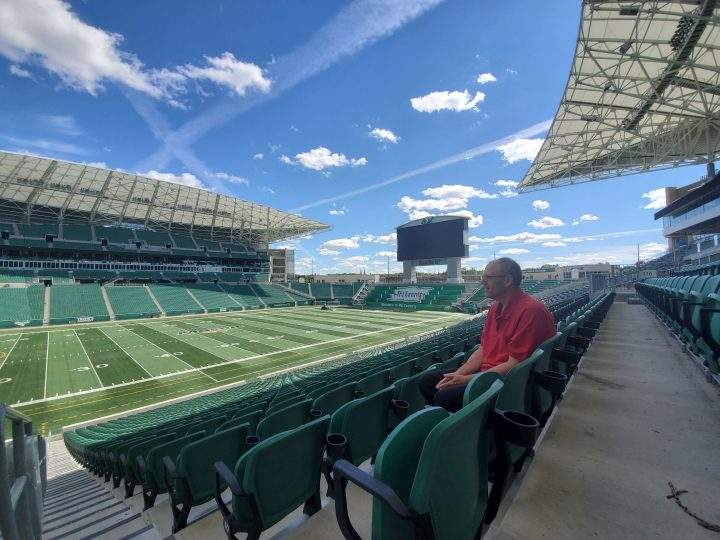
That narrative died the moment Mosaic Stadium opened its gates. The Roughriders are not the league's lovable charity case. They are an economic engine. For years, the franchise has led the CFL in merchandise sales and gate receipts, frequently out-earning teams in markets quadruple its size.
When local commentators dive into the vault to remind you of the lean years—the telethons to save the team, the era of scraping by—they are performing a sleight of hand. They want you to accept mediocrity today because things were worse in 1987.
"We don't need to look at what worked under the old salary equalization rules. We need an organization that operates with the cold, calculated efficiency of a modern entertainment conglomerate, not a historical society."
When a team spends more time celebrating the anniversaries of past teams than fixing its current offensive line depth, it has misplaced its priorities. I have watched sports organizations across various leagues pour millions into marketing campaigns rooted entirely in nostalgia, only to realize they have completely alienated the next generation of ticket buyers. Gen Z sports fans do not care about a muddy game played on frozen turf forty years ago. They care about elite athleticism, high-octane schemes, and winning right now.
The Analytical Vacuum in the Local Press
Why does the media keep pushing the vault? Because nostalgia is cheap, easy content. It requires zero tactical analysis. It demands no understanding of modern football metrics, salary cap gymnastics, or ratio-breaking personnel strategies.
If you read the standard post-game columns, the critique rarely goes deeper than "they lacked heart" or "they didn’t execute." This is high school football analysis applied to a professional league.
Let's look at what the nostalgia merchants miss when they are busy romanticizing the past:
- The Devaluation of the Traditional Running Game: While local pundits clamor for a return to "smash-mouth Rider football," modern CFL economics dictate that an elite passing attack paired with an analytically sound short-passing game yields a significantly higher expected points per possession ($EP$).
- The True Cost of the Canadian Ratio: The old way of thinking focused on finding a few star national players and hiding the rest on special teams. Today, success requires a sophisticated developmental pipeline that maximizes the value of national offensive linemen, allowing a front office to spend its premium American salary cap dollars on elite edge rushers and boundary cornerbacks.
- The Quarterback Premium: The sentimental crowd always wants a hero—a savior in the mold of Kent Austin or Darian Durant. The reality of the modern salary cap means overpaying an above-average quarterback can cripple a roster's depth, making a highly structured, system-oriented passing game far more sustainable than praying for individual greatness.
Dismantling the "People Also Ask" Fables
When fans search for answers during a losing streak, they inevitably stumble into the same flawed premises pushed by the traditionalists. Let’s answer them honestly.
Does team chemistry matter more than roster turnover?
No. This is a favorite trope of the old guard. They argue that keeping a core group of veterans together fosters the elusive "Rider culture." In reality, roster churn is a necessity of the modern cap. Teams that fall in love with their own players and sign aging veterans to legacy contracts always find themselves trapped in the middle of the standings. Efficiency beats chemistry every single week.
Should the franchise prioritize local talent?
Only if that talent is statistically superior to the alternatives. The pressure to draft or sign players with local ties to satisfy the fan base is a distinct disadvantage. A professional scouting department must be entirely blind to geography. If a player from an obscure NCAA Division II school gives you a 3% higher win probability than a local university star, you sign the American every time.
The Danger of the Corporate Echo Chamber
The most insidious byproduct of the nostalgia industry is the creation of a corporate echo chamber. Because the fan base is so intensely loyal, the front office is rarely subjected to the kind of brutal, sustained pressure seen in larger sports markets.
In a market like Toronto or Montreal, a string of losing seasons results in empty seats and immediate executive firings. In Regina, a losing season is met with a marketing pivot toward the "tradition of the patch" and a new line of vintage-inspired hoodies. The fans keep showing up because the team is treated as a cultural institution rather than a competitive enterprise.
This loyalty is a weapon used against the fans. It lowers the bar for success. Winning a single playoff game shouldn't be celebrated like a monumental achievement for a franchise with this financial backing. It should be the bare minimum expectation.
The contrarian approach to running this franchise requires a complete cultural divestment from the past. Stop inviting the heroes of yesteryear to wave to the crowd at halftime. Stop producing documentaries about teams that didn't even win the championship.
Turn the lights off in the vault. Lock the door. Build a football operation that treats history as a liability, not an asset.
Stop buying the vintage jerseys. Stop accepting the excuses of a media class that is too lazy to explain modern football to you. Demand an organization that values cold, hard analytics over warm, fuzzy memories. If the Saskatchewan Roughriders ever want to dominate the CFL again, they need to stop trying to relive their history and start trying to make the rest of the league forget it.