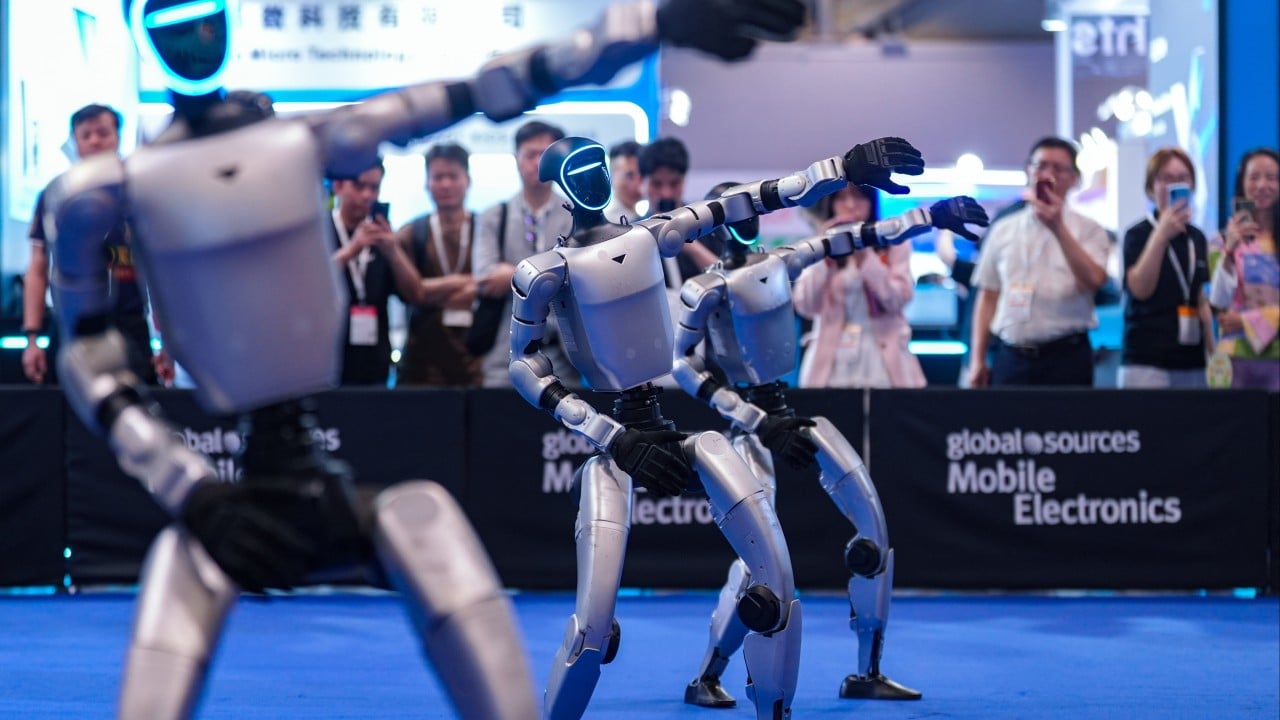
Most humanoid robots are useless. They walk like they need a restroom, wave at tech conferences, and lift empty cardboard boxes for promotional videos. It is theater. Tech companies love showing off these multi-million dollar science projects because they drive stock prices up, but businesses do not buy theater. They buy productivity.
That narrative just broke.
Nvidia, Unitree, and Sharpa teamed up to build a humanoid robot meant for actual labor. Not a pilot program. Not a research paper. Real, grueling, repetitive industrial work. By combining Nvidia’s computational brain, Unitree’s agile physical hardware, and Sharpa’s deep industrial automation software, this trio wants to bypass the hype and drop functional machines directly onto factory floors.
If you think general-purpose robots are still a decade away, you are misreading the pace of development. The pieces are already on the board.
The Problem With Silicon Valley's Walking Mannequins
Hardware is hard, but it is no longer the bottleneck. Look at the Unitree H1 or the newer G1 models. They can flip, run, recover from brutal kicks, and navigate uneven terrain. They cost a fraction of what older legacy platforms used to run.
The real issue is intelligence. Specifically, spatial intelligence and task adaptation.
Historically, factory robots required explicit programming. If you wanted a robotic arm to move a part, an engineer wrote code specifying the exact geometric coordinates. Move three inches left. Drop claw. Close grip. Lift. If the part shifted two centimeters to the right, the robot failed, threw an error, or crushed the component.
That approach fails instantly in a dynamic warehouse or manufacturing plant. Humans do not think in coordinates. We see an object, understand its mass, adapt our grip based on texture, and move it while avoiding a coworker who just walked into our blind spot. Giving a machine that level of common sense requires an absurd amount of compute power and simulation.
That is where the collaboration comes in.
Nvidia Is Giving the Machine a Mind
You cannot train a robot in the real world. It is too slow, too expensive, and dangerous. If a six-foot metal humanoid glitches during training, it smashes through a concrete wall or breaks its own expensive actuators.
Nvidia solves this through its Isaac platform and Project GR00T, a foundational model designed specifically for humanoid robots. Instead of training a robot for five hours in a physical lab, Nvidia spins up thousands of digital twins inside a simulated environment. The robot trains inside a virtual universe at ten times normal speed. It fails millions of times, learns what works, corrects its balance, and refines its grip before the physical hardware ever turns on.
[Physical World Sensors] -> [Nvidia GR00T Real-time Inference] -> [Unitree Actuator Response]
                                        ^
                        [Sharpa Industrial Logic Layer]
This simulation pipeline changes everything. When the software finally flashes onto the Unitree chassis, the robot already possesses the equivalent of decades of operational experience. It understands physics, torque, and spatial awareness.
Sharpa Bridges the Gap to the Factory Floor
A smart robot that can walk is still just a toy if it does not understand factory workflows. This is the missing link most tech commentators ignore. You cannot just drop a brilliant, autonomous humanoid into a BMW or Amazon facility and expect it to know what to do. It needs to interface with Manufacturing Execution Systems (MES) and Warehouse Management Systems (WMS).
Sharpa provides that operational layer. They build the software that translates high-level corporate logistics into specific robotic tasks.
Think of it this way. Nvidia provides the brain. Unitree provides the body. Sharpa provides the trade school education.
Without Sharpa, the robot is a genius who does not know how to read a blue-collar work order. With them, the robot connects directly to the factory's central server. It knows which pallet needs unloading, which components are defective, and where to store raw materials without human intervention.
This Is Not About Replacing Humans Right Away
The immediate goal isn't mass layoffs. It is filling the massive, growing labor shortage in heavy industry.
According to data from the Manufacturing Institute, the industry faces hundreds of thousands of unfilled roles. Younger generations do not want to work in hot, loud facilities lifting 50-pound components for eight hours a day. The turnover rate in fulfillment centers is notorious.
The Nvidia, Unitree, and Sharpa partnership targets these exact pain points. They are focusing on three specific tasks:
- Palletizing and Depalletizing: Moving heavy, awkwardly shaped goods from shipping containers to conveyor belts.
- Machine Tending: Loading raw metal or plastic into CNC machines and removing finished parts.
- Intralogistics: Transporting materials across massive factory footprints where traditional automated guided vehicles (AGVs) get stuck.
These jobs are boring, physically punishing, and prone to causing workplace injuries. By deploying humanoids here, companies can shift human workers into supervisory roles, maintenance, and quality control.
What Opponents Get Wrong About Humanoid Costs
The loudest critics always point to price. "A humanoid costs $150,000, but a forklift costs a fraction of that," they argue.
They are comparing apples to wrenches. A forklift requires a human operator, who commands a salary, benefits, and vacation days. A forklift cannot climb stairs, open a security door, or use a hand tool.
Furthermore, the hardware cost curve is plummeting. Unitree shocked the robotics world by pricing its smaller G1 humanoid at a base price of around $16,000. While an industrial-grade version packed with Nvidia chips and Sharpa integration will cost significantly more, the total cost of ownership is quickly dropping below the annual cost of human labor shift-for-shift.
When a machine can operate three consecutive shifts a day with nothing but a battery charge, the financial math becomes undeniable for manufacturing executives.
How to Prepare Your Workflow for the Automation Wave
This technology is moving fast. If you run a manufacturing plant, warehouse, or logistics firm, sitting on the sidelines until these robots are perfect is a recipe for irrelevance. Your competitors are already building the infrastructure to support them.
First, audit your data environment. These robots require clean, interconnected digital ecosystems. If your facility still relies on paper logs, whiteboards, or siloed legacy software, no AI robot will save you. Prioritize updating your warehouse management software so it can eventually talk to platforms like Sharpa.
Second, rethink your facility layout. Humanoid robots are designed to fit into human spaces, but they still benefit from clear signage, predictable pathways, and standardized bin sizes. Small tweaks to your environment today will make autonomous integration seamless tomorrow.
The humanoid worker isn't a sci-fi trope anymore. The alliance between silicon, steel, and industrial software just made it a line item on next year's corporate budget.