The media cycle treats every claim about a seized vessel like a trailer for World War III. When headlines shriek about a "hole in the engine room" or dramatic maritime seizures in the Strait of Hormuz, the public hyperventilates. It is theater. It is noise. It is designed to keep you staring at the screen while the real power dynamics shift entirely elsewhere.
I have spent decades watching these patterns play out. I have seen administrations use these phantom skirmishes to distract from domestic policy failures, and I have seen analysts trade their reputations by predicting regional firestorms that never ignite.
The story of the TOUSKA is not a story of military prowess or international law. It is a story of information warfare being weaponized for domestic political clout.
The Illusion Of Control
When a politician claims a vessel was seized or "dealt with," the immediate reaction is to analyze the tactical feasibility. Did a strike happen? Was there an boarding party? Forget that. The tactical reality is secondary to the signal being broadcast.
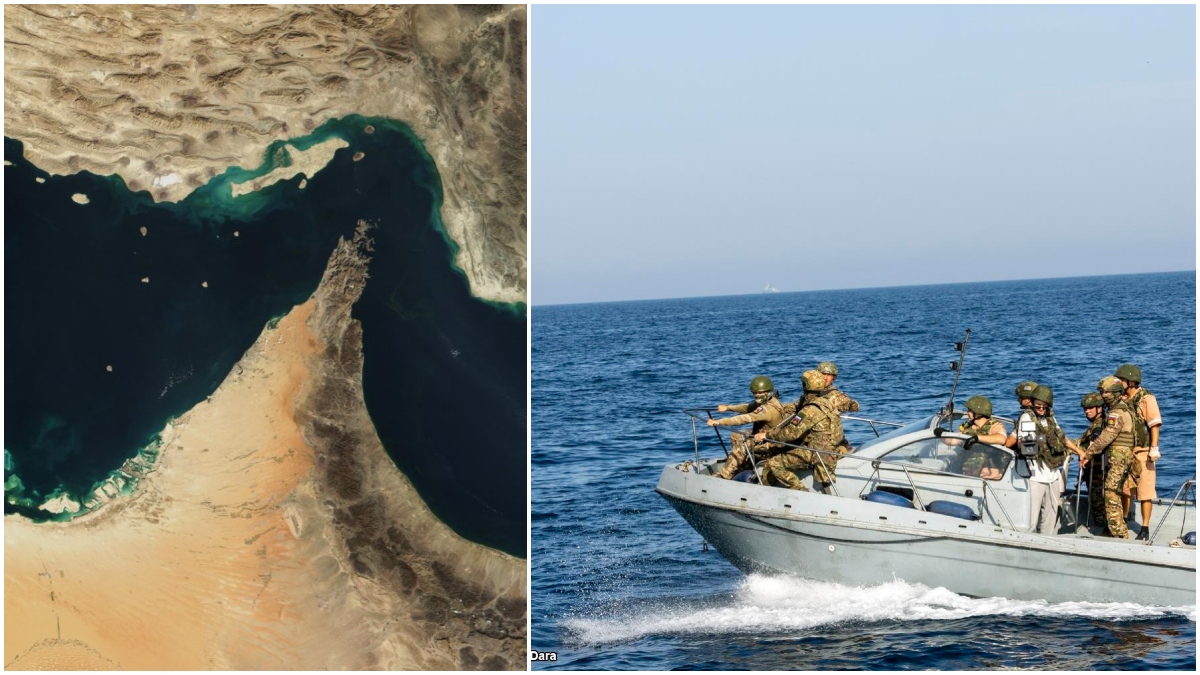
The Strait of Hormuz is the world's most congested chokepoint. It is shallow, narrow, and saturated with Iranian surveillance drones, small attack craft, and global intelligence gathering assets. If a significant military engagement actually occurred—one that "blew a hole" in an engine room—the photographic evidence would be circulating in minutes. We live in an era of ubiquitous satellite imagery and commercial tracking services that can see a deck cargo shift from orbit.
If you don't see the evidence, the event did not happen in the way you were told.
The "lazy consensus" here is that these events represent a linear escalation toward open conflict. They do not. They represent a calibrated maintenance of the status quo. Both sides—the US and Iran—have a vested interest in keeping the temperature just below the boiling point. It allows them to maintain domestic narratives of "strength" without triggering the catastrophic economic shock that a genuine closure of the Strait would cause.
Why You Are Being Played
Understand the math of these claims. By focusing on the dramatic "seizure," the narrative shifts away from the mundane reality of the global energy trade.
- Diversification: The global energy grid is far more resilient than it was in 1973. Pipelines, strategic reserves, and shifting consumption patterns mean that a localized event in the Strait is an irritation, not a terminal blow.
- Signaling: These claims are often aimed at internal audiences. For a political actor in the US, being "tough on Iran" is a reliable way to score points. For the Iranian leadership, claiming a confrontation—even a fabricated one—serves to consolidate nationalist sentiment against external pressure.
- The Credibility Gap: Every time a major news outlet parrots an unverified claim, they lose a sliver of credibility. Yet, they continue because fear sells. Your attention is the commodity being traded here.
The Real Strategic Game
While you are debating whether a ship was crippled in the Middle East, the actual power plays are happening in boardrooms and through quiet, non-kinetic measures.
Imagine a scenario where a state actor decides that physical control of a waterway is less efficient than controlling the insurance rates for the vessels passing through it. They don't need to fire a shot to bleed an economy. They simply need to make the risk-premium for shipping so high that trade patterns shift naturally. This is the "hidden" war. It is fought with lawyers, underwriters, and silent cyber-attacks on logistics software. It is boring. It is slow. And it is entirely real.
I have seen companies blow millions on security consulting for the Strait of Hormuz, only to have their supply chains paralyzed by a simple bureaucratic change in maritime insurance regulations. That is where the power resides. Not in a hole in an engine room.
Dismantling The Experts
The pundits who dominate your feeds are addicted to the "escalation ladder" theory. They believe every action is a step toward a total confrontation. They are wrong. International relations in the 21st century is not a game of chess; it is a game of messy, constant friction.
When you hear a report about a seized vessel, ask yourself:
- Who benefits from the public believing this?
- Where is the independent, non-governmental verification?
- What distraction does this provide from a failing domestic policy or a sagging poll number?
If the answer points to a political actor, disregard the tactical details. You are being sold a story, not being informed about a conflict.
Stop Searching For The Spark
People often ask if we are on the precipice of a regional war. The question is fundamentally flawed because it assumes a "pre-war" state. We are already in a state of perpetual conflict. It is a gray-zone struggle. It is conducted through sanctions, espionage, proxy support, and rhetorical posturing.
Stop waiting for the "big event." The big event is happening right now in the form of your exhausted attention span.
The next time a headline pops up about a vessel in the Strait, look at the date of the report and the source of the claim. Then, close the tab and check the price of Brent Crude or the shipping insurance indices. You will find that while the news cycle is screaming about fires on the water, the market is already pricing in the reality that nothing has actually changed.
Confidence is the enemy of truth in international affairs. Those who are certain about what is happening in the Strait are those who benefit from you remaining confused. Keep your head down, follow the money, and stop mistaking press releases for military history. The theater is closing, and the people running the show hope you stay long enough to miss the exit.