Rain on a Scandinavian slate roof has a sound like shifting coins. It is a dry, whispering rattle that tells you the sea is close, even when you cannot see it through the gray mist pressing against the windowpane. On a damp morning in Oslo, that sound belonged to a city holding its breath.
For nearly thirty-four years, the map of Norwegian life featured a fixed coordinate. You could disagree with him, you could pass him on a bicycle in Bygdøy without a police escort, you could watch him steer a wooden sailboat through freezing waters with hands that had fought off age and illness with stubborn Norwegian grit. King Harald V was simply there. A fixture. Like the fjords carved by ancient ice or the granite bones of the hills holding up the capital.
Then the rain kept falling, and the flag at the Royal Palace slipped slowly down the mast.
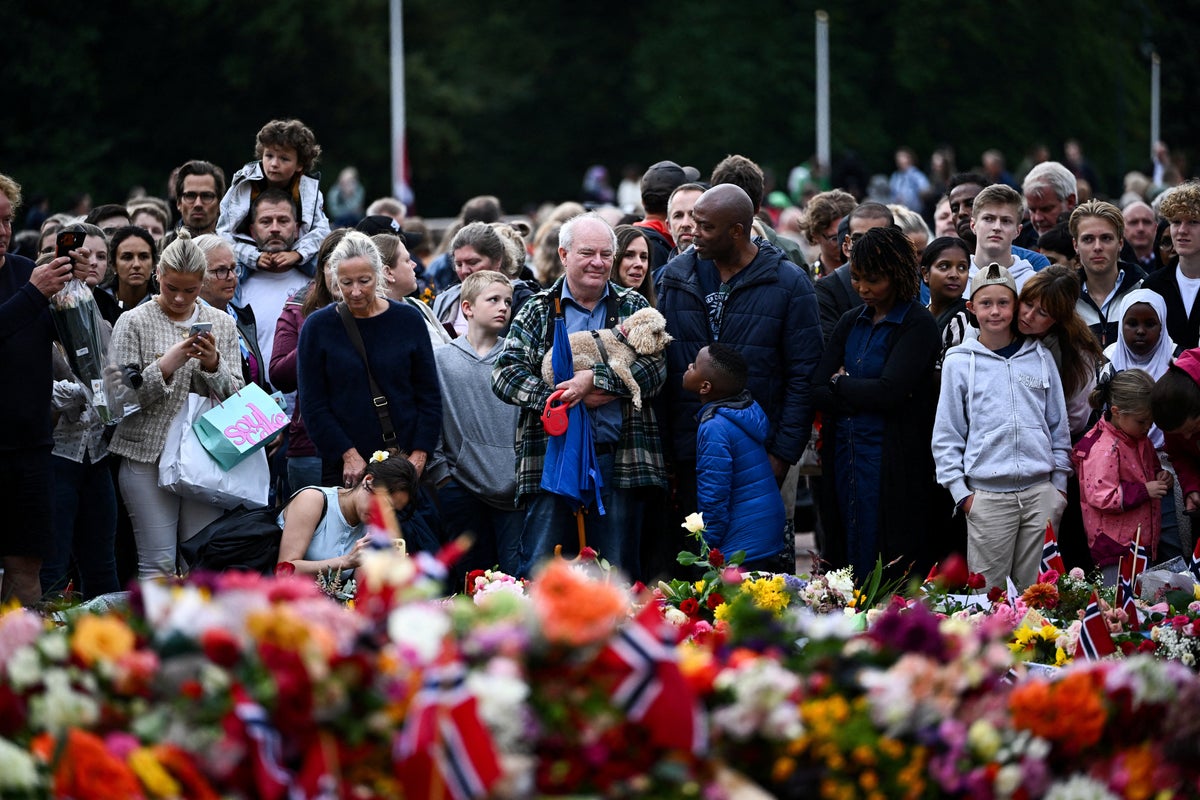
Let us be entirely honest about what a constitutional monarchy actually is in the twenty-first century. It is an expensive, anachronistic parlor trick. It defies logic. It asks rational, tax-paying citizens to invest their deepest patriotic yearnings in a bloodline rather than a ballot. Yet, when the old sailor finally let go of the tiller, tens of thousands of people who claim to despise pageantry walked through the freezing drizzle to leave candles on wet cobblestones.
Why? Because human beings are terrible at mourning abstractions. You cannot weep for a gross domestic product. You cannot place a hand on the cold shoulder of a legal statute. We need faces. We need a physical embodiment of our own collective age, our own frailties, our continuity.
Think about what Harald carried. He was not born to a throne of easy triumph. He was a child of war. In 1940, when German bombers turned Norwegian towns into smoking matchsticks, a four-year-old prince was smuggled out of the country in the back of a truck, crossing into neutral Sweden hidden beneath blankets while his mother wept for a burning homeland. He spent his formative years in exile in Washington, D.C., watching his father direct a government from across an ocean, learning early that a crown is not a piece of jewelry. It is an obligation.
Decades later, when he took the oath in 1991 following the death of his father, King Olav V—the beloved "People’s King" who had skied alongside commoners during wartime fuel shortages—the weight was crushing. How do you follow a legend? You do not try to be a legend. You simply become human.
Harald understood something profound about modern survival: dignity does not require distance. While other European houses wrapped themselves in velvet and isolation, Harald and Queen Sonja lived a life that felt remarkably close to the soil of their people. When his son, Crown Prince Haakon, fell in love with Mette-Marit Tjessem Høiby—a single mother with a working-class background and a turbulent past that made traditionalists choke on their morning aquavit—the old King made a quiet, radical choice. He approved the marriage.
That was not just a father yielding to a son. That was an institution updating its software to match the messy, democratic reality of the country it served.
I remember standing near the harbor in Oslo years ago when an elderly man in a faded fisherman’s sweater pointed a gnarled finger toward a passing car where the King sat in the front passenger seat, window rolled halfway down despite the chill, waving back with a tired, rumpled smile. The old fisherman didn't bow. He didn't take off his hat. He just nodded, a peer acknowledging another worker who had stayed on the job long past retirement age.
That was the Harald era. A reign defined by resilience in the face of failing joints, failing heart valves, and the relentless, microscopic scrutiny of the modern press. He outlived cancer treatments, foot surgeries, and the quiet private agonies that accompany growing old in a fishbowl. When critics whispered that it was time for him to step aside, to let youth take the wheel, Harald simply pointed out the obvious: he had taken an oath for life. In a disposable culture where politicians change their convictions as often as their tailors, stubborn longevity has its own moral gravity.
Now, the transition has arrived.
Norway enters a new royal era under King Haakon VIII—or whatever regnal name the new monarch chooses, though for now the nation watches Crown Prince Haakon step across the threshold with the heavy stride of a man who has spent thirty years preparing for an afternoon he never really wanted to happen.
Transition is a strange emotional weather. It is the sudden realization that the safety net of the past has dissolved. The elders who remembered the war are almost entirely gone now. The King who embodied the postwar rebuilding, the social democracy, the quiet humor, and the egalitarian mythos of the Norwegian soul is gone too.
Outside the palace gates, the mounds of white roses and yellow chrysanthemums grow higher by the hour, beaten flat by the relentless North Sea drizzle. Children sit on their fathers' shoulders, holding plastic lanterns that flicker against the gathering dark. They are too young to remember Harald’s youth, but they understand the language of loss.
The crown passes. The fjord remains. And somewhere out on the dark water, beneath a sky the color of a wet slate, the tide keeps turning.