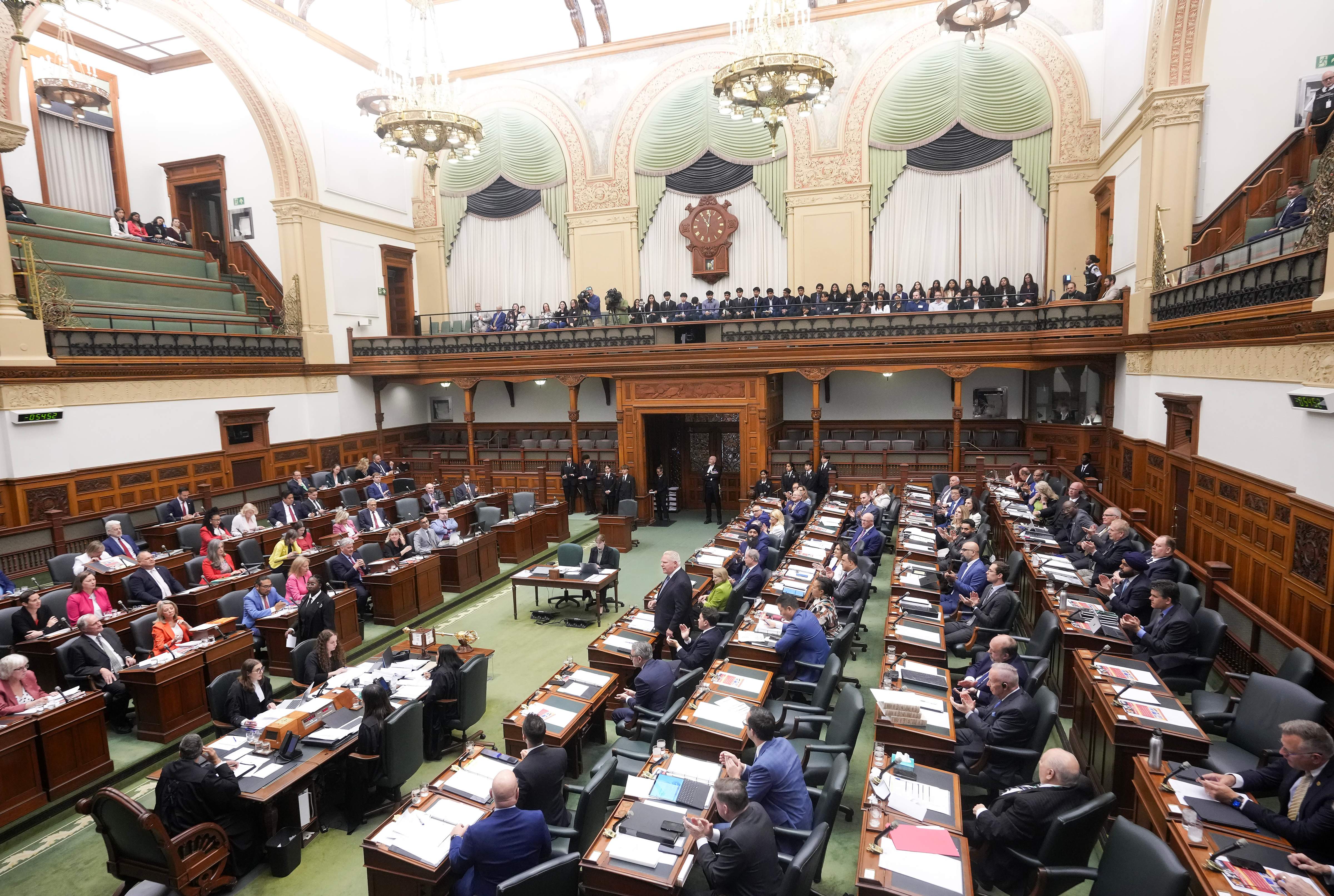
When a provincial legislature reconvenes after a 21-week recess, the resulting legislative calendar functions less as a routine administrative schedule and more as a concentrated stress test of fiscal, regulatory, and operational capacity. For the Doug Ford administration in Ontario, the post-recess docket centers on three distinct structural interventions: the restructuring of municipal recycling into an Extended Producer Responsibility model under the Blue Box program, the calibration of retail and supply chain mechanics in the cannabis sector, and the management of the provincial fiscal deficit. Understanding this legislative session requires analyzing how these three initiatives interact across regulatory economics, public-private cost shifting, and macroeconomic constraints.
The Three Pillars of the Post-Recess Agenda
A surface-level reading of the legislative docket treats waste management, controlled substance distribution, and public finance as isolated policy tracks. In practice, they represent a unified attempt to alter the balance sheet of the provincial government while managing voter expectations and private-sector friction. If you found value in this piece, you might want to look at: this related article.
- Cost-Shifting via Regulatory Redesign (The Blue Box Transition): Moving financial and operational liability for residential recycling from municipal taxpayers to product producers.
- Market Liberalization vs. Supply Bottlenecks (Cannabis Retail): Attempting to capture illicit market share through retail expansion while contending with wholesale distribution constraints.
- Fiscal Consolidation Under Political Constraints (The Deficit): Reducing the structural gap between provincial revenues and expenditures without triggering severe public-sector labor disruptions or alienating core voter demographics.
Each pillar relies on distinct economic mechanisms, and failure in one creates downstream fiscal or political liabilities in the others.
Pillar One The Economics of the Blue Box Transition
The reform of Ontario’s Blue Box program illustrates the operational mechanics of Extended Producer Responsibility (EPR). Under the legacy model, municipalities and provincial taxpayers funded roughly half of the net costs of collecting and sorting residential packaging and printed paper, while producers covered the remainder. This split-responsibility structure created a classic principal-agent problem: municipalities bore the operational burden of managing increasingly complex, non-recyclable packaging materials, while consumer packaged goods companies faced weak financial incentives to design packaging for end-of-life recovery. For another look on this event, check out the latest update from NPR.
Transitioning to full producer responsibility alters this incentive structure through three specific mechanisms:
- Internalization of Externalities: By requiring producers to fund 100 percent of collection and processing costs, the policy forces companies to price end-of-life waste management into their production and packaging design decisions. Lighter, mono-material packaging becomes financially advantageous compared to multi-layered plastics that are expensive to sort.
- Standardization of Collection Metrics: Under municipal administration, acceptable materials varied significantly across Ontario’s 444 municipalities, creating confusion for consumers and high contamination rates in recycling streams. A unified, producer-led framework allows for standardized province-wide material lists, reducing sorting friction at Material Recovery Facilities.
- Municipal Balance Sheet Relief: Offloading waste management expenses frees up municipal property tax revenues. However, this does not eliminate the cost to the consumer; instead, it shifts the payment mechanism from a visible municipal tax to an embedded, often invisible retail price adjustment across consumer goods.
The primary operational risk in this transition lies in governance and market concentration. When producers form Producer Responsibility Organizations (PROs) to manage collection on their behalf, regulators must prevent monopolistic pricing or under-servicing of rural and northern communities where logistics costs per ton are substantially higher than in the Greater Toronto Area. Without strict enforcement of diversion targets and geographic service minimums, full producer responsibility risks degrading collection standards to minimize corporate compliance costs.
Pillar Two Cannabis Distribution and the Retail Bottleneck
The second major item on the legislative agenda involves the ongoing maturation of Ontario’s legal cannabis market. Following the initial rollout of private retail licensing, the sector faced acute structural imbalances between supply, wholesale distribution, and physical retail density.
To evaluate the administration's adjustments to cannabis policy, one must separate the retail layer from the wholesale layer:
- The Retail Layer: Expanding the number of private retail storefronts directly addresses geographic accessibility, which is the primary driver in converting consumers from the illicit market to the legal channel. Higher store density reduces travel time, increases price competition, and forces retailers to differentiate through product curation and customer service.
- The Wholesale Bottleneck: Regardless of how many private storefronts open, all legal retailers in Ontario must purchase inventory through a single provincial crown corporation, the Ontario Cannabis Store (OCS). This creates an hourglass supply chain. Thousands of licensed producers feed into a single wholesale distributor, which then supplies hundreds of retail outlets.
When the legislature modifies retail licensing caps or adjusts operational rules—such as permitting click-and-collect services or delivery—it stimulates downstream demand. Yet if the centralized wholesale infrastructure lacks the warehouse automation, inventory forecasting, or fulfillment capacity to match retail expansion, the system experiences stockouts of high-demand SKUs and capital lockup for independent store owners.
Furthermore, taxation and regulatory compliance costs keep the legal retail price floor artificially high compared to legacy illicit operators who pay neither excise duties nor commercial compliance overhead. Legislative tweaks to retail rules will yield diminishing returns in illicit market capture unless paired with wholesale margin compression and streamlined excise structures that allow legal operators to compete on price per gram.
Pillar Three Deficit Mechanics and Fiscal Consolidation
The overarching constraint governing every bill introduced after the 21-week break is the provincial deficit. A structural deficit occurs when government expenditures consistently exceed revenues even during periods of baseline economic growth, meaning the shortfall cannot be resolved merely by waiting for a cyclical economic upswing.
Addressing a structural deficit of this scale requires pulling one or more of three macroeconomic levers, each carrying distinct political and economic trade-offs:
- Expenditure Compression: Reducing the rate of growth in program spending. Because healthcare and education consume the vast majority of the provincial operating budget, meaningful expenditure compression cannot be achieved solely by trimming administrative overhead or cancelling minor discretionary grants. It requires altering compensation growth curves for public-sector employees, restructuring service delivery models, or tightening eligibility criteria for social programs.
- Revenue Enhancement: Increasing tax rates, expanding the tax base, or introducing new user fees. For an administration elected on a platform of lowering the cost of living and reducing business friction, broad-based income or corporate tax hikes are politically non-viable. Consequently, revenue generation relies heavily on indirect mechanisms: economic growth expanding the existing tax base, increased dividends from crown corporations, or monetizing provincial assets.
- Debt-Service Management: Managing the maturity profile of provincial bonds to insulate the budget from interest rate volatility. Every dollar allocated to servicing existing debt represents a dollar unavailable for capital infrastructure or core public services.
The interplay between the deficit and the other agenda items becomes clear when viewing the budget as a unified system. Shifting Blue Box costs onto producers removes a recurring operational liability from public ledgers. Optimizing the cannabis retail framework increases excise tax remittances and wholesale dividends flowing into provincial coffers, effectively utilizing sin-tax revenue to offset general deficit pressures.
Second-Order Effects and Operational Friction
Legislative agendas rarely fail due to flawed high-level concepts; they fail at the point of execution where competing policies collide. Across these three priorities, two critical second-order effects warrant close monitoring by businesses and policy analysts.
First is the regulatory compliance burden on small and medium-sized enterprises (SMEs). While large multinational consumer goods corporations possess the legal and supply chain teams necessary to navigate complex EPR reporting under the new Blue Box rules, smaller regional manufacturers and importers face disproportionate administrative overhead. If compliance thresholds are poorly calibrated, the policy inadvertently consolidates market share among large incumbents while squeezing regional producers.
Second is the inflationary pass-through to households. The administration faces intense public scrutiny over household affordability. Yet shifting recycling costs to producers and relying on consumption-based revenues indirectly raises the baseline cost of everyday consumer staples. While these measures protect the provincial income tax rate and municipal property tax bills, households still absorb the financial impact at the grocery checkout counter.
Limitations of the Legislative Approach
Even flawlessly executed bills face hard structural limits. First, regulatory restructuring cannot solve global supply chain inflation or macroeconomic interest rate pressures, both of which directly inflate the cost of provincial infrastructure projects and debt servicing. Second, in the cannabis sector, provincial legislation cannot unilaterally alter federal excise tax formulas or federal packaging restrictions, both of which severely constrain product innovation and margin flexibility for legal operators. Finally, the 21-week recess itself compresses the legislative calendar, increasing the risk that complex bills are passed through committee with insufficient technical scrutiny, requiring corrective regulatory amendments in subsequent sessions.
Strategic Action for Stakeholders
Organizations operating within Ontario’s consumer goods, retail, and public-adjacent sectors must adjust their operational planning immediately to account for this compressed legislative window:
- Consumer Packaged Goods Producers and Retailers: Audit all packaging SKUs for material composition and recyclability metrics immediately. Modeling the financial impact of 100 percent EPR fee schedules on gross margins—and redesigning packaging toward mono-material inputs—must occur before PRO fee structures lock in.
- Cannabis Operators and Ancillary Service Providers: Shift capital allocation away from aggressive physical storefront expansion in saturated urban corridors and toward inventory turnover optimization, data-driven SKU selection, and customer retention mechanics to survive margin compression.
- Municipalities and Public Sector Contractors: Prepare for a protracted period of fiscal restraint at the provincial level. Capital projects dependent on provincial matching grants should undergo immediate sensitivity testing for delayed disbursements or stricter cost-overrun caps.