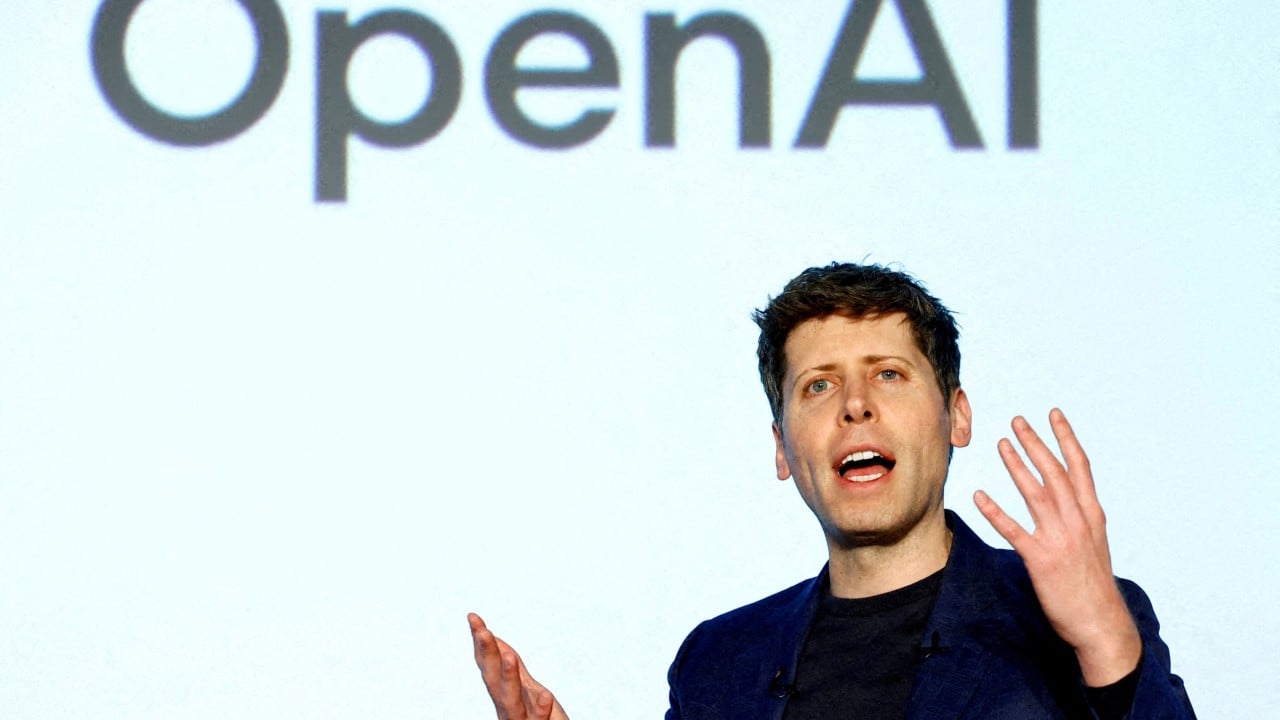
The tech press is salivating over a phantom war.
Following Sam Altman’s recent posturing about driving API costs down to near-zero, the consensus narrative has solidified: OpenAI, Anthropic, and a cohort of Chinese tech giants are locked in a bloody race to the bottom. The headlines scream about a "price war" that will supposedly democratize artificial intelligence, leaving only the most well-funded labs standing.
It is a beautiful, simplistic story. It is also entirely wrong.
What the commentators call a price war is actually a clever magic trick. While gullible enterprise buyers celebrate getting 90% off their input tokens, they are blindly marching into a high-margin proprietary trap.
I have watched Fortune 500 boards burn tens of millions of dollars migrating their entire architectures to whichever LLM provider shaved a fraction of a millicent off their rate card this quarter. It is a fool's errand. If you are building your company’s technical moat on the assumption that cheap foundational model tokens will save your balance sheet, you are being set up for a brutal awakening.
Let us dissect the reality of the situation, dismantle the lazy assumptions about API pricing, and look at the actual math of the AI infrastructure squeeze.
The Economics of the Mirage
The narrative suggests that Sam Altman is cutting prices out of desperation or fierce competition with Anthropic’s Claude 3.5 Sonnet or DeepSeek's aggressive pricing. That is a fundamental misunderstanding of commodity economics.
When Saudi Arabia floods the market with cheap crude, it is not trying to sell cheap oil forever; it is trying to choke out high-cost US shale producers so it can regain pricing power later.
But LLM tokens are not oil.
The marginal cost of computing a token is bound by hardware efficiency (namely, Nvidia’s Blackwell and future Rubin architectures) and power availability. OpenAI is not running a charity. They are lowering prices because of two distinct, non-altruistic mechanisms:
1. Speculative Dumping of Obsolete Compute
The models getting massive price cuts are almost always previous-generation architectures or heavily distilled "mini" variants (like GPT-4o mini). These are highly optimized, pruned models that cost OpenAI next to nothing to run on their depreciated H100 clusters. They are clearing out digital inventory. Calling this a "price war" is like claiming a grocery store is in a price war because they put bruised bananas on the clearance rack.
2. The Proprietary Handcuff Strategy
The cheap API token is a loss leader. If you build your entire application layer around OpenAI’s specific structured outputs, their assistants API, and their proprietary embedding spaces, the cost of switching providers becomes astronomically high. Once your developer workflows, vector databases, and agentic loops are deeply coupled with one ecosystem, that provider can raise prices, introduce premium "reasoning" tiers, or force you into expensive enterprise support contracts.
You saved $50,000 on API calls this year, only to face a $5,000,000 migration cost when you realize you need to move to an open-weights model on your own hardware.
Dismantling the "People Also Ask" Delusions
Let us address the deeply flawed premises that dominate the industry's current line of questioning.
"Won't cheap API pricing make open-source models obsolete?"
This is the most common industry cope. The logic goes: if OpenAI offers GPT-4 class intelligence for pennies, why would any sane enterprise go through the headache of hosting Llama 3.1 or Mistral models on their own cloud?
Here is the reality from the ground. I have audited enterprise AI pipelines where the raw API cost was actually the smallest line item. The real costs lie in data privacy compliance, latency bottlenecks, and lack of control.
When you query a closed API, you are sending your proprietary operational data across the open internet to a third party. For financial services, healthcare, and defense, "cheap tokens" do not offset the risk of a regulatory compliance penalty.
Furthermore, relying on a closed API means you are at the mercy of their uptime and system changes. We have seen countless developers complain that a stealth update to GPT-4 broke their carefully engineered prompts overnight. With an open-weights model hosted on your own virtual private cloud, you have absolute reproducibility, zero risk of deprecation, and the ability to fine-tune down to the weight level.
Cheap APIs do not kill open source; they act as a gateway drug that forces serious companies to eventually build their own independent infrastructure.
"Should we migrate our workloads to whichever provider is cheapest today?"
No. Stop doing this.
If your engineering team is rewriting prompt templates and changing SDKs every time Anthropic or OpenAI drops their prices by 15%, you are losing more money in developer hours than you are saving on compute.
A high-performing software engineer costs roughly $150 to $250 an hour. If a team of five spends two weeks refactoring, testing, and redeploying a pipeline to switch from Claude to GPT just to save $0.002 per thousand tokens, you have just spent $80,000 in labor to save perhaps $3,000 a year in API fees.
The math simply does not close.
The Hidden Cost of the "Cheap" AI Stack
Let's look at the actual architecture of a modern enterprise AI system.
+-----------------------------------------------------------------+
|                        Your Application                         |
+-----------------------------------------------------------------+
                                |
                                v
+-----------------------------------------------------------------+
|    Middleware / Agentic Framework (LangChain, AutoGen, etc.)    |
+-----------------------------------------------------------------+
                                |
                                v
+-----------------------------------------------------------------+
|         The API Gateway (Where you think the cost is)           |
+-----------------------------------------------------------------+
        |                               |                  |
        v                               v                  v
+---------------+               +---------------+   +--------------+
| Vector DB     |               | Guardrails    |   | Context      |
| Retrieval     |               | & Moderation  |   | Window Bloat |
+---------------+               +---------------+   +--------------+
When you look at this pipeline, you realize the foundational model API is just one small component.
To make a "cheap" model work reliably in a production environment, you have to build massive scaffolding around it. You need complex retrieval-augmented generation (RAG) pipelines, extensive validation steps, and guardrail models to ensure the system does not hallucinate nonsense to your customers.
Here is the catch: cheap models require more context and more reasoning loops to get the same job done.
If you use a highly compressed, cheap model, you often have to prompt it multiple times, run self-correction loops, and feed it massive amounts of few-shot examples to get a structured output that doesn't break your parser.
Imagine a scenario where a high-quality, expensive model (say, $15 per million tokens) gets the job done in a single call with a 1,000-token prompt. Total cost: $0.015.
Now imagine using a cheap model ($1.50 per million tokens). Because it is less capable, you have to feed it 5,000 tokens of context, use a multi-step chain-of-thought prompt, and run three parallel calls to vote on the best answer.
- Call 1 (Context + Prompt): 6,000 tokens ($0.009)
- Call 2 (Self-Correction): 4,000 tokens ($0.006)
- Call 3 (Verification): 3,000 tokens ($0.0045)
- Total Cost: $0.0195
You used the "cheap" model, yet you paid more in total API fees, introduced massive latency, and increased the points of failure in your system.
The Strategic Path Forward
If you want to survive this transition without getting fleeced by the major labs, you need to abandon the chase for cheap API tokens. Instead, adopt a strategy focused on sovereignty and efficiency.
Build an Abstracted Model Gateway
Never write code that directly calls openai.ChatCompletion or anthropic.messages. Build or use an internal gateway layer that standardizes your inputs and outputs. This allows you to route queries dynamically. Simple summarization tasks go to cheap, internal, open-source models; complex reasoning goes to the top-tier proprietary models. You gain leverage. If OpenAI raises prices, you can reroute your traffic with a single configuration change.
Invest in Small, Highly Specialized Models
Stop using generalized 400-billion parameter models for tasks that a highly tuned 8-billion parameter model can do on a single GPU. Companies like Predibase have proven that fine-tuning a small open-source model on a specific task (like extracting JSON from medical records) consistently outperforms GPT-4 at a fraction of the latency and cost.
Admit the Sovereign Downside
The contrarian approach is not free. Hosting your own models means you need internal ML engineering talent. It means you have to manage GPU allocation, deal with cold starts, and keep up with the rapid pace of open-source developments. It is harder than just plugging in an API key and putting a corporate credit card on file.
But if you are building a product where AI is core to your value proposition, relying on a competitor's API rate card as your primary cost-saving strategy is not a business plan. It is a slow-motion corporate suicide pact.
Stop celebrating Sam Altman's price cuts. He is not doing you a favor. He is building a toll booth on the only road your developers know how to travel. It is time to start building your own highway.