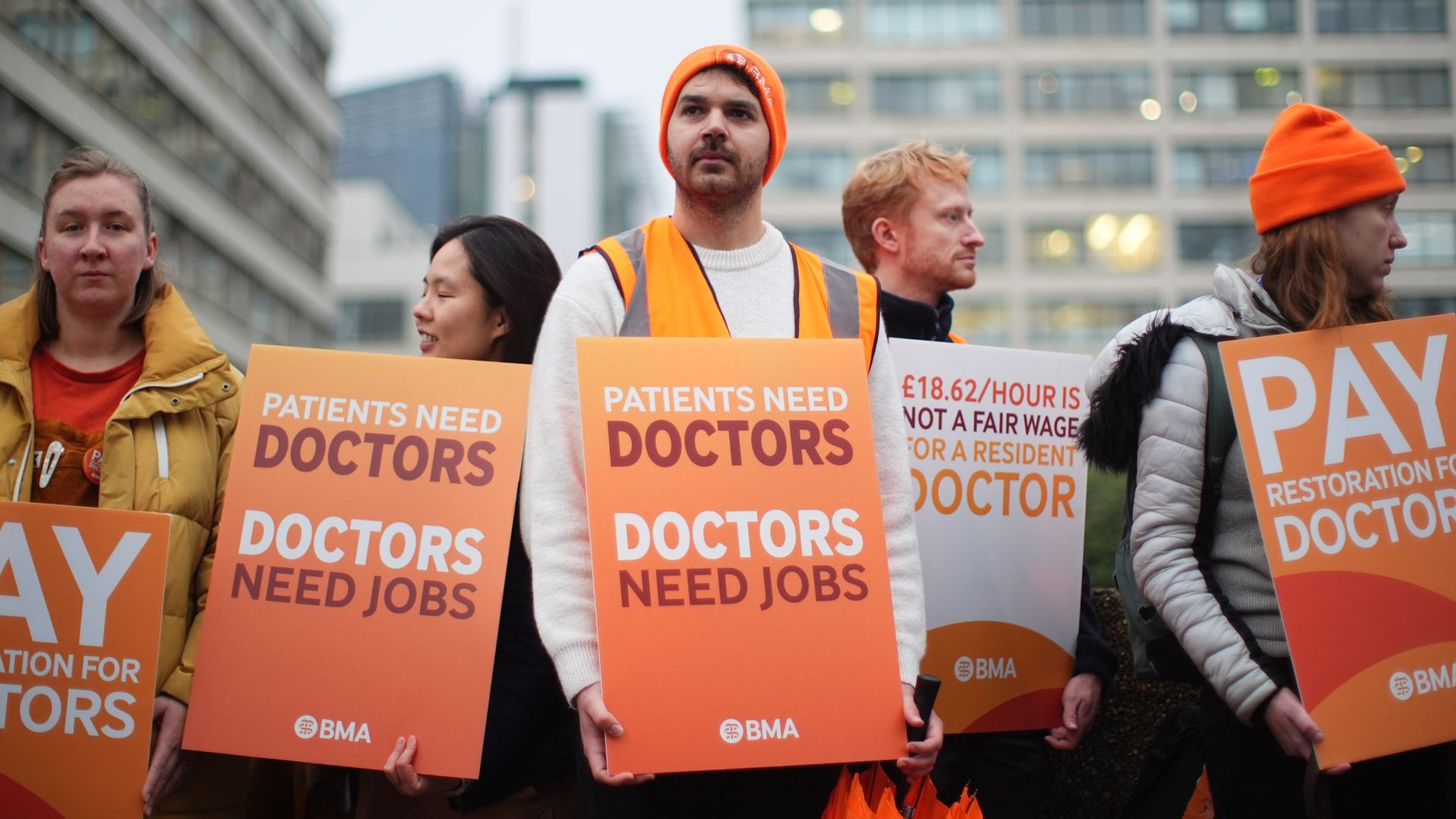
A forty-eight-hour walkout by senior physicians does not merely pause hospital schedules; it removes the clinical decision-making bottleneck required to discharge patients, supervise junior staff, and clear high-acuity surgical backlogs. When a healthcare system loses its consultant or attending tier for two consecutive days in November—a period already characterized by rising seasonal respiratory admissions—the operational disruption compounds across three distinct phases: pre-strike capacity throttling, acute floor triage, and multi-week post-strike recovery.
Most coverage of physician industrial action treats a two-day strike as a discrete, forty-eight-hour event. In hospital operations, that framing is fundamentally flawed. Senior doctors sit at the top of the clinical risk-tolerance hierarchy. Removing them forces the entire health system to shift from an optimization model (moving patients through care pathways efficiently) to a containment model (preserving life and limb at the expense of throughput).
The Structural Economics of Senior Physician Labor
To understand why a two-day absence creates weeks of downstream friction, one must examine the distinct economic function of senior doctors compared to resident or junior medical staff. In a standard hospital hierarchy, junior doctors execute care plans, manage routine floor work, and handle initial admissions. Senior doctors—consultants, attendings, and department heads—provide three non-substitutable inputs:
- Terminal Clinical Sign-Off: Only senior physicians hold the legal and institutional authority to authorize complex discharges, sign off on high-risk surgical interventions, and override standard protocols when patient presentations deviate from textbook norms.
- Supervision Bandwidth: Under standard accreditation and safety rules, junior physicians cannot legally or safely operate theatres or run outpatient clinics without named senior oversight. When the supervisor walks out, the junior staff's productive capacity drops simultaneously, even if the junior staff remains on the clock.
- Diagnostic Compression: Experience reduces diagnostic latency. A senior clinician often reaches a definitive ruling after two targeted tests, whereas a less experienced practitioner may order six defensive diagnostics to rule out edge cases. During a strike, defensive medicine spikes, clogging radiology and pathology pipelines.
Because of these three inputs, senior physicians exhibit extreme inelasticity of substitution. Hospital administrators cannot simply hire temporary agency staff to replace specialized surgical consultants or senior intensivists on short notice. The credentialing timelines, institutional familiarity requirements, and sheer scarcity of equivalent labor make immediate replacement impossible.
The Three-Phase Operational Cascade
When a union announces a forty-eight-hour strike in November, hospital command centers immediately initiate a deterministic sequence of operational adjustments. Rather than waiting for day one of the walkout, the system begins absorbing the shock seventy-two hours prior.
Phase 1: Pre-Strike Decompression and Elective Cancellations
Hospitals cannot safely enter a strike period at ninety-five percent bed occupancy. To create buffer capacity for emergency admissions during the walkout, operational leads must artificially depress inpatient volume beforehand.
This requires cancelling elective surgeries and routine outpatient appointments up to three days before the strike begins. A patient undergoing a complex orthopedic or oncological procedure requires post-operative ICU or high-dependency monitoring. Performing that surgery on a Tuesday when the supervising consultant will be on the picket line on Thursday creates an unacceptable clinical liability. The cancellation of elective lists is therefore a proactive risk-mitigation measure, not merely a staffing shortage artifact.
Phase 2: The Forty-Eight-Hour Containment Window
During the actual two-day walkout, hospitals typically revert to "Christmas Day" staffing models. Emergency departments remain open, and acute trauma, obstetrics, and urgent oncology services continue operating, often staffed by non-striking senior doctors, clinical directors, or negotiated emergency derogation teams.
The primary operational casualty during these forty-eight hours is discharge velocity. Discharging a complex medical patient requires assessing home-care viability, reconciling multi-drug regimens, and accepting the clinical risk that the patient will not bounce back to the emergency department within forty-eight hours. Covering physicians, unfamiliar with the patient's baseline, rightly refuse to take on that liability. Patients who are medically fit to leave remain in acute beds, causing the emergency department to back up as admitted patients wait hours for ward transfers.
Phase 3: The November Backlog Multiplier
The timing of a November walkout introduces a severe seasonal multiplier. Late autumn marks the inflection point where community respiratory infections, influenza, and chronic obstructive pulmonary disease (COPD) exacerbations begin driving up emergency department acuity.
When the strike concludes on day three, senior doctors return to a hospital operating above optimal capacity, populated by patients whose discharges were delayed and surrounded by a queue of cancelled elective procedures. Clearing a two-day elective backlog rarely takes two days. Because operating theatres and outpatient clinics already run near maximum utilization during November to hit pre-winter targets, absorbing two days of lost capacity requires either paying overtime rates for weekend lists—eroding hospital operating margins—or pushing routine care into the first quarter of the following year.
The Bargaining Mechanics and Asymmetry of Leverage
Industrial disputes involving senior physicians operate under different game-theoretic conditions than strikes by other public or private sector workers. Both the physician unions and the health system leadership (whether a national health ministry or a large hospital network) face rigid structural constraints.
The union's primary lever is scheduled disruption. By announcing a forty-eight-hour walkout weeks in advance, senior doctors maximize administrative pain while minimizing direct harm to emergency patients. The advance notice allows hospitals to safely wind down elective care, shifting the burden of the strike onto waiting-list metrics and hospital balance sheets rather than acute mortality rates. This protects the physicians' public standing and professional licensure while inflicting measurable political and financial damage on administrators.
Conversely, hospital leadership and government payers face a fixed-budget, open-demand constraint. Unlike a private manufacturing firm that can raise prices to offset higher wage settlements, publicly funded or insurance-capped healthcare systems operate within fixed annual budgets. Conceding to senior physician pay demands—often driven by multi-year inflation erosion, pension taxation rules, or widening pay disparities compared to private practice and international markets—forces administrators into a zero-sum allocation problem. Every percentage point added to the senior medical payroll must be extracted from capital expenditure, facility maintenance, or operational reserves.
Furthermore, senior doctors possess a credible exit option that strengthens their bargaining floor. Unlike junior doctors, who must remain within accredited training pathways to complete their residencies, fully credentialed consultants can reduce their contracted hours, transition to private-sector locum work, accelerate retirement, or emigrate to competing healthcare markets. When real wages fall below a clinician's reservation wage, the system experiences silent attrition—dropped extra-contractual shifts and early retirements—even when no formal strike is occurring.
Strategic Limits of Hospital Mitigation Playbooks
When confronted with an imminent two-day strike, hospital executives routinely deploy a standard mitigation playbook. Operational data from previous healthcare walkouts demonstrates that each lever carries severe structural limitations:
- Internal Locum Escalation: Offering elevated hourly rates to non-striking doctors or adjacent staff grades to cover gaps drains operational budgets rapidly. More critically, paying temporary staff more per hour than striking consultants deepens institutional resentment, hardening union resolve for subsequent rounds of industrial action.
- Command-and-Control Bed Management: Centralizing discharge authority under a handful of medical directors speeds up patient flow temporarily, yet it concentrates medicolegal risk onto a few individuals and leads to higher seven-day readmission rates when marginal discharges fail.
- Outpatient Telehealth Substitution: Shifting routine follow-ups to remote consultations preserves some clinic volume, but it cannot substitute for physical diagnostics, imaging, or procedural interventions, creating a secondary wave of in-person appointments later in the winter.
No operational workaround can synthesize senior clinical judgment out of thin air. Mitigation strategies only redistribute the friction across time and departments; they do not eliminate the net loss of system capacity.
The Strategic Imperative for Health System Leadership
Treating a November senior doctor strike as an isolated labor dispute guarantees a recurring cycle of winter capacity crises. If system administrators want to break the pattern of pre-winter elective cancellations and compounding waiting lists, they must separate immediate strike containment from structural workforce retention.
In the immediate term, hospital command centers must lock in elective cancellation schedules at least ninety-six hours prior to the walkout rather than waiting for last-minute union derogation agreements. Late cancellations waste theatre prep costs and maximize patient dissatisfaction; early, decisive throttling preserves financial resources for post-strike weekend recovery lists.
At the negotiation table, payers must shift away from flat, across-the-board percentage wage offers that stall on headline budget caps. Instead, settlements should target the structural drivers of senior attrition: reforming punitive pension cliffs, restructuring out-of-hours on-call allowances to reward high-acuity weekend coverage, and tying multi-year pay restoration triggers to verifiable productivity and waiting-list reduction milestones. Without addressing the underlying erosion of senior clinical compensation, a forty-eight-hour walkout in November is not the climax of the dispute—it is merely the opening calibration before prolonged winter disruption.