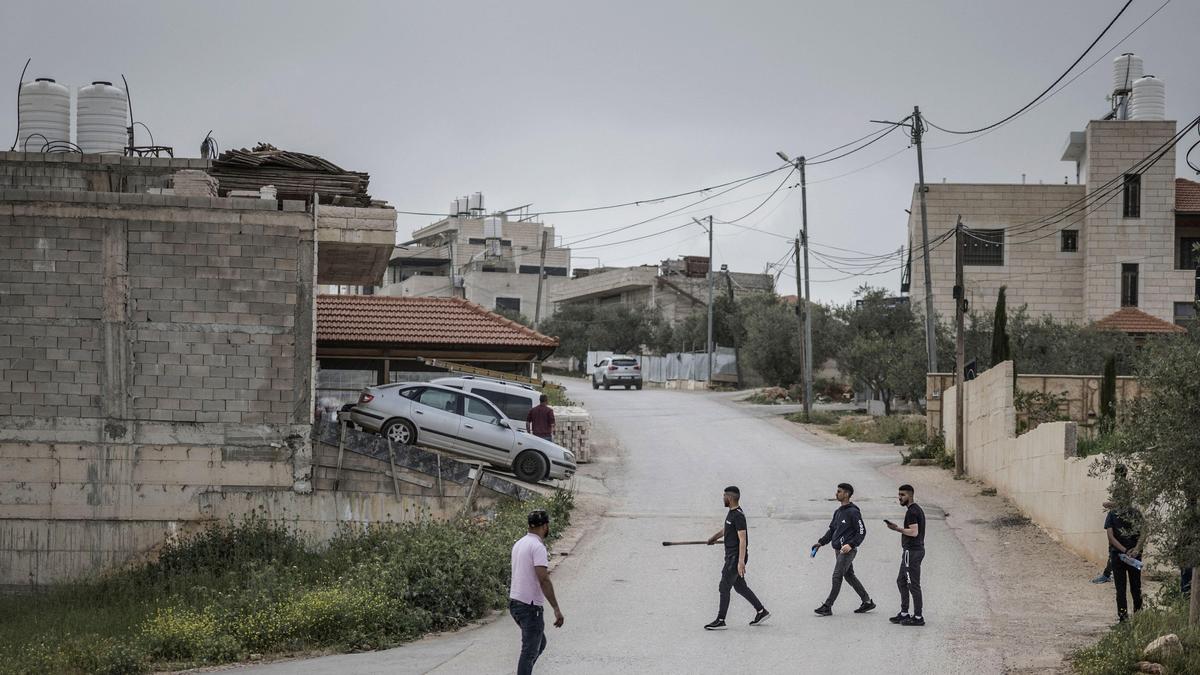
The Israeli military’s recent neutralization of a suspected militant in the West Bank is not an isolated tactical event; it is a data point within a broader strategy of proactive friction. This kinetic interdiction serves as a primary tool for degrading the organizational capacity of non-state actors before they reach a stage of operational maturity. By analyzing these events through the lens of asymmetric warfare frameworks, we can isolate the underlying logic of security maintenance in high-tension geographic zones.
The Asymmetric Attrition Framework
Military operations in the West Bank are governed by a specific cost-benefit calculus designed to manage, rather than solve, a persistent insurgency. This framework relies on three distinct operational pillars: Expanding on this topic, you can also read: The Strait of Hormuz is Not a Global Chokepoint and You Are Being Lied To.
- Intelligence-Led Target Acquisition: The success of an interdiction is directly correlated with the granularity of the "human-tech" intelligence loop. Operations often begin with signals intelligence (SIGINT) identifying communication patterns, which are then cross-referenced with human intelligence (HUMINT) to verify a subject's physical location.
- Minimization of Collateral Friction: In dense urban environments like the West Bank, the military must weigh the value of neutralizing a target against the risk of inciting a broader localized uprising. The decision to use lethal force suggests a high-value target assessment where the risk of the individual remaining active outweighed the potential for civil unrest.
- The Deterrence Signal: Beyond the physical removal of a combatant, these actions serve as a psychological signal to the network. The objective is to increase the "cost of participation" for other militants by demonstrating a persistent surveillance presence and a short "kill chain" from identification to execution.
The Mechanics of Kinetic Interdiction
When the Israel Defense Forces (IDF) engage a suspect in the West Bank, the operation follows a rigid sequence designed to maintain tactical advantage. This sequence is often characterized by the "Infiltration-Isolation-Interdiction" model.
Infiltration and Perimeter Control
The first phase involves establishing a sterile zone. Security forces utilize armored mobility and rapid deployment units to seal off access points. This prevents the arrival of reinforcements and limits the suspect’s avenues of escape. The technical bottleneck here is often the terrain; narrow alleys and vertical urban density create significant blind spots for ground forces. Experts at Associated Press have also weighed in on this situation.
The Escalation Ladder of Engagement
Lethal force is rarely the starting point of the engagement protocol unless an immediate threat is detected. The military typically utilizes a graduated response:
- Surround and Call: Attempting to force a surrender through loud-hailer instructions and overwhelming physical presence.
- Non-Lethal Breaching: The use of stun grenades or tear gas to disorient the occupant and force them into the open.
- Kinetic Engagement: If the suspect responds with gunfire or exhibits an immediate intent to use explosives, the engagement shifts to lethal interdiction.
The specific case of a "suspected militant" being killed usually implies that the escalation ladder was climbed rapidly or bypassed due to the presence of an active threat, such as an armed confrontation.
Logistics of Urban Combat in Contested Territories
The West Bank presents a unique operational environment where the boundary between civilian infrastructure and militant operational bases is often nonexistent. This creates a specific "cost function" for military planners.
The Signal-to-Noise Ratio in Intelligence
In a population of millions, identifying a single militant requires filtering through vast amounts of "noise"—daily civilian activity, legitimate political dissent, and non-combatant movement. The failure of intelligence (false positives) results in high political costs and increased radicalization. Conversely, false negatives (missing a militant) result in successful attacks against Israeli targets. The military’s reliance on real-time drone surveillance and biometric data aims to tighten this ratio, though it remains a significant technical challenge.
Resource Allocation and Unit Specialization
Operations of this nature are typically carried out by specialized units, such as the Duvdevan or Yamam, which are trained specifically for undercover work and high-stakes urban arrests. The deployment of these units signifies that the objective was likely a high-priority individual within a local militant cell. The use of specialized units also reduces the footprint of the operation, allowing for a "hit and run" style of engagement that minimizes the duration of the military's presence in a hostile area.
Structural Constraints of the Current Security Paradigm
The current strategy is an exercise in management, not resolution. This creates several structural bottlenecks that limit the long-term efficacy of kinetic operations.
The Hydra Effect
In decentralized insurgencies, the removal of a mid-level militant often triggers a rapid succession process. While the immediate operational capability of a cell is degraded, the vacuum is frequently filled by younger, more radicalized individuals who have not been mapped by intelligence services. This creates a cycle where the military must continuously "mow the grass"—a term used in Israeli defense circles to describe the ongoing need to suppress militant growth through periodic kinetic action.
Geographic and Political Enclaves
The West Bank is fragmented into Areas A, B, and C under the Oslo Accords, creating a patchwork of legal and operational jurisdictions.
- Area A: Full Palestinian civil and security control.
- Area B: Palestinian civil control and joint Israeli-Palestinian security control.
- Area C: Full Israeli civil and security control.
Operations often occur in Areas A and B, which necessitates a complex navigation of security coordination with the Palestinian Authority (PA). When this coordination breaks down or is bypassed by the IDF, it weakens the PA’s domestic legitimacy, which in turn can lead to a surge in militant recruitment.
[Image showing the administrative divisions of the West Bank into Areas A, B, and C]
Analyzing the Impact on Local Stability
The killing of a militant acts as a catalyst for several socio-political reactions. These reactions can be quantified by observing the "post-event surge" in local activity.
- Funeral Mobilization: Funerals for killed militants often serve as the primary recruitment and propaganda events for armed groups. The size and intensity of these gatherings are leading indicators of the local mood.
- Retaliatory Cycles: There is a measurable correlation between high-profile interdictions and subsequent attempts at low-level attacks (stabbings, car-rammings) by "lone wolf" actors or small cells seeking revenge.
- Economic Disruption: Frequent military incursions lead to the closure of checkpoints and the suspension of work permits for Palestinians, creating economic strain. This strain, while a security measure, can also act as a driver for future conflict by reducing the opportunity cost of joining an insurgency.
Probability of Escalation vs. Containment
To determine whether a single interdiction will lead to a wider conflict, analysts look at the "Systemic Saturation Level." If multiple incidents occur within a short timeframe across different cities (e.g., Jenin, Nablus, and Hebron), the likelihood of a coordinated uprising increases.
Currently, the security architecture relies on a "pressure valve" strategy: allowing limited civilian movement and economic activity while maintaining a high frequency of targeted raids. The primary risk to this strategy is a breakdown in the intelligence loop or an event with high civilian casualties, which could flip the system from "managed friction" to "uncontrolled escalation."
The military's operational focus remains on preventing the unification of various militant factions. By targeting specific individuals, they prevent the consolidation of command-and-control structures that would be necessary for a full-scale intifada.
The tactical execution in the West Bank is a high-stakes balancing act of intelligence application and force projection. For the security apparatus, the objective is to maintain a state of "suppressed equilibrium." For the militant groups, the goal is to survive and expand their footprint despite the constant attrition. The immediate strategic requirement for the Israeli military is to ensure that these localized operations do not coalesce into a regional security failure, requiring a continued reliance on high-frequency, precision-led kinetic interventions.