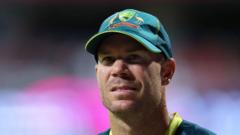
Sports media loves a clean, predictable narrative. When former Australian opening batter David Warner pleaded guilty in Waverley Local Court to a mid-range drink-driving charge, the commentariat predictably reached for their worn-out moral outrage scripts.
The facts of the legal matter are straightforward. On Easter Sunday in Sydney’s eastern suburbs, Warner was pulled over during a roadside breath test, registering a blood alcohol concentration of 0.104—more than double the legal limit of 0.05. His legal representation made no excuses, entering a guilty plea, acknowledging a foolish decision to drive instead of booking an Uber after three glasses of wine, and preparing for his August 18 sentencing.
Yet, instead of letting the judicial system handle a standard traffic offense, the sporting establishment instantly triggered its familiar theatre of public shaming. Calls to strip Warner of his Sydney Thunder captaincy mounted immediately, with administrative suits pointing out the inconvenient conflict with government-backed road safety awareness partnerships.
This performative panic exposes the core intellectual bankruptcy of modern sports administration.
The Myth of the Sacred Athlete Role Model
Modern sports executives love to draft contracts that treat elite athletes as moral deities. They plaster player faces across public service campaigns, pocketing massive state grant monies and corporate sponsorships under the guise of social utility. Then, the instant an athlete makes a human mistake, administrators feign shock and scramble for a sacrificial lamb to protect their PR budget.
Let us be completely unambiguous. Driving under the influence is dangerous, stupid, and illegal. Warner blew 0.104, breaking the law. For that, he faces a minimum six-month driving ban, hefty fines, and potential court sanctions like any other citizen.
That is how law enforcement works.
Where the logical framework breaks down is the absurd demand that a magistrate's court verdict must automatically translate into an administrative execution of an athlete's professional career.
"He accepts that was a reckless decision, a foolish decision to get in his car instead of taking an Uber... It doesn't matter if you're a tradesman, a doctor, or one of the best opening batsmen in the world."
— Bobby Hill, Defence Counsel for David Warner
Warner’s defense lawyer nailed the truth that sports moralists refuse to digest: elite athletes are fallible humans, not pristine instruments designed to validate state safety messaging.
The Hypocrisy of Administrative Sanction
I have watched sports boards handle player discipline for over fifteen years. The pattern never changes.
When an athlete makes a mistake in public view, corporate boards immediately calculate brand damage rather than justice. They attempt to play judge, jury, and executioner, completely decoupled from the legal system's actual outcome.
Consider the blatant asymmetry in how sports bodies operate:
| Entity | Action | Real Motivation |
|---|---|---|
| The Judicial System | Applies statutory penalties (fines, license suspension) | Public safety and legal accountability |
| Sports Executives | Moral grandstanding, contract threats, media leaks | Protecting commercial sponsorships |
| Commentary Class | Demands career cancellation and public humiliation | Outrage-driven engagement metrics |
When Cricket NSW officials cite their alignment with road safety campaigns as a reason to review Warner’s leadership, they expose their own cynicism. They weaponized his star power to secure those government contracts in the first place, operating on the fantasy that elite physical skill correlates with flawless private execution.
The Ball-Tampering Ghost and False Equivalence
Lazy commentators instantly linked this court case to the 2018 Cape Town ball-tampering scandal. They draw a straight line from sandpaper on a leather ball to a mid-range breathalyzer reading seven years later.
This connection is intellectually lazy.
The 2018 incident was an on-field breach of elite sporting integrity—a deliberate tactical cheat within the confines of international cricket. A roadside breath test on Easter Sunday is an off-field breach of civil traffic laws. Mixing the two proves that the media is not interested in proportional justice; they are hungry for a simple villain archetype.
Warner served his 12-month international ban for South Africa. He served his leadership ban until Cricket Australia formally reviewed and lifted it in 2024, clearing him to lead Sydney Thunder. To drag six-year-old on-field infractions into a Sydney traffic court hearing is pure sensationalism.
The Real Cost of Corporate Sanctimony
What happens when sports bodies mandate absolute perfection from their athletes? They create an environment of institutional deception.
When boards enforce draconian career penalties for personal missteps, players stop seeking help. They hide personal struggles, retreat behind legal teams, and engage in elaborate cover-ups rather than taking direct accountability.
Warner did not fight the charge. He did not invent absurd technicalities or drag the court through months of delayed hearings. He admitted guilt upfront through his lawyer, accepted responsibility, and prepared for his legal sentence.
That is what genuine accountability looks like in a democracy.
If sports administrators truly cared about road safety rather than corporate posturing, they would keep Warner in his leadership role. They would put him in front of young players to explain the exact mechanics of a terrible decision—how three glasses of wine, an eleven-minute window, and a lazy assumption ruined his record and cost him his license.
That would actually change behavior. Stripping a captaincy to satisfy a corporate sponsor’s press release changes nothing.
Stop expecting athletes to be saints. Demand that they obey the law, accept their legal punishments when they fail, and leave the moral posturing out of the game.