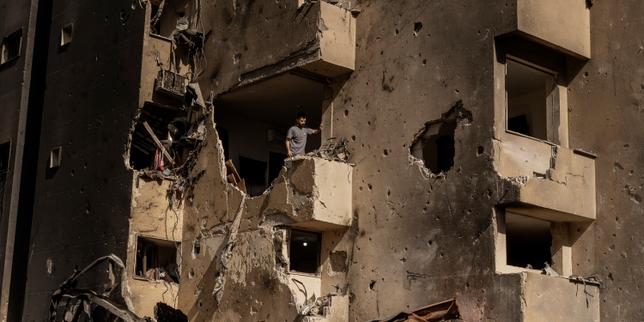
The international press loves a predictable script. When a Pakistani Prime Minister stands before a microphone to denounce Israeli "aggression" in Lebanon, the media dutifully scribbles it down as a significant geopolitical shift. They frame it as a rising tide of Islamic solidarity or a pivot in regional power dynamics.
They are wrong.
This isn’t diplomacy. It is performance art designed for a domestic audience that is currently boiling over with economic resentment. If you want to understand why Islamabad is suddenly so vocal about the Levant, stop looking at maps of Beirut and start looking at the spreadsheets of the International Monetary Fund (IMF) and the internal memos of the Pakistani military establishment, the Establishment.
The Myth of Islamic Solidarity as a Policy Driver
Most analysts fall into the trap of believing that Pakistan’s foreign policy is dictated by religious affinity. This is a lazy consensus. In reality, Pakistan’s stance on the Middle East is a series of cold, calculated survival maneuvers masked in the language of the Ummah.
When Prime Minister Shehbaz Sharif condemns the escalation in Lebanon, he isn't trying to change the tactical reality on the ground. He knows Pakistan has zero kinetic influence in the Eastern Mediterranean. He is trying to distract a population facing 40% inflation and a crumbling energy grid.
I have watched this cycle for decades. When the price of flour hits record highs, the rhetoric on Palestine and Lebanon hits record volumes. It is the cheapest currency the Pakistani state has to trade.
The Real Power Players are Silent
Notice who isn't screaming: the Gulf monarchies. While Pakistan issues fiery press releases, Riyadh and Abu Dhabi are playing a much more sophisticated game of quiet hedging and strategic patience.
- The Saudi Stance: Focused on Vision 2030 and regional stability, not ideological crusades.
- The Emirati Reality: Deeply integrated into the Abraham Accords framework, prioritizing trade over traditional pan-Arabist rhetoric.
By being the loudest voice in the room, Pakistan isn't leading the "Muslim world"—it’s highlighting its own isolation from the actual decision-makers of the region.
The IMF Shadow Over the Rhetoric
The timing is never an accident. Pakistan is currently tethered to an IMF lifeline. To secure these loans, the government has to impose brutal taxes and hike electricity prices. This makes the ruling coalition deeply unpopular.
By pivoting to the Middle East conflict, the government creates a "rally 'round the flag" effect. They position themselves as the defenders of global Muslim interests to mask the fact that they are struggling to defend the value of the Rupee.
The Military’s Strategic Ambiguity
Behind the civilian facade, the Pakistani military—the real arbiter of foreign policy—maintains a far more nuanced position. They need Western military hardware and American financial backing just as much as they need the optics of supporting "brotherly" nations.
Imagine a scenario where Pakistan actually moved beyond words. If Islamabad offered more than just condemnations—say, intelligence sharing or logistical support to anti-Israel factions—the flow of dollars from Washington would evaporate overnight. The military knows this. The Prime Minister knows this. The rhetoric is a pressure valve, nothing more.
Lebanon is a Mirror of Pakistani Instability
The irony of Islamabad lecturing anyone on sovereignty is rich. Pakistan is currently battling an insurgency in Balochistan and a resurgent TTP (Tehrik-i-Taliban Pakistan) on its western border.
When Sharif talks about "aggression" and "violation of borders," he is inadvertently describing the exact chaos occurring within his own provinces. The focus on Lebanon serves a dual purpose: it suggests a level of international relevance that Pakistan currently lacks, and it projects the image of a stable state capable of critiquing others.
The Proxy Problem
The competitor article treats the Lebanese conflict as a binary: Israel vs. Lebanon. It fails to mention the proxy nature of the conflict, which resonates deeply with Pakistan’s own history.
Pakistan is the original laboratory for proxy warfare. From the Mujahideen in the 80s to various groups today, the state has used non-state actors as extensions of foreign policy. This is why their condemnation of "non-state actors" or "unprovoked attacks" is always laced with hypocrisy. They aren't against the method; they are just against the current target.
The Debt Trap Diplomacy
Pakistan’s "bold" stance is also a signal to China and the Middle Eastern lenders. It says: "We are still the moral heavyweight of the region. Don't let us collapse."
By positioning themselves as the vocal vanguard against Israel, they are essentially asking for a "geopolitical premium" on their debt. They want the world to believe that a stable Pakistan is the only thing preventing a more radicalized response from the street. It’s a protection racket disguised as a press release.
Stop Asking if Pakistan Will Intervene
The "People Also Ask" sections of the internet are filled with queries like "Will Pakistan send troops to Lebanon?" or "How will Pakistan help Hezbollah?"
These questions are fundamentally flawed. They assume Pakistan has the fiscal or logistical capacity to project power thousands of miles away.
- Fact: Pakistan's navy is designed for coastal defense and monitoring the Indian Ocean.
- Fact: The Air Force is preoccupied with the eastern border and internal counter-insurgency.
- Fact: The treasury doesn't have enough foreign reserves to fuel a long-range expeditionary force for a week.
The honest answer? Pakistan will help by issuing more PDFs. They will host more conferences. They will tweet. That is the extent of the intervention.
The Cost of Cheap Talk
There is a downside to this contrarian approach. By constantly using Middle Eastern conflicts as a domestic distraction, Pakistan risks "crying wolf."
When actual shifts in regional power occur—such as the potential normalization of ties between major Arab states and Israel—Pakistan finds itself backed into a corner. Its rhetoric is so high-pitched that it has no room for the quiet, pragmatic diplomacy required to navigate a post-conflict Middle East.
They have traded long-term strategic flexibility for short-term domestic survival.
The Nuclear Elephant in the Room
Every time a Pakistani leader speaks on global conflict, the world listens with one ear on the "Islamic Bomb." This is the only reason the Prime Minister’s words carry any weight at all. But even this leverage is waning. The international community has realized that Pakistan’s nuclear arsenal is a defensive shield, not a tool for offensive pan-Islamic adventurism.
The "Red Line" that Islamabad draws is written in disappearing ink.
The New Reality of Power
Power in 2026 isn't measured by who can give the most stirring speech at the UN or to the local press. It’s measured by:
- Semiconductor supply chains.
- Sovereign wealth fund liquidity.
- Energy independence.
Pakistan is currently failing in all three categories. Until it fixes the rot at home, its critiques of foreign wars are essentially shouting into a hurricane.
The world isn't watching Pakistan to see what it will do about Lebanon. The world is watching Pakistan to see if it will survive the month without another bailout. Every word spoken about the Middle East is a heartbeat skipped on the reality of its own internal collapse.
The "aggression" Sharif should be denouncing is the economic mismanagement that has turned a nuclear power into a global beggar, forced to use the tragedies of others to keep its own people from the gates of the capital.
Stop listening to what they say. Watch what they can afford to do.
Which is nothing.


