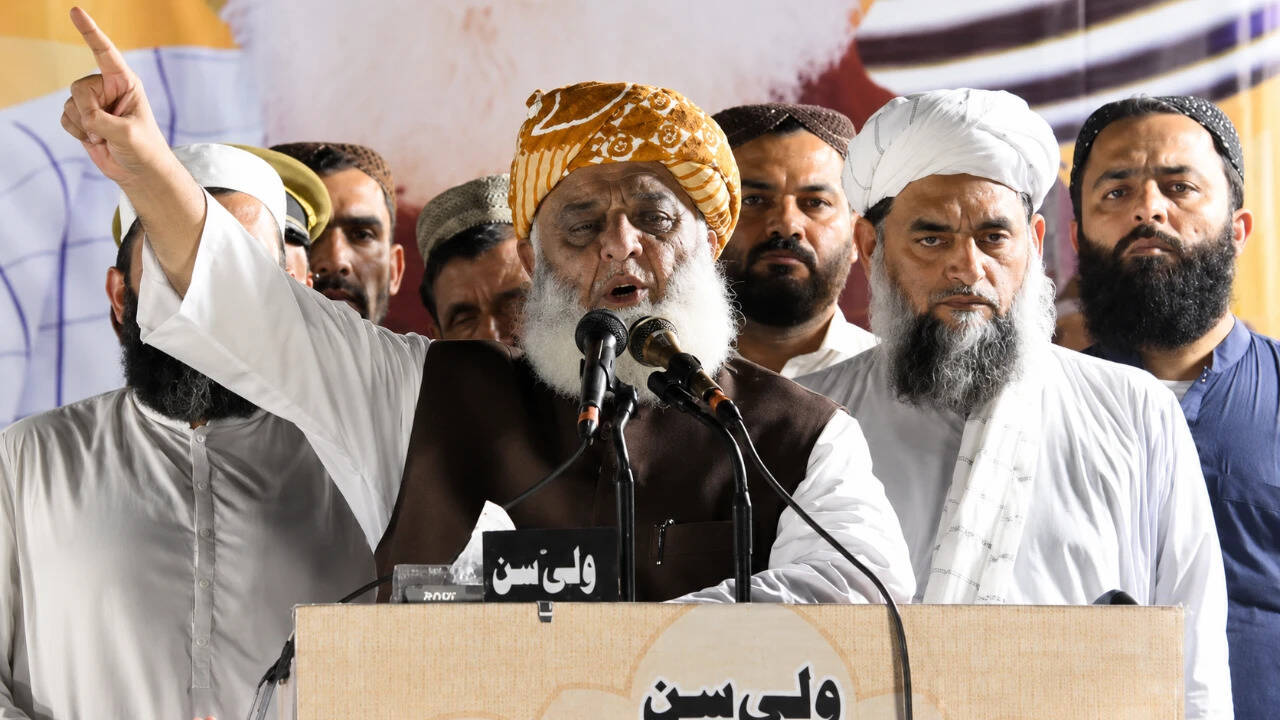
Let's not dance around the elephant in the room. In Pakistan, criticizing the military is a dangerous game. It's a line most politicians dance around with vague euphemisms, referencing "the establishment" or "invisible forces." But Jamiat Ulema-e-Islam (Fazl) chief Maulana Fazlur Rehman just threw the rulebook out the window.
Addressing a crowd in July 2024, Rehman didn't whisper; he roared. He looked straight at Army Chief General Asim Munir and delivered an ultimatum that is still sending shockwaves through the country's political landscape: "If you want to do politics, then take off the uniform and come into politics. Contest elections. Then we will see how many votes a man in uniform gets".
It was a staggering moment of public defiance. In a country where the military has directly or indirectly ruled for most of its history, a veteran politician openly challenged the top general to trade his combat boots for a spot on a ballot.
The Myth of the Military Savior
For decades, the standard narrative from Rawalpindi—the military’s headquarters—has been that civilian politicians are corrupt, incompetent, and incapable of keeping the nation together. According to this logic, the military is the only institution standing between Pakistan and total chaos.
Rehman dismantled this narrative in a single afternoon.
He targeted the fundamental social contract between the state and its citizens. He rejected the constant emotional appeals about the military's sacrifices, pointing out the stark reality of the situation.
"Your youth who are becoming martyrs — they have tied the uniform for this very reason, they are taking their salary for this very reason — that they have to fight for the country's security," Rehman said. "What favor are you doing me by throwing your blood on me? You are taking your salary from the taxes of my blood and sweat for precisely this".
It’s an incredibly bold point. He’s essentially saying: don't use the tragic deaths of soldiers as a shield to deflect from political interference and strategic failures.
He didn't stop there. He took aim at the military’s suggestion that ordinary citizens should form local militias to fight off armed militants. Rehman slammed this idea as a complete abdication of duty. He warned that arming civilians would only drag the country into endless, generational bloodfeuds.
Where the State’s Control Has Already Slipped
Rehman's anger isn't born in a vacuum. It is a direct response to a rapidly deteriorating security situation that the military, despite its massive budget, has failed to contain.
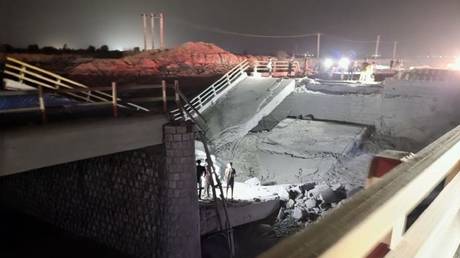
Take Balochistan, for instance. Rehman openly declared that the entire province has essentially slipped out of the government’s control. The state's writ is virtually nonexistent there. Now, the Pashtun belt is facing a similar wave of violence. He recounted the grim reality of receiving dozens of bodies in a matter of days, turning local markets into places where people do little else but buy funeral shrouds.
If the military's primary job is national security, and key regions of the country are descending into lawlessness, why are they spending time managing the civilian government?
The hypocrisy is hard to ignore. General Asim Munir was recently appointed to a high-level committee managing Pakistan's population control initiatives. When the head of the army is tasked with managing family planning while entire provinces are slipping into insurgency, the priorities are clearly skewed.
The Dangerous Game of "Kingmaking"
We've seen this movie before in Pakistan. The military selects a political favorite, helps them rise to power, falls out with them, and then orchestrates their removal.
- The Imran Khan Experiment: The military heavily backed Imran Khan’s rise in 2018, earning him the "selected" label. When Khan fell out of favor with the top brass, he was ousted in 2022.
- The Shehbaz Sharif Coalition: The current government led by Shehbaz Sharif is widely seen as a puppet regime kept on life support by the military high command.
Rehman’s frustration reflects a growing consensus among civilian politicians: this endless cycle of "kingmaking" is destroying the country's democratic institutions. "It is your prerogative to give government to whomever you want, and to snatch it away from whomever you wish," Rehman mocked. But he made it clear that this power is illegitimate.
What Happens Next?
Predictably, the establishment has struck back. A court petition was quickly filed against Rehman, claiming his remarks hurt the feelings of the general public and disrespected the families of fallen soldiers. Government ministers have rushed to defend the military, calling Rehman's comments unfair.
But you can't put the toothpaste back in the tube.
Rehman has voiced what millions of Pakistanis are thinking. The country is grappling with a crushing economic crisis, rampant inflation, and a resurgence of terrorism. People are tired of excuses. If the military wants to run the country, they should put their names on the ballot and let the voters decide. Otherwise, it is time for them to step back to the barracks and let civilians govern.
For Pakistan to have any chance of stability, the military must focus entirely on security and leave the politics to the politicians. Defying the generals is incredibly risky, but as the situation on the ground worsens, staying silent is no longer an option.