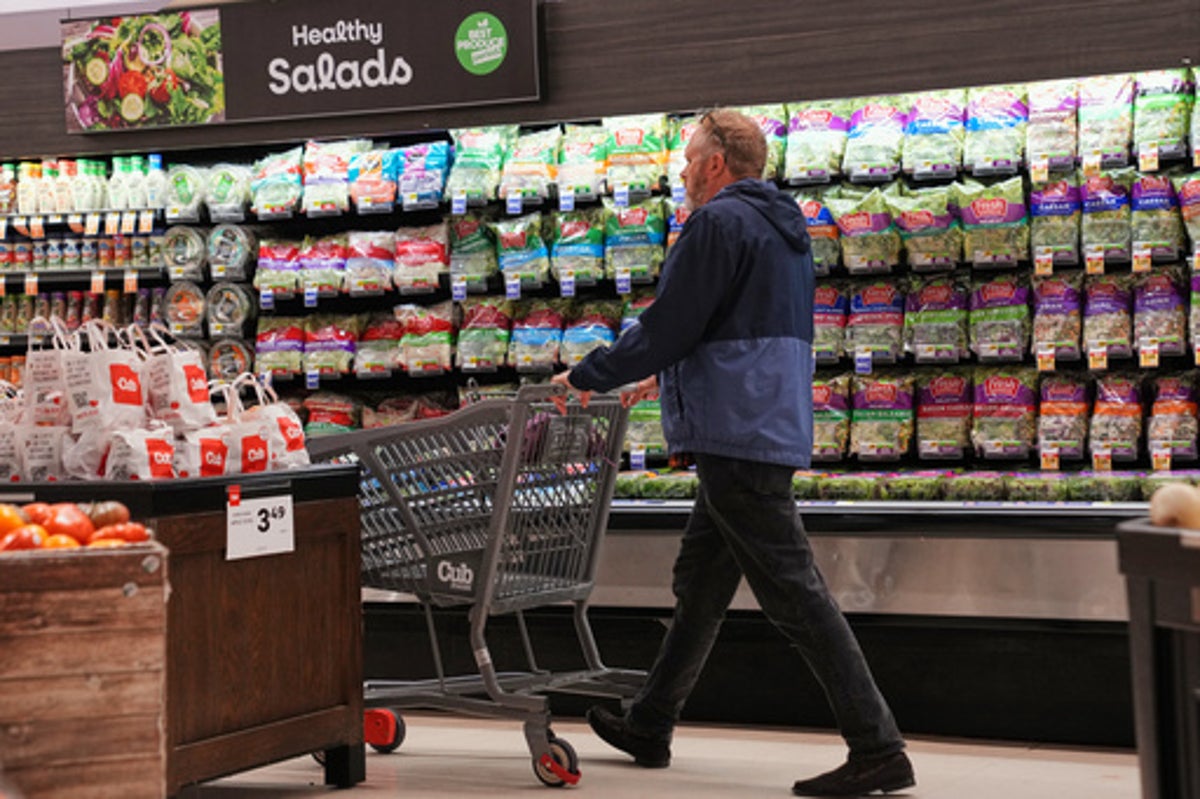
Every few years, the food safety panic cycle spins up with predictable clockwork. A headline drops about an outbreak linked to pre-bagged salad, and millions of well-meaning households instantly pivot to buying whole heads of romaine or loose spinach. They pat themselves on the back for returning to a simpler, safer era of food preparation. They assume that washing a head of lettuce in the kitchen sink is an act of purification.
It is not. It is an act of supreme self-deception.
I have spent years watching supply chains break down, factories audit their sanitation protocols, and public health agencies chase shadows. I have seen panicked consumers ditch convenience in favor of an illusion of control, trading a heavily monitored, industrial sanitation process for a domestic kitchen counter covered in raw chicken juice and sponges teeming with bacteria.
The lazy consensus is that pre-bagged salad is a bacterial roulette wheel, while whole produce is pristine. That belief is dead wrong. The truth is much stranger, far less comfortable, and requires us to look at how foodborne pathogens actually travel.
The Microbiological Reality of Your Kitchen Sink
Let us clear up a foundational misunderstanding right away. Factory-washed bagged salad undergoes a multi-step sanitation process using chlorinated water washes, ozone treatments, or peracetic acid rinses. It is engineered to reduce pathogen loads uniformly. It is not sterile, nor could it be without turning the leaves to mush, but it is standardized.
When you buy a whole head of romaine from the farmers market or the supermarket produce aisle, you are buying an untreated agricultural product that has been handled by field workers, packed into cardboard boxes, loaded onto trucks, and fondled by dozens of shoppers looking for the crispest leaves.
Then you take it home.
You place that unwashed head of lettuce onto a cutting board. If you do not sanitize that board with industrial-grade heat or bleach, you have just introduced every surface contaminant from your last meal prep directly into the plant tissue. Worse yet, domestic tap water is not sterile. When you submerge lettuce in a household sink, you often cross-contaminate the leaves with whatever biofilm is currently breeding in your drain trap.
Data from food safety authorities consistently show that domestic kitchens are hotbeds for food poisoning vectors. You are far more likely to culture E. coli or Listeria from a home sponge than from a commercial washing facility. Ditching the bag does not remove risk; it simply transfers the burden of risk management from a multi-million-dollar sanitation plant to your messy kitchen counter.
Why Outbreaks Happen and Why the Media Misses the Plot
When an outbreak hits the news cycle, the immediate reaction is to blame the bag. But bags are passive containers. They do not manufacture pathogens.
The root cause of leafy green contamination almost always traces back to the agricultural interface—specifically, proximity to livestock operations, irrigation water quality, and wildlife vectors. Runoff from nearby cattle feedlots during heavy rainfall events can infiltrate shared watershed basins. Once a pathogen like E. coli O157:H7 enters an irrigation pond, it does not care whether the water is destined for a processing plant that will bag the greens or a farm that will box them whole.
The difference lies in traceability. When a contamination event hits pre-bagged greens, barcodes, lot numbers, and strict supply chain tracking allow public health officials to pinpoint the exact farm, the exact harvest date, and the exact processing shift within hours.
Whole produce, on the other hand, is frequently sold loose, unpackaged, or with ambiguous branding. When someone gets sick from a loose head of lettuce purchased at a local stand, the source is rarely traced. It gets chalked up to a mysterious case of food poisoning, lost in the aggregate data. The bag is not the vector of the disease; the bag is simply the whistle-blower that tells you the disease is there.
The Cost of Convenience Phobia
There is a psychological trap at play here. Consumers love narratives where villains are easily identifiable. A plastic bag sweating under fluorescent grocery store lights makes a much better villain than the invisible, complex web of agricultural water rights and animal agriculture zoning laws.
When consumers panic and ditch bagged salads, they alter their behavior in ways that ironically increase their exposure to other hazards. By shifting back to whole heads, they spend more time prepping, chopping, and handling raw produce with knives and peelers that introduce new vectors for mechanical injury and cross-contamination. Furthermore, the friction of washing and chopping whole vegetables leads many households to eat fewer greens overall, opting instead for shelf-stable convenience foods that offer zero nutritional benefit.
I have seen companies blow millions on rebranding campaigns designed to counter this exact type of consumer panic, slapping words like "triple-washed" and "farm-fresh" on packaging, as if marketing adjectives could alter microbiology. They miss the point. You cannot market your way out of a systemic water management problem.
What You Should Actually Do
If you want to protect your household from foodborne illness, stop worrying about the plastic packaging and start focusing on thermodynamics and physical separation.
First, abandon the notion that rinsing produce with cold tap water washes away bacteria. Pathogens like E. coli and Salmonella form resilient biofilms on plant surfaces that cling stubbornly to leaf crevices. If you want to reduce risk on raw produce, your defense is consumption timing and temperature control, not a quick splash in the sink.
Second, treat your cutting board like a surgical station. The most dangerous object in your kitchen is not the bag of lettuce in your crisper drawer; it is the wooden cutting board you used to slice raw poultry twenty-four hours ago.
Finally, accept that absolute zero-risk does not exist in a biological food system. We eat living things harvested from dirt and watered by rain. Microbes are part of that equation. When you trade a rigorously audited industrial supply chain for a romanticized ideal of rustic food prep, you are not escaping danger. You are just flying blind.