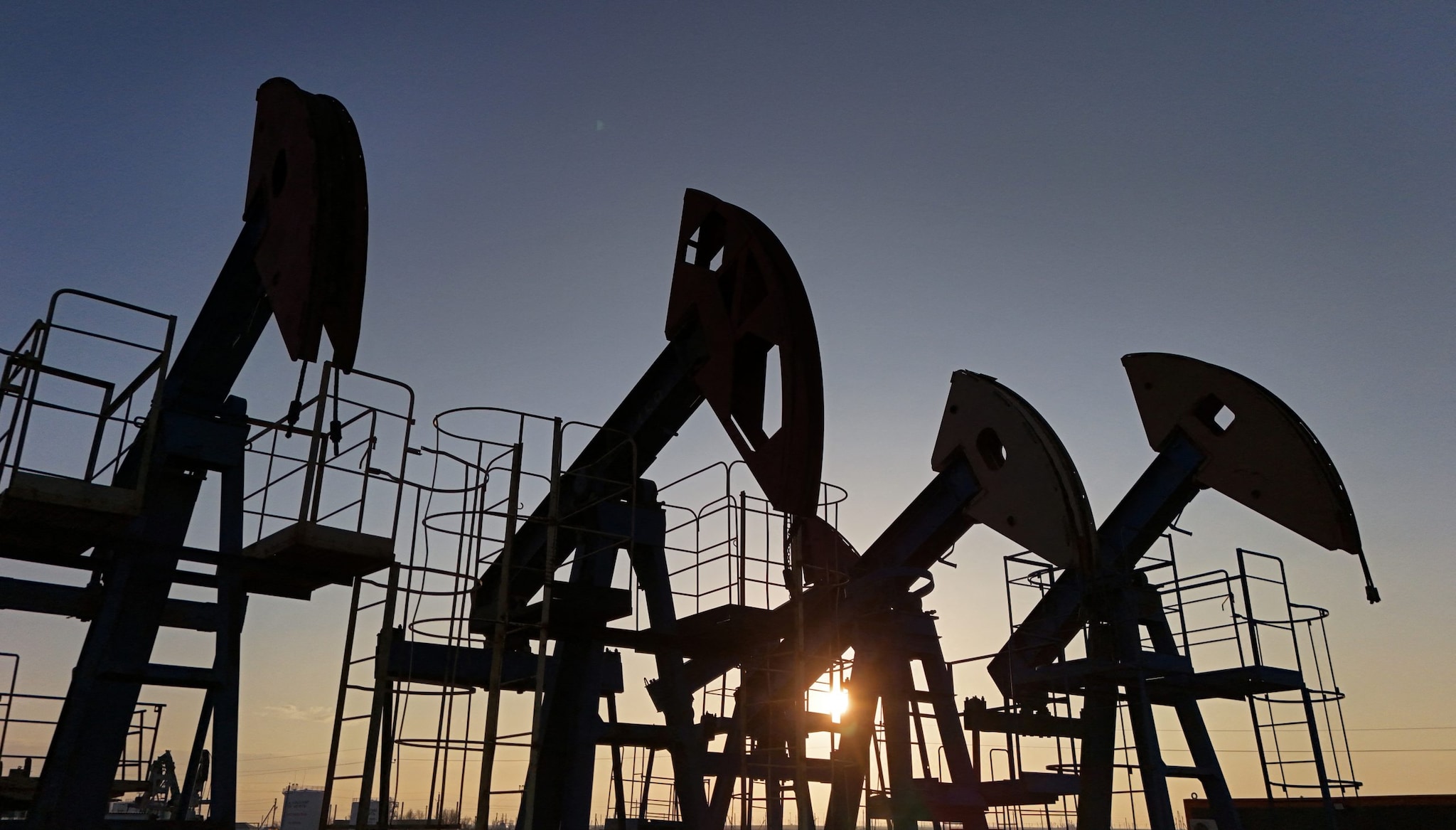
The headlines are screaming again. You’ve seen them. "Middle East Tensions Ignite." "Oil Surges on Trump’s New Project." The financial press is salivating over the prospect of a 1970s-style energy crisis, painting a picture of a world held hostage by a single spark in a desert. They want you to believe that geopolitical friction equals an immediate, permanent tax on the global economy.
They are wrong. They are lazy. And if you follow their lead, you are going to lose money.
The consensus view suggests that every time a drone flies over a refinery or a diplomat scowls at a camera, the price of Brent crude reflects a fundamental shift in reality. It doesn’t. It reflects a "fear premium" manufactured by algorithms and amplified by pundits who haven’t looked at a supply-demand spreadsheet since the Obama administration.
The reality? The world isn't running out of oil, and the Middle East doesn't hold the keys to the ignition anymore.
The Myth of the Irreplaceable Barrel
For decades, the "Middle East Hegemony" was a gospel truth. If the Strait of Hormuz closed, the lights went out in London and New York. That version of the world is dead.
We now live in an era of diversified extraction. The United States is the largest producer of crude oil in the world. Brazil is pumping at record levels. Guyana is a burgeoning energy powerhouse. When the "project" in the Middle East stirs up trouble, the knee-jerk reaction is to bid up prices. But notice how quickly those rallies fizzle.
In the old days, a geopolitical shock created a price floor. Today, it creates a "spike and bleed." Prices jump on the news, then slowly drift back down as the market realizes that global inventories are sufficient and non-OPEC production is more than ready to fill any perceived gap.
If you’re buying the surge, you’re providing liquidity for the smart money to exit. I’ve watched traders blow eight-figure accounts trying to "catch the moon" on Middle East unrest, only to realize that the fundamental mechanics of the market have shifted toward oversupply.
Trump, The Project, and the Deception of Volatility
The media loves to tie price action to specific political figures. "Trump’s new project" is the current bogeyman. The narrative suggests that a more aggressive or transactional U.S. foreign policy will inherently destabilize energy markets.
This ignores the math of the "Drill, Baby, Drill" philosophy.
Political tension in the Levant or the Gulf is actually a secondary signal. The primary signal is the regulatory environment for domestic production. If a "project" involves aggressive deregulation and the expansion of infrastructure, the long-term pressure on oil prices is downward, regardless of how many headlines focus on regional skirmishes.
The market isn't reacting to the tension; it's reacting to the uncertainty of the tension. Once the uncertainty is priced in—usually within 48 to 72 hours—the reality of a saturated market takes back the wheel.
Why $100 Oil is a Ghost Story
Every time Brent hits $85, the $100-per-barrel predictions start crawling out of the woodwork. They’ve been wrong for years. Why? Because the global economy can no longer sustain $100 oil without triggering an immediate, violent demand destruction.
- Efficiency Gains: Vehicles and industrial processes are significantly more efficient than they were during the last true energy crisis.
- Substitution: At $90+, the economic incentive to accelerate electrification and alternative fuels becomes an existential threat to oil producers.
- OPEC’s Fragility: OPEC+ isn't a monolith. Every time prices stay high, member nations have an immense urge to "cheat" and pump more to capture the revenue.
The "ignited" tensions are a temporary distraction from the fact that the long-term trend for oil is a battle for relevance against a backdrop of increasing supply and plateauing demand.
Stop Asking "Will Prices Go Up?"
That is the wrong question. It’s a retail question. It’s the question people ask when they’re worried about the price of gas at the pump.
The real question you should be asking is: "Who is profiting from the volatility?"
The volatility is the product. The tension is the marketing. When a "project" or a conflict causes a 5% jump in a day, it isn't because the oil is gone. It's because the market is forcing a massive liquidation of short positions. It’s a margin call disguised as a geopolitical event.
If you want to understand the true state of the market, stop looking at the news and start looking at the "crack spread"—the difference between the price of crude and the refined products like gasoline and jet fuel. If crude is surging but the crack spread is narrowing, the "surge" is a hallucination. It means refiners can't pass the cost on to consumers because the demand isn't there.
The Contrarian Playbook for Energy Shocks
Most people see a headline about Middle East war and think "Buy Exxon." That’s amateur hour.
If you want to actually navigate this, you have to embrace the counter-intuitive:
- Short the Hysteria: The first 4 hours of a "geopolitical surge" are almost always the peak. The "news" is already stale by the time you read it on a major outlet.
- Watch the Dollar, Not the Desert: Oil is priced in USD. Often, what looks like an "oil surge" is actually just a fluctuation in the DXY. If the dollar is strengthening while oil is "surging," you are looking at a massive bubble that is about to burst.
- Ignore the "Project" Rhetoric: Whether it's a new diplomatic initiative or a military buildup, these are often performative. Look at the actual tanker tracking data. Are the ships moving? If the ships are moving, the price hike is fiction.
The Hidden Danger of the "Stable" Narrative
There is a risk to my stance, and I’ll admit it: Black Swans exist. A total blockade of the Strait of Hormuz—not just "tensions," but a physical, kinetic closure—would indeed break the models.
But here is the truth that the "insiders" won't tell you: A total blockade is a suicide mission for the producers. Saudi Arabia, Kuwait, and Iraq need that water open to survive. The idea that they would allow a permanent disruption to the very thing that funds their sovereign wealth funds is a fantasy designed to sell newspapers. They want the price at $80, not $180. At $180, their customers disappear forever.
The "tension" is a tool for price support, not a precursor to Armageddon.
The Reality of the New Energy Order
The competitor's article wants you to feel a sense of dread. It wants you to feel like the world is spinning out of control and that your portfolio is at the mercy of a single region’s instability.
It’s a lie.
We are in the middle of a massive global rebalancing. The Middle East is fighting for its life to remain relevant in a world that is rapidly diversifying its energy sources. Every "surge" is a desperate gasp for air, not a sign of renewed strength.
The "project" isn't about oil; it’s about power. And the power of the oil-producing states is at an all-time low relative to the rest of the world’s productive capacity.
Stop reacting to the noise. The "surge" is a gift to those who understand that the trend is down, the supply is up, and the fear is manufactured.
The next time you see a headline about "Middle East Igniting," don't check the price of oil. Check the date. It’s the same story they’ve been telling for forty years, and it’s never been less true than it is today.
Put your money where the math is, not where the fear is. The era of the oil-driven geopolitical panic is over. The market just hasn't realized it yet.