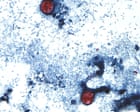
The rapid escalation of the 2026 Midwestern Cyclospora cayetanensis outbreak—surpassing 2,640 laboratory-confirmed and probable cases in Michigan alone—reveals systemic vulnerabilities in agricultural supply chains and public health infrastructure. This outbreak represents a sharp departure from historical baselines; Michigan typically records only 40 to 50 cases of cyclosporiasis annually. The geographic concentration in the Midwest, with rising case counts in Ohio (364 cases) and New York (470 cases), underscores a widespread supply chain contamination vector rather than localized handling failures.
To minimize future exposure and financial liability, operators must look beyond superficial health advisories and analyze the structural, biological, and regulatory mechanisms driving this epidemic.
The Biology of Persistence: Why Standard Sanitization Fails
The primary pathogen, Cyclospora cayetanensis, is a microscopic, single-celled coccidian parasite that infects the mucosal epithelium of the human small intestine. Understanding the physical properties of the parasite explains why standard agricultural and culinary disinfection methods fail to mitigate risk.
Unlike bacterial pathogens such as Escherichia coli or Salmonella, which can be suppressed via chlorine washes or organic acid sanitizers, the infectious unit of Cyclospora—the oocyst—possesses a highly resilient, double-layered cell wall. This wall consists of a protein-lipid outer layer and a glycoprotein inner layer, providing extreme resistance to chemical disinfectants, osmotic pressure, and routine chlorination.
The life cycle of the parasite introduces a distinct chronological delay in outbreak detection:
- Excretion: Infected hosts shed unsporulated (non-infectious) oocysts into the environment via feces.
- Sporulation: In warm, humid environmental conditions (typically found in agricultural fields during the spring and summer months), these oocysts undergo sporulation outside the host over a period of days to weeks.
- Ingestion: Once sporulated, the oocysts contain sporocysts that release sporozoites upon ingestion, invading the host’s enterocytes and initiating the cycle of watery, explosive diarrhea, malabsorption, and intense fatigue.
Because the oocyst is physically robust, standard commercial produce washes do not kill the parasite. These chemical washes are designed to reduce bacterial loads, not to rupture the chitin-like structure of a protozoan oocyst. Physical removal via friction and water volume is the only non-thermal means of reducing oocyst concentration on raw produce, though surface tension and leaf morphology often prevent complete decontamination. Thermal processing remains the sole definitive kill step; the parasite is neutralized only when exposed to temperatures of 158°F (70°C) or higher.
The Aggregation Trap: How Industrial Processing Amplifies Pathogen Spread
The structural transition from whole-head agricultural distribution to value-added, pre-packaged salad mixes has altered the epidemiology of foodborne protozoan infections. The 2026 outbreak highlights how centralized processing acts as a force multiplier for pathogen dissemination.
The Risk Aggregation Function
In a traditional whole-head lettuce supply chain, a localized contamination event (e.g., contaminated agricultural runoff contacting a single crop row) restricts exposure to a small, localized consumer cohort.
In a commercial processing facility, the risk profile changes exponentially:
$$\text{Risk Output} = f(\text{Batch Volume}, \text{Cross-Contamination Rate})$$
When raw leafy greens from multiple growers are harvested, transported, and dumped into centralized washing flumes, a single contaminated leaf can shed millions of oocysts into the shared water system. If the water's sanitation chemistry is not specifically optimized to precipitate or filter out oocysts (which are highly resistant to chlorine), the flume water acts as a vector, distributing the parasite across thousands of previously clean leaves.
The processing steps themselves create physical conditions that favor pathogen adhesion:
- Mechanical Cutting: Slicing lettuce leaves ruptures cell walls, releasing sticky intracellular fluids (latex and sugars) that increase the surface adhesion of oocysts to the leaf tissue.
- Capillary Action: Cut edges of leafy greens can draw in surrounding water—along with suspended pathogens—through capillary action as the leaves cool in processing water, effectively placing the parasite inside the plant tissue where surface washing cannot reach it.
- Modified Atmosphere Packaging: The high-moisture, low-oxygen environments inside plastic salad bags preserve leaf crispness but also protect the structural integrity of the oocysts, preventing desiccation that might otherwise degrade the parasite.
The physical surface characteristics of alternative vectors identified in previous and current investigations—such as the bumpy surfaces of raspberries, the tight layers of green onions, and the complex surface areas of herbs like cilantro and basil—similarly harbor oocysts by shielding them from physical washing forces.
Systemic Blind Spots: The Epidemiology and Surveillance Gap
The public health response to the 2026 outbreak is constrained by structural delays inherent to both the biology of Cyclospora and the current organization of regulatory surveillance systems.
The timeline from exposure to official case reporting is hindered by a compounding series of bottlenecks:
[Day 0: Exposure] ──► [Days 2-14: Incubation] ──► [Days 15-18: Healthcare Seeking] ──► [Days 19-25: Lab Diagnosis & Reporting] ──► [Weeks 4-6: CDC Lag]
The clinical incubation period ranges from 2 to 14 days, during which the patient is asymptomatic but the parasite is replicating within the intestine. Once symptoms manifest, patients often delay seeking medical care for several days, assuming a self-limiting viral or bacterial gastroenteritis. When a patient does seek care, standard stool cultures and routine ova and parasite (O&P) examinations frequently miss Cyclospora oocysts unless specific acid-fast staining or advanced polymerase chain reaction (PCR) gastrointestinal panels are requested.
This diagnostic pathway introduces a reporting lag. The Centers for Disease Control and Prevention (CDC) operates under an estimated six-week lag between the actual onset of a patient’s illness and the formal entry of that case into national surveillance databases.
The surveillance gap has been further widened by recent administrative changes. In 2025, structural funding cuts to state and local health departments, alongside a reduction in the scope of federal programs dedicated to coordinating foodborne illness data, degraded the real-time tracking of pathogens. This institutional friction explains the sharp divergence in current data: while local investigations in Michigan have compiled a dataset of over 2,640 cases, the CDC's national database lags significantly behind, showing only 843 confirmed cases nationwide. The reduction in federal coordination capacity limits the speed of traceback investigations, which rely on matching commercial distribution records with patient purchasing histories to locate the precise agricultural source.
Operational Mitigation: A Protocol for Commercial Food Service
Because traceback investigations have not yet isolated the specific grower, supplier, or distribution channel responsible for the contaminated greens, commercial food service operators, institutional kitchens, and restaurants must implement immediate, proactive risk-mitigation protocols.
The primary objective is to transition from a reliance on supplier-side guarantees to active, on-site hazard control.
Supply Chain Realignment
The systemic nature of the 2026 Cyclospora outbreak indicates that agricultural practices must adapt to a warming, more volatile climate that favors protozoan survival. Relying on post-harvest washes is a mathematically losing strategy; food safety protocols must shift to agricultural water security and origin testing.
For commercial buyers, retailers, and distributors, the long-term strategic response requires a fundamental restructuring of purchasing contracts and supplier verification programs.
┌────────────────────────────────────────────────────────┐
│               UPSTREAM RISK MITIGATION                 │
├───────────────────────────┬────────────────────────────┤
│ Current Deficient Model   │ Proposed Resilient Model   │
├───────────────────────────┼────────────────────────────┤
│ Post-harvest sanitizing   │ Agricultural water PCR     │
│ Relying on chemical wash  │ DNA-traceback tagging      │
│ Bagged, mixed varieties   │ Single-origin whole head   │
└───────────────────────────┴────────────────────────────┘
The primary long-term intervention must focus on the testing of agricultural water inputs. Cyclospora contamination almost invariably originates from human fecal contamination of irrigation water, canal systems, or worker hygiene facilities in the field. Standard agricultural water testing relies on indicators like generic E. coli levels. Because protozoan oocysts survive environmental stressors and chemical treatments far longer than indicator bacteria, a clean bacterial water test does not correlate with the absence of Cyclospora.
Future supplier contracts must mandate the adoption of rapid, field-deployable PCR assays designed to detect Cyclospora DNA in irrigation water and wet-surface swabs before harvesting. Additionally, suppliers must implement strict geofencing and physical barriers around open water reservoirs to prevent agricultural runoff from animal grazing lands and municipal sewage systems during heavy rain events.
Until these upstream testing protocols are integrated into standard agricultural supply contracts, the operational burden of food safety will remain with downstream commercial kitchens. Operators who fail to adapt their prep methods from convenience-focused packaged mixes to controlled, whole-head processing will face continuous exposure to regional outbreaks as long-term climatic warming trends expand the geographic and seasonal boundaries of the pathogen.