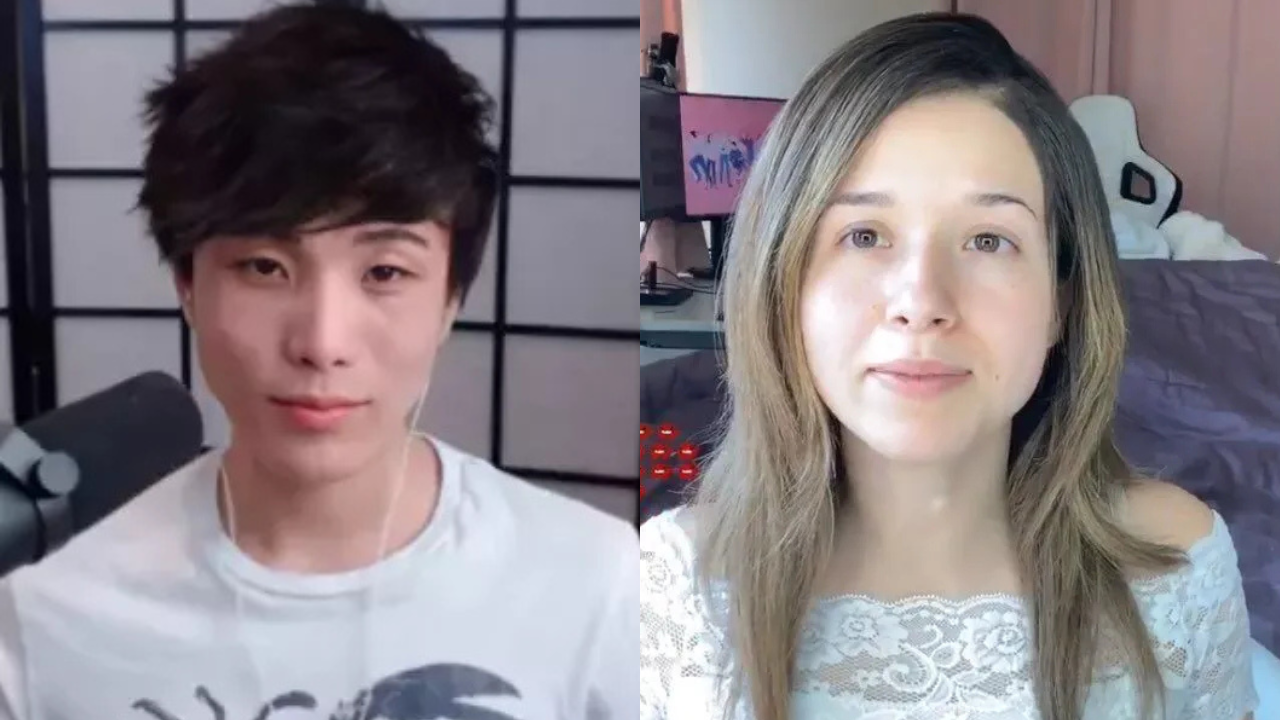
The internet thrives on the fiction of the "streaming friend group." We watch Pokimane, Valkyrae, and Sykkuno interact through a digital glass, convinced that their chemistry belongs to us. When that glass cracks—when someone moves to a different platform or a group stops appearing in every thumbnail—the audience reacts like a child of a messy divorce.
The recent wave of "hypocrisy" claims aimed at Imane "Pokimane" Anys and Rachell "Valkyrae" Hofstetter is a masterclass in audience entitlement. Critics point to past controversies involving Fuslie or NoahJ456 as "proof" of a double standard. They claim these women are abandoning Thomas "Sykkuno" shortly after his move back to Twitch (or his previous jump to YouTube) out of petty professional jealousy.
They are wrong. This isn't a story about hypocrisy or "fake friends." It is a story about the brutal, cold mechanics of the creator economy. If you think streamers owe you a lifetime contract of friendship, you have fallen for the most expensive marketing trick in history.
The Myth of the Perpetual Squad
The lazy consensus suggests that because Sykkuno was a core member of the "Amigops" era, any reduction in public interaction is a betrayal. This logic ignores how content is actually made. Collaboration in the streaming world is a business transaction disguised as a hang-out.
When a creator switches platforms, the "synergy"—a word I hate but one that accurately describes the algorithm here—dies. YouTube and Twitch do not play well together. Discoverability drops when you can’t raid your friend or host their channel. Co-streaming becomes a technical and legal headache.
I have watched dozens of creator circles dissolve the moment the financial incentive to collaborate vanished. It isn't personal. It’s resource management. Pokimane and Valkyrae are CEOs of their own brands. If a collaboration no longer serves the growth of that brand, it stops. Expecting them to carry "legacy" friendships into every new content cycle is like expecting a Fortune 500 CEO to keep their college roommate on the board of directors out of sentimentality.
The Hypocrisy Trap: Fuslie and NoahJ456
The internet loves a "gotcha" moment. The current narrative weaponizes old controversies involving Leslie "Fuslie" Fu or NoahJ456 to paint Pokimane and Valkyrae as moral arbiters who only apply rules when it suits them.
Here is the nuance the "outrage" articles miss: The streaming industry has no HR department. There is no standard code of conduct. Standards are set by the audience’s appetite for drama and the platform's TOS.
When people bring up Fuslie’s past mistakes to "prove" Pokimane is a hypocrite for distancing from Sykkuno, they are comparing apples to spaceships. Distancing from a creator because of a change in career trajectory is a business move. Interacting with another creator despite their past controversies is a risk-assessment move.
The audience assumes these decisions are made based on "vibes" or "sisterhood." In reality, they are made based on internal metrics, sponsor requirements, and the specific heat of a controversy at any given moment. If a creator’s past controversy doesn't hurt the bottom line, it is ignored. If a friend's platform move makes collaboration inefficient, that friend is deprioritized. It’s not hypocritical; it’s consistent with the logic of profit.
Your Parasocial Investment is a Bad Asset
The "betrayal" felt by fans is the result of a failed investment. You spent thousands of hours watching these people. You bought the merch. You defended them in Twitter threads. You feel you own a piece of their social lives.
You don't.
The parasocial relationship is a one-way street designed to keep you clicking. Streamers are incentivized to make you feel like you're part of the inner circle. When they make "real-life" decisions that exclude your favorite personality, the illusion shatters.
The backlash isn't actually about Sykkuno. It’s about the fans realizing they aren't in the room where it happens. They are just the people paying for the room.
The Professionalization of "Vibes"
Streamers like Valkyrae and Pokimane have matured beyond the "just playing games" phase. They are investors. They are founders of companies like OfflineTV or RFLCT (regardless of how that ended). They operate in a high-stakes environment where every public association is scrutinized by advertisers and VC firms.
Sykkuno’s brand is built on being the "shy, humble gamer." It is a brilliant, highly profitable persona. But his career path—jumping between platforms for massive contracts—is a solo play. Why should his peers, who are building their own competing empires, be expected to subsidize his visibility if it doesn't align with their current roadmap?
We see this in every industry. In music, a featured artist stops working with a producer once they've hit a certain level of fame. In tech, a founder leaves their "work best friend" behind to start a new venture. We call that "career growth" in the real world. In streaming, we call it "snake behavior."
The industry insider truth is this: Most of these creators are friendly, but few are "lose-money-for-you" friends.
The False Moral High Ground
The most annoying part of this discourse is the moralizing. Critics pretend they care about Sykkuno’s feelings or the "purity" of the gaming community.
They don't. They want a reason to tear down successful women who have stayed at the top of a male-dominated industry for a decade. Pokimane has been the "villain" of a thousand different narratives because she understands the business better than her audience. She knows when to pivot. She knows when to cut ties.
If a male streamer stops playing with a former collaborator, the audience says "the meta changed." When Pokimane does it, it's a "betrayal."
Let’s look at the data of audience retention. If Valkyrae continued to play exclusively with the 2020-era Among Us crew, her numbers would have stagnated years ago. The "Among Us" peak was an anomaly, not a baseline. You cannot build a sustainable 10-year career on 2020 nostalgia.
Stop Asking if They Are "Real Friends"
The question itself is a distraction. Whether they text each other at 3:00 AM doesn't matter to you. What matters is the content.
The "People Also Ask" sections are filled with queries like "Are Pokimane and Sykkuno still friends?" or "Why did Valkyrae stop playing with Sykkuno?"
The honest, brutal answer: Because it stopped being the most profitable way to spend their time.
If you want "real" friendships, go to a bar or join a local club. If you want high-production digital entertainment, watch Twitch. Stop confusing the two. The "backlash" is just the sound of a consumer base realizing they bought a product, not a relationship.
The Inevitable Decentralization of Content
We are entering an era where big "squads" are becoming less relevant. Creators are realizing that being tied to a specific group limits their individual brand power. The "Amigops" era was a moment in time, a lightning strike of pandemic boredom and perfect game mechanics.
Trying to force that dynamic to continue in 2026 is like trying to force a high school garage band to stay together after the lead singer gets a record deal. It’s pathetic to watch, and it ruins the music.
Sykkuno is fine. He is a multi-millionaire with a dedicated fanbase. He doesn't need "protection" from Pokimane or Valkyrae. He is making his moves, and they are making theirs.
The hypocrisy isn't in the creators; it's in the fans who demand "authenticity" while simultaneously demanding that creators perform a choreographed version of friendship that ended years ago.
You are being sold a story. Every stream is a performance. Every "leak" about drama is a hook. The backlash is just another form of engagement, and by participating in it, you are proving that the streamers—not the critics—actually understand how this game is played.
The next time you see a headline about "hypocrisy" in a streamer circle, ask yourself who benefits from the noise. It’s usually the person writing the article and the creator getting the hate-clicks. The "truth" of their friendship is irrelevant because the business of their brand is thriving on your indignation.
Stop mourning a friendship that was always a partnership.
Stay mad. It’s great for the algorithm.