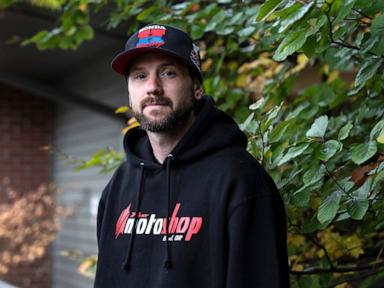
When an armed threat enters a school, survival often comes down to seconds, human instinct, and the physical layout of a building. While national coverage frequently centers on a single viral quote from a parent who intervened, the broader reality of civilian intervention during school shootings exposes deep structural gaps in campus security, emergency response protocols, and the unpredictable psychology of crisis.
Media outlets love a clean hero narrative. A father happens to be on campus, confronts an active shooter, and utters a phrase like "I was supposed to be there" during a televised interview. It makes for compelling evening news. Yet focusing exclusively on fate or individual bravery obscures the systemic failures that put a parent in the line of fire in the first place.
The Anatomy of Unplanned Civilian Intervention
Active shooter events move faster than institutional response times. According to federal law enforcement analyses of active shooter incidents across the United States, the majority of attacks end before police arrive on the scene. Most incidents conclude within five minutes, while average law enforcement response times often hover between three and eight minutes depending on municipal density and dispatch delays.
That gap creates a vacuum. Into that vacuum steps whoever happens to be standing in the hallway.
When a parent or staff member intervenes, they are rarely operating from tactical training. They are reacting to acute stress, adrenaline, and proximity. Security analysts refer to this as proximity-driven intervention. Unlike sworn officers, civilians on campus do not carry body armor, communications gear, or standardized rules of engagement. Their decision to charge an attacker is usually binary—fight because escape is impossible, or fight because children are directly behind them.
Consider a hypothetical scenario at a typical suburban elementary school during morning drop-off. A visitor sign-in vestibule sits unlocked while parents walk children to classrooms. If an armed individual breaches that front entrance, a parent standing ten feet away faces an immediate physical reality. Running leaves the hallway exposed. Engaging the threat, even unarmed, disrupts the attacker's momentum. In high-stress threat assessments, interrupting an assailant's OODA loop—observe, orient, decide, act—is often the single factor that reduces casualty counts.
Why Media Narratives Miss the Structural Failures
Headline writers gravitate toward the miraculous. When a parent says they were meant to be at the school that morning, the public absorbs a story about destiny rather than perimeter security.
This framing lets institutions off the hook. If a tragedy was averted by a miracle, nobody has to ask why an unauthorized person with a weapon reached an interior corridor. Nobody has to audit the magnetic door locks, question the visitor management software, or examine why the school resource officer was stationed on the opposite side of a sprawling campus.
Investigative reviews of past school breaches consistently point to mundane vulnerabilities rather than cinematic masterminds. Propped-open side doors. Front-office glass that is not ballistic-rated. Single-point-of-entry designs that look secure on architectural blueprints but fail during high-traffic periods like arrival, lunch, and dismissal.
| Security Layer | Intended Function | Common Real-World Failure Point |
|---|---|---|
| Perimeter Fencing | Channels visitors to a single monitored entrance | Left unlocked for deliveries or athletic field access |
| Access Control Vestibule | Traps visitors between two locked doors until vetted | Inner door buzzed open automatically during busy mornings |
| Visitor Management | Checks IDs against watchlists and prints badges | Parents waived through because front desk staff recognize them |
| Campus Communications | Alerts all classrooms instantly to initiate lockdown | Dead zones in gymnasiums, cafeterias, or portable classrooms |
When a parent ends up tackling a gunman, at least three of those layers have already collapsed. Celebrating the parent's courage is appropriate. Treating that courage as a viable security strategy is reckless.
The Law Enforcement Friction Nobody Discusses
There is an uncomfortable truth inside modern active shooter doctrine. Police departments train officers to enter a building immediately, locate the shooter, and neutralize the threat. At the exact same time, parents outside the perimeter are driven by an overwhelming biological imperative to breach that same building and reach their children.
These two imperatives collide in the parking lot.
During high-profile school emergencies, perimeter chaos frequently slows down tactical teams. Officers arriving on scene must distinguish between the perpetrator, fleeing students, plainclothes staff, and frantic parents trying to force their way inside. Every second a patrol officer spends restraining an unarmed father at the front doors is a second that officer is not moving toward gunfire.
Yet the friction cuts both ways. Parents have watched high-profile incidents where law enforcement hesitated outside a classroom while victims remained trapped inside. That erosion of institutional trust has fundamentally altered parent behavior. A growing number of parents no longer view police perimeters as absolute boundaries; they view them as obstacles if they believe responders are stalling.
The Identification Hazard
Inside an active scene, civilian intervention carries a lethal secondary risk. When an unarmed parent wrestles a firearm away from an assailant, that parent is suddenly holding a weapon in a hallway moments before tactical units round the corner.
Law enforcement training emphasizes weapon recognition under extreme stress. Officers entering a smoke-filled or chaotic corridor have fractions of a second to assess whether a person holding a rifle is the shooter or a bystander who just disarmed him. Plainclothes intervention, while heroic, strips away the visual cues police rely on to avoid friendly fire.
The Psychological Aftermath of the "Hero" Label
Public attention moves fast. Within forty-eight hours of a thwarted attack, television crews pack up their satellite trucks, leaving the intervening parent to navigate a quiet, disorienting reality.
Trauma specialists who work with emergency responders and civilian bystanders note that society struggles to process survivors who prevented a mass casualty event. Because the worst-case scenario did not happen, outside observers often assume the rescuer is fine. They are hailed as heroes at city council meetings and given plaques at school board assemblies.
Behind closed doors, the physiological toll looks identical to combat trauma.
- Hypervigilance: Inability to sit in public spaces without scanning exits and monitoring strangers' hands.
- Survivor Guilt: Obsessing over minor details, wondering what would have happened if they had arrived thirty seconds later.
- Somatic Fallout: Chronic sleep disruption, auditory triggers from everyday loud noises, and persistent adrenaline crashes.
A parent who steps into a shooting did not sign a contract to carry that weight. Unlike firefighters or police officers, they do not return to a precinct with peer support units, mandatory debriefings, or institutional workers' compensation structures tailored to critical incidents. They go back to making breakfast, driving carpool, and staring at the exact hallway where their life nearly ended.
What Actually Hardens a School Without Turning It Into a Prison
Districts across the country spend millions on security theater. Metal detectors that create massive bottlenecks of children standing unprotected outside the building. Clear backpacks that do nothing to stop a rifle concealed under a coat. Reactive software that sends alerts after shots have already been fired.
Real mitigation relies on passive, physical friction that buys time without requiring superhuman intervention from parents.
Compartmentalization remains one of the most effective architectural principles. Schools designed with heavy fire doors that automatically release and lock via magnetic hold-opens can seal off hallways instantly when an alarm triggers. Even if an intruder breaches the front office, compartmentalized corridors prevent free movement through the academic wings.
Classroom door hardware is equally critical. Decades of post-incident commissions have noted a stark statistic: no active shooter in a K-12 school has ever breached a locked, commercial-grade classroom door reinforced with a proper deadbolt or secondary barricade device. Attackers look for paths of least resistance. When a door does not yield within seconds, shooters almost universally move on rather than expend ammunition trying to defeat a steel frame.
Standardized panic alerts directly linked to local dispatch centers also eliminate the dead time between a 911 call and officer mobilization. Silent wearable badges worn by teachers and administrators allow staff to trigger a building-wide lockdown and summon police simultaneously without needing to reach a wall-mounted intercom.
The Limits of Individual Bravery
When a parent speaks out after stopping an attacker, their words resonate because they tap into a universal parental instinct. Every mother and father watching that interview quietly asks themselves whether they would have run toward the sound of gunfire or frozen in place.
The answer cannot be known until the moment arrives. Human reactions to sudden lethal threats are governed by neurobiology, not willpower. Some people freeze, some flee, and a rare few surge forward.
Building school safety around the hope that a brave parent will happen to be standing near the front office at 8:15 in the morning is not a plan. It is a gamble with the highest possible stakes, and the only reliable way to protect students is to ensure no parent ever has to make that choice in the hallway again.


