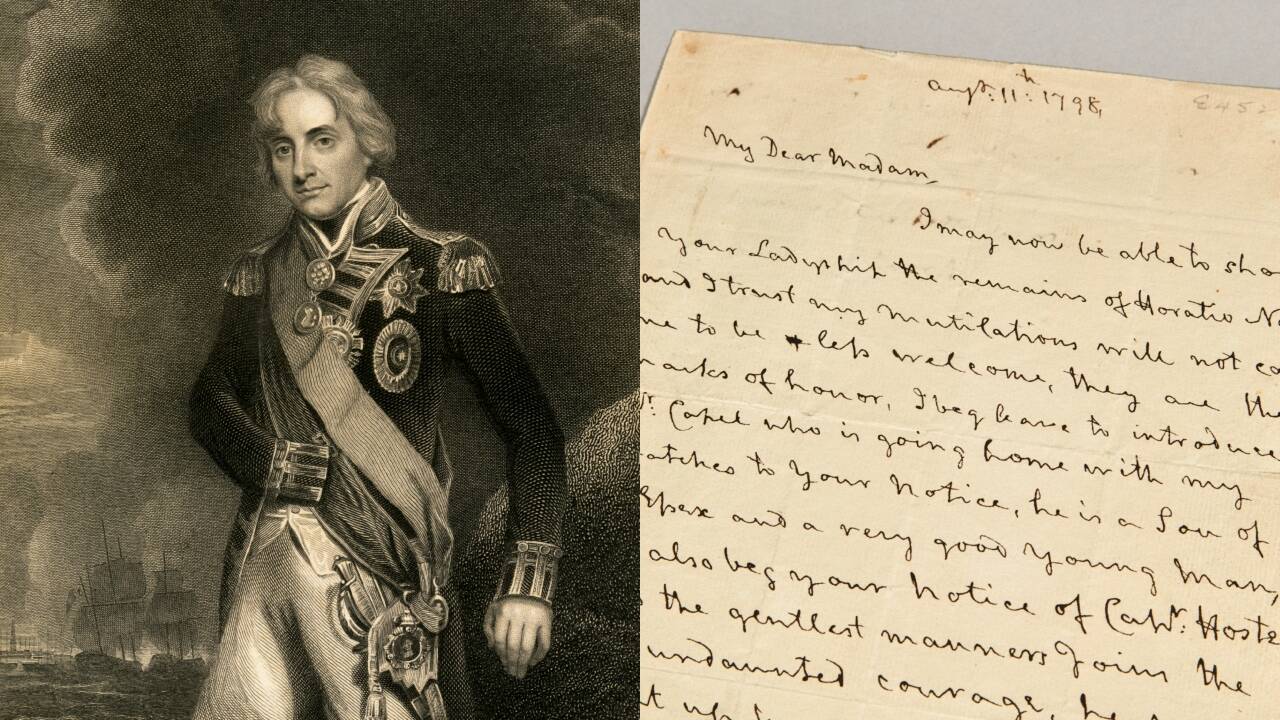
Auction houses love a good fairy tale. Every few years, a cache of yellowed parchment tied to Horatio Nelson hits the block, and the press dutifully regurgitates the press release. Six million pounds. National treasure. Irreplaceable slice of naval history.
Buyers eat it up. They bid with their egos, convinced they are securing immortality alongside Britain’s greatest naval hero.
They are wrong.
If you are looking at a £6 million estimate for a Nelson archive and seeing a blue-chip alternative asset, you are falling for one of the oldest traps in the collectibles market. The lazy consensus treats historical manuscripts like fine art or prime real estate—finite supplies that only ever go up. In reality, high-end historical autographs are illiquid, fragile, and notoriously poor performers when adjusted for inflation, insurance, and storage.
Let’s dismantle the myth of the trophy archive before another billionaire lights seven figures on fire.
The Scarcity Illusion
The primary sales pitch for any Nelson sale revolves around rarity. The catalog copy will remind you that Nelson died at Trafalgar in 1805, cutting short his output, and that museum collections have locked away the best material.
Here is the reality check. Nelson was a prolific, obsessive writer. Despite losing his right arm at Santa Cruz de Tenerife in 1797, he learned to write rapidly with his left hand and dictated thousands more dispatches to his secretaries. The National Maritime Museum in Greenwich holds thousands of his letters. The British Library has thousands more. Every major naval archive in Europe has boxes of them.
A letter signed by Nelson is not rare. A handwritten letter by Nelson is not even particularly rare.
What commands the headline-grabbing prices are specific, emotionally charged artifacts—letters to Emma Hamilton, battle orders from the Nile or Trafalgar, or personal logs detailing injuries. When an archive is valued at £6 million, you are rarely paying for a uniform collection of masterpieces. You are usually paying for three or four crown jewels bundled together with dozens of mundane administrative notes about ship victualing, midshipman promotions, and weather reports.
Auction houses love bundling. It allows them to slap an astronomical estimate on a lot by averaging the prestige of the top five percent across the entire box. Once the gavel falls and the press moves on, the buyer is left holding a massive volume of low-tier paper that the secondary market has zero appetite to absorb individually.
The Maintenance Trap Nobody Calculates
When people discuss the return on investment for historical documents, they conveniently ignore the carrying costs. Paper is organic. It wants to rot.
Iron gall ink—the standard writing fluid of the late eighteenth and early nineteenth centuries—is mildly acidic. Over two hundred years, it literally eats through the rag paper it was written on, a process conservators call ink burn. If the parchment or paper isn't kept at precise temperature and humidity levels, the letters turn to brown dust.
To protect a £6 million archive, you cannot simply frame the best pages and hang them in your study. UV light fades iron gall ink irreversibly within a few years. You have to build or rent climate-controlled vault space. You have to pay specialist paper conservators to de-acidify and stabilize the sheets. You have to pay specialized fine art and specie insurers an annual premium that quietly bleeds your capital every single year.
I have watched collectors spend millions acquiring historic military archives, only to realize five years later that their annual insurance, conservation, and storage bills exceeded any realistic appreciation in the market value of the paper. If you hold that archive for twenty years, your break-even price doesn't just need to beat inflation; it has to clear a mountain of dead-weight operational costs.
The Liquidity Cliff
Try selling a £6 million historical archive in a hurry. You cannot.
Equities sell in milliseconds. Prime London real estate sells in months. Ultra-high-end historical manuscripts operate in a market of maybe fifteen serious private buyers globally, plus a handful of cash-strapped national institutions.
When an archive goes up for auction at Sotheby's or Christie's, the house spends months orchestrating a global roadshow to get three or four ego-driven bidders in the same room. If two of those billionaires decide they would rather buy a superyacht or a Basquiat that season, the lot fails to meet its reserve.
Once a high-profile lot is "bought in"—meaning it fails to sell at auction—it becomes radioactive. Dealers call it being burned. Every serious collector in the world knows the archive couldn't find a buyer at its reserve price, and its market value instantly drops by thirty to forty percent.
Even if you successfully buy the archive, how do you exit? If you consign it back to an auction house within five years, the market assumes you are distressed or dissatisfied. If you try to break the archive up and sell the letters piecemeal through manuscript dealers, you surrender forty to fifty percent of the retail value to dealer commissions, and it will take you a decade to clear the inventory.
The Institutional Export Block
There is a massive regulatory trap specific to British historical archives that foreign buyers routinely overlook until the wire transfer clears.
Under UK law, any cultural object over fifty years old that exceeds a specific monetary threshold requires an export license to leave the country. For historical manuscripts and archives, that threshold is remarkably low—often just a few tens of thousands of pounds, let alone six million.
If you are an American, Middle Eastern, or Asian buyer who just spent £6 million on Nelson's papers with plans to display them in your private museum in New York or Geneva, the UK government can—and frequently does—place a temporary export bar on the items under the Waverley Criteria.
This gives British museums and libraries months to fundraise and match your winning bid. While the export bar is active, your £6 million is frozen. You own the asset on paper, you carry the risk, and you cannot take possession of it outside the United Kingdom. Even worse, if a British institution successfully raises the cash, you are forced to sell the archive back to them at the exact price you paid. You lose the auction house buyer's premium—which often runs north of twenty-five percent—and walk away with a guaranteed seven-figure loss before you ever held the letters in your hands.
Where the Real Value Lives
Does this mean historical manuscripts are worthless? Not at all. It means the smart money plays an entirely different game than the headline chasers.
The biggest mistake buyers make is confusing fame with historical utility. A signed Nelson letter thanking a London merchant for a crate of wine is a trophy for someone who wants to drop a famous name at a dinner party. It adds nothing to human knowledge. Consequently, its value is purely tied to celebrity worship, which fluctuates wildly across generations. Ask yourself how much twenty-five-year-old tech founders care about the Battle of Copenhagen compared to their grandfathers. The demographic base for nineteenth-century naval memorabilia is aging out, and younger wealth is chasing cultural artifacts from the twentieth and twenty-first centuries—early computing hardware, space exploration relics, and modern pop culture manuscripts.
If you want to buy historical paper that actually holds and builds value, you ignore the celebrity trophies and buy primary operational intelligence.
Look at what genuinely appreciates in the institutional market:
- Unpublished reconnaissance maps and hand-drawn charts that show how commanders actually viewed terrain before a major conflict.
- Cipher books and intelligence dispatches that reveal the hidden mechanics of espionage and diplomacy.
- Complete, unbroken runs of correspondence from mid-level bureaucrats or merchants who documented the exact economic realities—prices, supply chains, trade routes—of a pivotal era.
Museums and universities do not have budget to buy another Nelson signature. They have dozens. They will scrape together endowment funds to buy an obscure quartermaster's ledger that proves how the Royal Navy actually financed its blockade of Brest. Historians need data, not autographs.
The Honest Caveat
To be clear, there is one scenario where buying a £6 million Nelson archive makes complete sense.
If you are an ultra-high-net-worth individual who views the purchase strictly as consumption—no different than buying a Gulfstream jet or a box at the opera—and you intend to donate the archive to a major public institution like the National Maritime Museum for a massive tax deduction and a wing named after your family, the math works. You are converting liquid cash into social status and tax efficiency.
There is nothing wrong with buying prestige. Just don't call it an investment.
How to Actually Buy History
If you have capital to deploy in the historical market and refuse to be the person holding the bag when the auction gavel falls, follow three rules:
- Never buy the headline lot. The item featured on the cover of the auction catalog is priced for maximum emotional markup. Let two billionaires fight over it while you buy the unglamorous, scholarly lots buried on page 140 of the same sale.
- Audit the provenance before the preview. Ensure the archive has an unbroken, documented chain of ownership stretching back decades. Quietly check with major national libraries to see if they have already microfilmed or digitized the contents. If the text has already been published in a standard academic compendium, the scholarly value is already extracted, and you are strictly buying paper and ink.
- Price in the exit on day one. Before you raise your paddle, know the exact three dealers or two institutions that would buy the archive from you in five years, and calculate what they would pay after taking their cut. If you cannot name the next buyer, you are the end of the line.
Stop letting auction catalogs convince you that overpaying for a famous signature makes you a custodian of history. All it really makes you is exit liquidity for the previous owner.