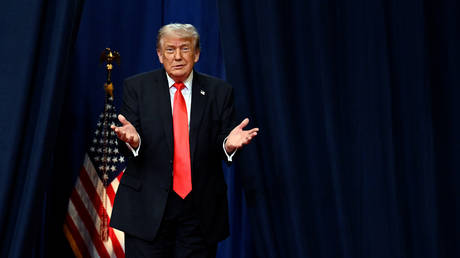
The media is currently vibrating with the same tired script: a "peace proposal" is on the table, one side rejects it, and the pundits treat it like a moral failure. They paint Donald Trump’s dismissal of Iran’s counter-offer as "obstructionism" and Tehran’s warnings as "escalation."
They are missing the point.
Peace proposals in the current Middle Eastern climate aren't blueprints for harmony. They are tactical pauses disguised as diplomacy. Rejection isn't a sign that the process is broken; it’s a sign that the actors finally understand the stakes. We need to stop pretending that a signed piece of paper changes the tectonic shifts of regional power.
The Myth of the Good Faith Negotiation
The "lazy consensus" suggests that if both parties just sat in a room long enough with a neutral mediator, they’d find a middle ground. This ignores the fundamental reality of Zero-Sum Geopolitics.
In the Middle East, power is not shared; it is occupied. When the U.S. offers a peace proposal, it is effectively asking Iran to managed its own decline. When Iran responds, it isn't "negotiating"—it is checking the shelf life of its leverage.
I’ve watched diplomats spend decades "building bridges" only to realize they were building them over an active volcano. You cannot "foster" (to use a term the bureaucrats love) a relationship with a regime whose entire domestic legitimacy is built on being the "Resistance." For Tehran, a permanent peace with a U.S.-backed framework isn't a victory; it's an existential threat to the Islamic Revolutionary Guard Corps (IRGC).
Why Trump’s Rejection is Mathematically Sound
Critics claim Trump’s rejection of the Iranian response is "reckless." From a cold, hard realism perspective, it’s the only move that makes sense.
If you accept a counter-proposal that allows for "limited" enrichment or "monitored" proxy funding, you haven't bought peace. You’ve subsidized the next war.
Consider the Sunk Cost Fallacy of Diplomacy. The U.S. has spent billions trying to stabilize the Levant and the Gulf. To accept a flawed Iranian response just to "keep the process alive" is throwing good money after bad. Trump isn't rejecting a "solution"; he’s rejecting a bad contract. In the private sector, if the terms change to favor the entity that's actively trying to disrupt your supply chain, you walk away. Why should the White House be any different?
The "Tehran Warns" Headline is a Distraction
Every time the news cycle hits a snag, we see the headline: "Tehran warns of new attacks."
This is theatrical posturing. It’s the geopolitical equivalent of a corporate "cease and desist" letter that neither side expects to hold up in court. Iran’s warnings are designed for two audiences:
- The Domestic Hardliners: To prove the regime hasn't gone soft.
- The Western Press: To trigger the "de-escalation" reflex in Washington.
If Iran truly intended to launch a decisive, game-altering strike, they wouldn't warn the Associated Press first. True military escalation happens in the dark, through cyber warfare or asymmetric proxy moves that offer plausible deniability. These public "warnings" are actually a sign of restraint. They are a plea for the U.S. to return to a status quo that favors Iranian persistence.
The Flaw in the "Peace" Question
"People Also Ask" columns are full of questions like: "Will there ever be peace in the Middle East?"
This is the wrong question. It’s a Western-centric, idealistic query that ignores history. The right question is: "What level of instability is manageable?"
Stability in this region has historically been maintained through a Balance of Power, not a Confluence of Values. When one side gets too strong, the other pushes back. The peace proposal currently being debated is an attempt to artificially freeze the map. It won't work because it doesn't account for the rise of non-state actors or the shifting energy needs of the global market.
The High Cost of the "Middle Ground"
We are told that a "compromise" is the goal. In reality, compromise in the Middle East often leads to "Frozen Conflicts."
Look at Lebanon. Look at Yemen. These aren't successes of diplomacy; they are the scarred remains of "agreements" that failed to address the root causes. A "successful" peace proposal that leaves the IRGC’s proxy network intact is just a countdown clock to the next October 7th or the next Red Sea blockade.
The contrarian truth is that friction creates clarity. By rejecting a sub-par Iranian response, the U.S. forces the issue. It demands a binary: either a total shift in behavior or a continuation of the "Maximum Pressure" campaign. The "nuanced" middle ground that the competitor article pines for is actually the most dangerous place to be. It’s where miscalculations happen.
Strategic Honesty vs. Diplomatic Performance
The competitor’s piece focuses on the "live" updates of who said what. It’s a play-by-play of a theater production.
Real analysis requires looking at the Economic Incentives. Iran’s economy is struggling, yet they continue to reject proposals. Why? Because the "Resistance Economy" is their only survival mechanism. If they open up, the regime loses control.
If the U.S. accepts a weak deal, it signals to the rest of the world—China and Russia included—that the "American Peace" is for sale at a discount. Trump’s rejection, whether you like his personality or not, is an assertion of Value Integrity. You don't sign a deal with a partner who is currently trying to burn down your house.
Stop Fixing the Wrong Problem
The world is obsessed with "fixing" the Middle East. You don't fix a thousand-year-old sectarian and geopolitical rivalry with a four-page document drafted in a D.C. think tank.
You manage it. You contain it. And occasionally, you have to be the "bad guy" who walks away from the table.
The current outcry over the "failed" peace proposal is a byproduct of a society that values the appearance of progress over the reality of security. We want the photo op of the handshake. We want the Nobel Peace Prize ceremony. We don't want the messy, quiet, and often violent work of maintaining a deterrent.
The rejection of the Iranian response isn't the end of the world. It’s the beginning of a more honest conversation. One where we admit that some interests are irreconcilable. One where we stop treating Tehran like a misunderstood teenager and start treating them like a sophisticated, hostile regional power.
The most "pro-peace" thing a leader can do is refuse to sign a lie.
Diplomacy isn't about saying "yes" to keep the room quiet. It's about having the spine to say "no" when the "yes" leads to a graveyard.
The proposal is dead. Good. Now we can finally start talking about reality.
Stop looking for the handshake. Watch the oil prices. Watch the Straits of Hormuz. Watch the movement of ballistic batteries. Everything else is just noise for the evening news.
The table hasn't been flipped; it's been cleared of the clutter.
Go back to work.