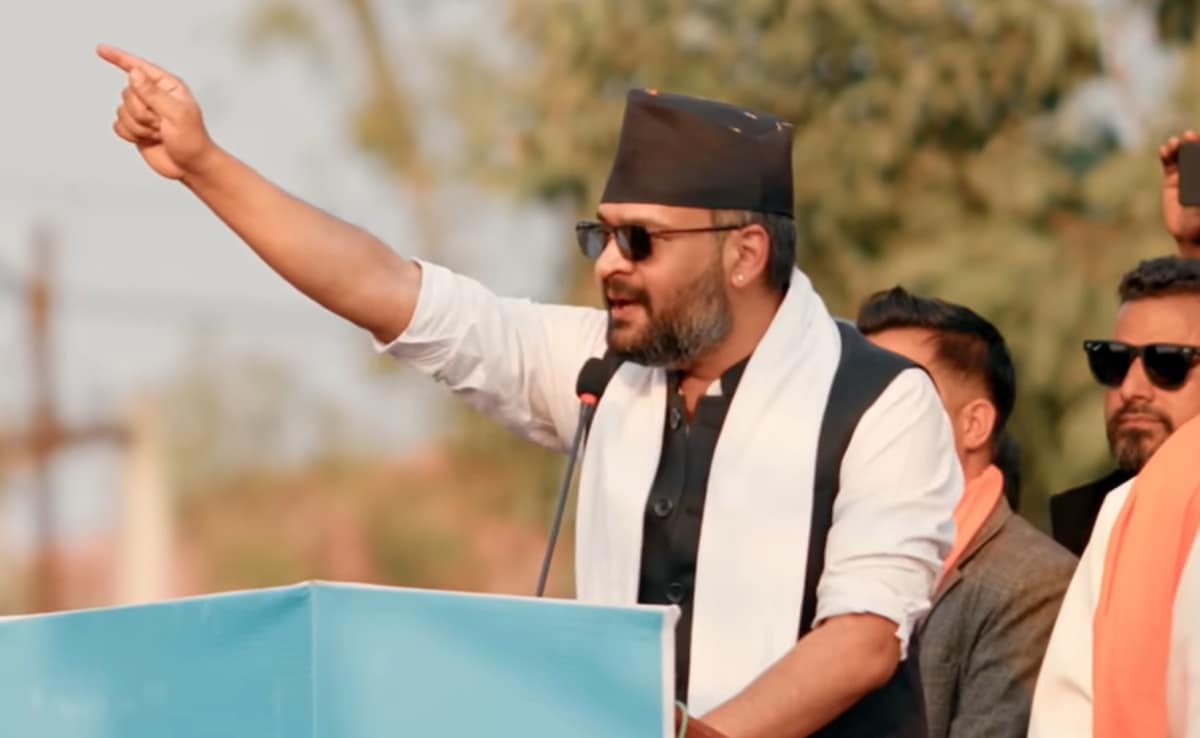
When a rapper turned structural engineer takes the highest office in the country after a youth-led political earthquake, you expect fireworks. You expect the status quo to shake. But nobody in Kathmandu or New Delhi expected Prime Minister Balen Shah to turn the most sacred cow of Nepali domestic politics completely on its head during his first address to Parliament.
By declaring that territorial encroachment along the India-Nepal border is a two-way street, the 35-year-old Prime Minister did something unprecedented. He broke the ultimate taboo. For decades, the political playbook in Kathmandu has been simple: use anti-India border rhetoric to whip up nationalist fervor, secure your base, and paint New Delhi as the perpetual bully.
Instead, Shah stood before lawmakers and dropped a bombshell. "You will be surprised to know a fact that I have learnt recently," he said. "India has not only encroached Nepali territory, but Nepal has also encroached Indian territory in many places."
The reaction was instant, furious, and highly revealing. Opposition lawmakers shouted for the comments to be expunged. Former diplomats panicked. The Foreign Ministry scrambled to issue a late-night clarification, basically trying to put the toothpaste back in the tube.
Why did these raw remarks trigger such an intense, immediate backlash across Nepal? It is not just about maps or border pillars. It is about a fundamental shift in how the world's youngest state leader is choosing to play a dangerous diplomatic game.
The Taboo of Balanced Blame
To understand why everyone is losing their minds in Kathmandu, you have to realize that Nepal's sovereign identity is deeply tied to its border grievances. The official narrative has always been one of pure victimhood. When Shah suggested that Nepal might also be occupying land claimed by India, he shattered that collective consensus.
Former Ambassador to India Nilambara Acharya quickly went on the record to say there is absolutely no official data supporting the claim that Nepal has encroached on Indian soil. Geographers and border experts like Buddhi Narayan Shrestha immediately pushed back too. They argue that while local farmers might cross lines because of missing border pillars, it is technically incorrect to call it state-level encroachment.
By validating India's perspective on the messy reality of the open border, Shah stripped away the absolute moral high ground that Nepali politicians usually weaponize during elections. It felt like a betrayal to the old guard who spent their entire careers using the border issue as a shield against domestic failures.
Moving Beyond the Cartographic War
This is not Shah's first brush with border politics, which makes his recent conciliatory tone even more shocking. Back in 2023, while serving as the Mayor of Kathmandu, he hung a map of "Greater Nepal" in his office. That map included territories that are currently part of India. He even tried to ban Indian movies in the capital over cultural disputes.
So what changed? Power brings proximity to state secrets and real diplomacy.
The core of the dispute rests on the 1816 Treaty of Sugauli, signed after the Anglo-Nepalese War. That treaty set the Kali River as Nepal's western boundary. The problem? It never defined the exact source of the river.
- Nepal's Position: The river starts at Limpiyadhura, meaning the Kalapani, Lipulekh, and Limpiyadhura regions belong to Nepal.
- India's Position: The river starts much further downstream near Kalapani, keeping the strategically crucial tri-junction under Indian control.
In 2020, Nepal went so far as to amend its constitution to update its official political map, incorporating these disputed areas. It was a peak moment of cartographic nationalism.
But Shah is a structural engineer by trade. He looks at problems through a lens of pragmatism rather than ideology. In his speech, he revealed that Kathmandu and New Delhi are actively communicating via official diplomatic notes. His pitch is to move past political grandstanding and hand the issue over to a joint team of historians, surveyors, and technical experts.
Shaking Up the Neighborhood
Shah did not stop at breaking domestic taboos. He also managed to ruffle feathers in New Delhi by announcing that he has dragged the United Kingdom and China into the conversation.
Bringing up the UK makes historical sense since the British East India Company drew the original, flawed lines. But inviting China into a bilateral dispute over the Lipulekh Pass—a highly sensitive military vantage point for India near the Tibet border—is a massive strategic gamble.
New Delhi has always maintained that border issues with Nepal must be solved strictly through bilateral dialogue. By floating the idea of an internationalized, multi-party review, Shah is trying to pressure India to the negotiating table. He wants to show that his administration is not just going to accept the status quo of Indian administrative control on the ground.
The Reality of the Living Border
Lost in the political noise in Parliament is the actual reality of the 1,751-kilometer open border. Around 97% of the boundary has been mutually agreed upon. The trouble lies in places like Susta and Kalapani, and in the "Dasgaja"—the no-man's-land strip.
In areas like Susta, the Gandak River serves as the border. But rivers do not care about international treaties. Over two centuries, the river has constantly shifted its course from east to west. Entire villages that used to be on one bank are now on the other.
This creates a logistical nightmare where local citizens cultivate land that technically belongs to the other nation. The Foreign Ministry's frantic clarification noted that this "cross-border occupation" by local populations is what the Prime Minister actually meant. But the damage was already done. Shah used the word "encroached," a term loaded with geopolitical aggression.
The Next Steps for Nepal's Border Politics
The outrage in Kathmandu shows that the old political establishment is terrified of Shah's direct, unpolished approach to foreign policy. They view his remarks as a rookie mistake from a young leader who does not understand the delicate nuances of diplomacy. But Shah’s supporters see it as a refreshing dose of honesty from someone trying to solve a decades-old problem instead of just fundraising political points off it.
If you are trying to understand where this situation goes next, keep an eye on these concrete developments:
- Watch the Parliamentary Record: Opposition parties are fighting hard to have Shah's remarks officially expunged. If they succeed, it will show the old guard still holds significant sway over national security narratives.
- Monitor the Joint Technical Teams: Look for whether the Boundary Working Group (BWG) actually schedules meetings to address the shifting pillars and riverine changes in Susta. Real diplomatic progress will happen quietly through these surveyors, not through speeches.
- The India-China-Nepal Tri-Junction: Pay attention to any formal responses from Beijing regarding Shah’s invitation to join the dialogue. If China engages, it will fundamentally alter the geopolitical balance in South Asia.
Shah has made his opening move. By admitting that both sides have skin in the game and errors on the ground, he has changed the rules of engagement. Whether this leads to a historic breakthrough or a diplomatic disaster depends entirely on whether he can handle the heat in his own backyard.