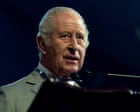
King Charles walked into a diplomatic buzzsaw in Samoa, and almost everyone watching missed what actually happened on the stage.
When King Charles addressed the Commonwealth Heads of Government Meeting (CHOGM) in Apia in October 2024, headlines immediately framed it as a binary showdown. Either the British monarch would finally utter the words "I apologize" for the transatlantic slave trade, or he would stonewall 56 member nations demanding accountability. He did neither. Instead, he acknowledged the "painful aspects" of shared history and told leaders that "none of us can change the past," urging them to commit to learning its lessons and finding creative ways to right enduring inequalities.
If you're waiting for a British monarch to casually drop a formal legal apology at a podium, you're misunderstanding how the British constitution works. Honestly, the King isn't allowed to freelance foreign policy or sign the British Treasury up for billions of pounds in liability. That's the Prime Minister's job, and Keir Starmer had already slammed the door on reparations before the plane even touched down in the Pacific.
Why the Samoa Summit Became a Boiling Point
The October 2024 summit in Samoa wasn't just another routine gathering of former British territories. It was the first CHOGM Charles attended as head of the Commonwealth since taking the throne, and the first ever hosted by a Pacific island nation.
Caribbean leaders arrived in Apia with a unified agenda. All 15 member states of the Caribbean Community (CARICOM) had already endorsed a 10-point reparations plan drafted by the CARICOM Reparations Commission, chaired by historian Sir Hilary Beckles. That plan doesn't just ask for a polite "sorry." It demands a full formal apology, debt cancellation, technology transfers, public health investments, and psychological rehabilitation programs to address the generational trauma of chattel slavery.
Then there was the internal politics of the Commonwealth itself. Leaders were selecting a new Secretary-General to succeed Patricia Scotland, and every single one of the three candidates vying for the role—Shirley Ayorkor Botchwey of Ghana, Mamadou Tangara of The Gambia, and Joshua Setipa of Lesotho—publicly backed the call for reparatory justice. The momentum wasn't coming from the fringes anymore. It was coming from the people running the room.
Yet Downing Street tried to keep the entire topic off the official agenda. UK Prime Minister Keir Starmer insisted ahead of the summit that Britain should "look forward" rather than engage in "very, very long, endless discussions about reparations."
That dismissal backfired immediately. You can't tell nations whose economies and social structures were shaped by centuries of forced labor to simply move on while the descendants of those who profited still hold generational wealth. By trying to bury the issue before the summit even began, the British government guaranteed that reparations became the only story reporters wanted to cover.
What King Charles Actually Said and What It Meant
Listen closely to the phrasing Charles used in Apia, because royal speeches are written with a scalpel. Every single word goes through Buckingham Palace aides and the Foreign, Commonwealth & Development Office.
In his address, Charles noted that he had spoken with people across the Commonwealth and understood how "the most painful aspects of our past continue to resonate." He explicitly stated that it's vital to understand history so that we make the right choices in the future, adding that "none of us can change the past. But we can commit, with all our hearts, to learning its lessons and to finding creative ways to right inequalities that endure."
Compare that to what he said two years earlier in Rwanda in 2022, while still Prince of Wales. Back then, he expressed "personal sorrow" over the suffering of so many and said he could not describe the depths of his sorrow at the "appalling atrocity" of slavery.
Notice the shift. In 2022, it was about his personal sorrow. In 2024, as King, he introduced the phrase "right inequalities that endure."
That wasn't an accident. While "apology" is a legal tripwire that governments avoid to prevent opening the floodgates to financial claims in international courts, acknowledging enduring inequality validates the core premise of the reparations movement. It concedes that the damage isn't just ancient history—it's active right now.
Still, for campaigners and several Caribbean prime ministers, acknowledgment without an apology feels like half a loaf. When Bahamian Prime Minister Philip Davis and Barbadian Prime Minister Mia Mottley have spent years arguing that Britain cannot heal a wound it refuses to name properly, carefully calibrated royal empathy only goes so far.
The Royal Family's Own Ties to the Slave Trade
You can't separate the institution Charles represents from the history under scrutiny. The British monarchy wasn't a passive bystander during the transatlantic slave trade; it was an active investor and beneficiary.
In 1660, King Charles II helped establish the Royal African Company, which shipped more enslaved Africans to the Americas than any other single institution in the history of the transatlantic trade. Monarchs held shares, granted royal charters, and profited directly from the forced transportation of millions of people.
When the British Parliament finally passed the Slavery Abolition Act in 1833, it didn't pay a penny to the people who had been enslaved. Instead, the British government borrowed £20 million—roughly 40% of the entire national budget at the time—to compensate the slave owners for their lost "property." That debt was so massive that British taxpayers didn't finish paying it off until 2015. Think about that for a second. Living descendants of enslaved people paying taxes in Britain were literally helping pay off the loans used to compensate the families who owned their ancestors.
King Charles knows this history is closing in on the Crown. In 2023, after The Guardian published documents showing a 1689 transfer of shares in the Royal African Company to King William III, Buckingham Palace announced that Charles was supporting independent academic research into the monarchy's links to slavery, granting researchers unprecedented access to the Royal Archives and the Royal Collection.
That research is expected to conclude later in 2026. Whatever those historians uncover will land directly on Charles's desk, making his balancing act in Samoa look like a warm-up exercise.
Why Downing Street Fears the Word Apology
If the historical record is undeniable, why won't the British government just say the word?
It comes down to cold, hard legal and financial liability. International human rights lawyers have long debated whether a formal state apology constitutes an admission of an "internationally wrongful act." Even though slavery was legal under British domestic law at the time, legal scholars argue it violated fundamental norms of humanity, and a formal apology weakens a nation's defense against financial restitution claims.
The numbers floating around are staggering. A 2023 report by the Brattle Group, commissioned by the University of the West Indies and presented at an event attended by UN judges, estimated that Britain alone owes roughly $24 trillion in reparations for its role in the transatlantic slave trade across 14 Caribbean nations.
No British Prime Minister—Conservative or Labour—is going to walk into the House of Commons and tell voters that the UK owes trillions of pounds while the domestic economy is struggling with stagnant growth and strained public services. Public polling in the UK consistently shows that a large majority of British voters oppose paying financial reparations for slavery.
So Downing Street plays defense. They argue that Britain already provides billions in international development aid and climate finance, and that focusing on modern partnerships is more practical than litigating the 18th century.
The Communique That Broke the Deadlock
Despite Starmer's initial refusal to put reparations on the table, Caribbean leaders refused to leave Samoa empty-handed. Behind closed doors, diplomats spent hours hammering out the final summit communique—the official joint statement signed by all 56 nations.
The compromise they reached was a diplomatic milestone, even if it didn't produce a check. For the first time in Commonwealth history, the official communique explicitly agreed that the time had come for a "meaningful, truthful and respectful conversation" on "reparatory justice" for the transatlantic slave trade and chattel slavery.
Read that again. Britain couldn't keep the phrase "reparatory justice" out of the final document.
Here is why that matters more than a soundbite from a press conference:
- It sets an official precedent. Once "reparatory justice" enters formal Commonwealth diplomacy, it cannot be erased from future agendas.
- It shifts the burden. Britain can no longer pretend the issue is a fringe distraction; all 56 member states formally recognized it as a legitimate subject of intergovernmental dialogue.
- It empowers the incoming leadership. With Ghana's Shirley Ayorkor Botchwey taking over as Secretary-General, the Commonwealth Secretariat now has a leader from a major West African departure point of the slave trade who openly supports the conversation.
Reparations Doesn't Always Mean Giant Cash Transfers
One of the biggest misconceptions in Western media is that reparations simply means writing massive personal checks to millions of individuals. That framing makes it easy for politicians to dismiss the entire movement as impossible fantasy.
In reality, the CARICOM 10-point plan is built around structural investment and systemic repair. When Caribbean leaders talk about reparatory justice today, they're usually pointing to concrete mechanisms that look a lot like modern economic reform:
- Debt cancellation and restructuring. Many Caribbean nations are trapped in cycles of high-interest sovereign debt inherited from the economic underdevelopment left behind by colonial extraction. Canceling bilateral debt frees up immediate capital for schools and hospitals.
- Climate resilience funding. Small island states contribute almost nothing to global carbon emissions, yet they face existential threats from rising sea levels and supercharged hurricanes. Linking historical wealth extraction to modern climate finance is a central pillar of Mia Mottley's Bridgetown Initiative.
- Public health and education transfers. The Caribbean suffers from disproportionately high rates of chronic conditions like hypertension and type 2 diabetes, which medical historians link to the nutritional trauma of the plantation era. Targeted funding for medical infrastructure and literacy programs directly addresses those legacies.
- Cultural and institutional restitution. Returning looted artifacts, funding museums, and establishing educational exchanges cost a fraction of trillions of dollars while acknowledging cultural erasure.
When you look at the actual proposals, the conversation stops looking like a courtroom shakedown and starts looking like a serious debate over global economic fairness.
What Happens Next for the Monarchy and the Commonwealth
King Charles finds himself trapped between two irreconcilable roles. As the constitutional monarch of the United Kingdom, he is legally bound to follow the advice of his Prime Minister, which means he cannot issue an official state apology without Keir Starmer's approval. As Head of the Commonwealth, however, he presides over a voluntary association of 2.7 billion people, most of whom live in nations that were once colonized by the British Empire.
If Charles leans too far toward Downing Street's hardline refusal, he risks accelerating the republican movement across the Caribbean. Barbados already removed the British monarch as head of state in 2021. Jamaica, Belize, and the Bahamas have all signaled intentions to hold referendums or introduce legislation to do the same.
If Charles leans too far toward the demands of Caribbean leaders, he triggers a constitutional crisis at home by stepping outside his neutral, non-political lane.
Watch what happens when the Royal Archives research project publishes its findings later this year. That report will strip away any remaining ambiguity about the Crown's financial entanglement with slavery. At that point, carefully worded speeches about "learning lessons" won't be enough to satisfy Commonwealth partners, and the pressure on both Buckingham Palace and 10 Downing Street will move from diplomatic summits straight into domestic British politics.
If you want to track where this debate actually goes—beyond the clickbait headlines about royal snubs—stop watching for a dramatic podium apology and start tracking three concrete indicators:
- The Royal Collection Trust research release: Look for whether Buckingham Palace pairs the historical findings with concrete financial commitments, similar to how the Church of England pledged £100 million (later increased to a £1 billion fund target) after discovering its own historical links to slavery through Queen Anne's Bounty.
- CARICOM's diplomatic push at the UN: Caribbean leaders are increasingly bypassing bilateral talks with London to build coalitions at the United Nations, where Britain doesn't hold the same institutional leverage it enjoys inside the Commonwealth.
- Constitutional referendums in the Caribbean: Keep an eye on Jamaica's constitutional reform process, as every nation that drops the British monarch as head of state weakens London's soft power in the region and strengthens the hand of reparations advocates.