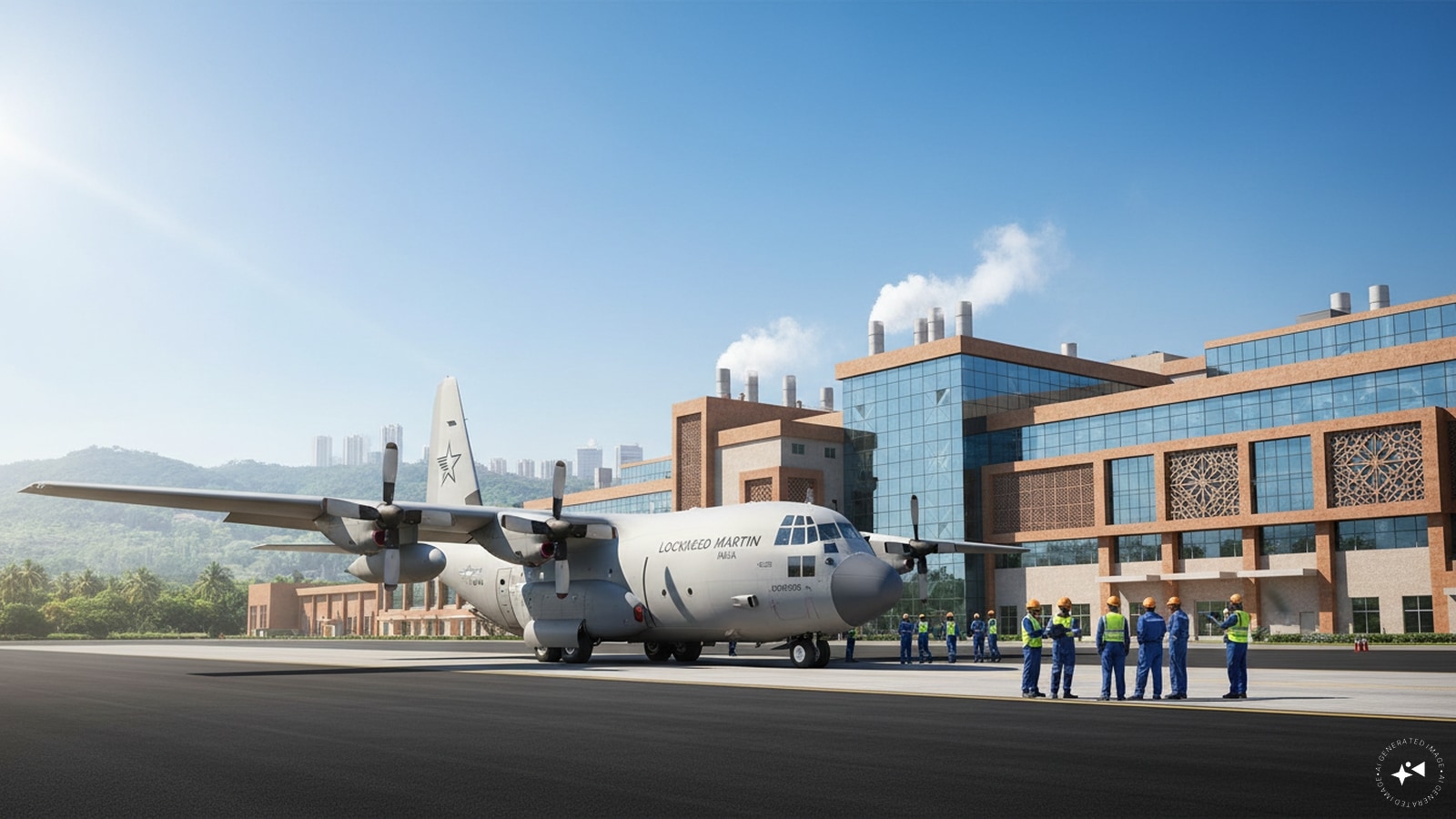
The global defense market runs on high stakes, but few deals match the sheer ambition of India's ongoing search for a new military transport fleet. We are talking about a massive $10.5 billion program to replace aging Soviet-era aircraft. Amid this scramble, Lockheed Martin is playing a very specific card. If they win the bid to supply 60 medium transport aircraft to the Indian Air Force, they won't just ship completed planes across oceans. They plan to build the vast majority of them right on Indian soil.
Most defense analysis misses the forest for the trees when looking at these mega-tenders. People focus entirely on unit costs or raw payload specs, ignoring the deep industrial chess match happening underneath. Let's break down what is actually driving Lockheed's strategy, how their partnership with Tata changes the math, and why this deal matters far beyond a simple hardware purchase.
The Real Strategy Behind the C-130J Pitch
Lockheed isn't coming to India empty-handed. They are pitching the stretched C-130J-30 Super Hercules in its latest Block 8.1 configuration. Under their proposal submitted to the Ministry of Defense, only 12 aircraft would be manufactured in Marietta, Georgia. The remaining 48 would be built completely inside India through their joint venture with Tata Advanced Systems Limited (TASL).
This local manufacturing pivot targets India's strict "Make in India" mandates. New Delhi doesn't just want to buy expensive gear off the shelf anymore. They want tech transfers, domestic jobs, and long-term sustainment capabilities. By promising to assemble 80 percent of the fleet locally, Lockheed is betting that industrial localization will outweigh competing offers.
The main rival in this contest is Embraer's C-390 Millennium, which has teamed up with the Mahindra Group. While the C-390 brings distinct jet-powered performance advantages to the table, Lockheed holds a major head start: familiarity.
Why Existing Infrastructure Changes Everything
The Indian Air Force already operates a fleet of C-130J Super Hercules aircraft. They fly them out of challenging high-altitude forward strips like Daulat Beg Oldi, proving their grit in brutal Himalayan terrain.
When you already have pilots trained on a specific platform, maintenance crews certified on its quirks, and a supply chain partially in place, buying more of the same equipment makes operational sense. Lockheed knows this. Alongside the manufacturing pitch, they have offered a comprehensive upgrade path for India's existing C-130J fleet.
If accepted, this creates a streamlined logistics pipeline. The air force could theoretically manage a unified fleet of over 70 Super Hercules aircraft. Training costs drop. Spare parts sharing becomes seamless. Ground time shrinks. That kind of lifecycle efficiency appeals heavily to military planners who hate managing mismatched inventories.
Breaking Down the Local Manufacturing Reality
Building tactical airlifters is no small feat. You cannot simply throw up a tent and start bolting wings together.
Tata and Lockheed already share a deep industrial relationship. They have spent years manufacturing C-130J tail assemblies and other structural components at their joint facility in Hyderabad. Furthermore, a dedicated Maintenance, Repair, and Overhaul (MRO) facility is already taking shape in India to service existing operations.
Transitioning from building tail cones to assembling an entire fuselage requires an exponential leap in precision engineering, supply chain maturity, and workforce training. Lockheed's proposal relies entirely on scaling up this existing Hyderabad foundation rather than starting from scratch. That minimizes execution risk—a major selling point for defense bureaucrats burned by past delays.
The Broader Geopolitical Chessboard
This tender isn't just about cargo planes. It is a referendum on defense ties in the Indo-Pacific region.
Washington and New Delhi have grown increasingly close over the past decade, bound by shared strategic concerns and joint exercises under the Quad framework. Securing a multi-billion dollar aerospace manufacturing hub deep inside India anchors the defense industrial base of both nations closer together.
Critics often argue that American defense contractors are stingy with technology transfers compared to European counterparts. Lockheed's willingness to shift final assembly for 48 complex tactical airlifters to India is a direct counter-argument to that critique. It signals that American primes are finally willing to treat India as a co-producer rather than just a customer.
What Happens Next
The Request for Proposal set strict timelines, with final bids closing in December. Technical evaluations will drag on as flight trials and cost negotiations take center stage.
If Lockheed and Tata win, the implications will ripple across India's private defense sector. It forces local suppliers to level up their quality control to aerospace standards, creating a ripple effect that benefits other domestic programs like fighter jet co-production and helicopter manufacturing.
If they lose, it proves that raw platform performance and pricing—such as Embraer's jet speed and heavier payload capacity—can still trump existing operational footprint. Either way, India's aerospace ambitions have reached a tipping point where foreign primes must hand over the keys to local manufacturing if they want a piece of the pie.