When state media in Pyongyang announces a major weapons breakthrough, the defense world usually splits into two camps. You have analysts who panic over every grainy photograph, and skeptics who dismiss the whole thing as propaganda. Both miss the point. North Korea's recent test-launch of the Hwasong-11Ma-1 short-range ballistic missile tipped with a hypersonic glide vehicle isn't just empty theater, nor is it an invincible sci-fi weapon. It's a calculated engineering evolution designed to exploit very real gaps in regional missile defense shields.
If you look past the official rhetoric, the core mechanical achievement centers on a solid-fuel rocket booster paired with a detachable, maneuverable warhead. Traditional ballistic missiles follow predictable parabolas. Once gravity takes over on the downward arc, advanced tracking systems can calculate the impact point long before the payload arrives. Hypersonic glide vehicles change that math entirely. After separating from the booster, the warhead dips into the upper atmosphere and maneuvers horizontally and vertically at speeds exceeding Mach 5.
Tracking the Discrepancies in the Data
State media outlets released imagery showing leader Kim Jong Un observing the coastal launch alongside senior defense officials. But military intelligence observers in Seoul and Tokyo immediately spotted something interesting. The telemetry data published on North Korean state displays didn't quite match the tracking metrics recorded by neighboring militaries.
South Korea's Joint Chiefs of Staff and Japan's Ministry of Defense tracked short-range trajectories covering several hundred kilometers into the Sea of Japan, noting peak altitudes that differed slightly from official Pyongyang infographics. These discrepancies happen all the time in modern telemetry analysis. Testing phases rarely mirror full operational capability. What matters isn't whether a single promotional graphic inflated its range by a few kilometers. What matters is the velocity and the flight path stability during terminal descent.
Why This Technology Changes Regional Defense
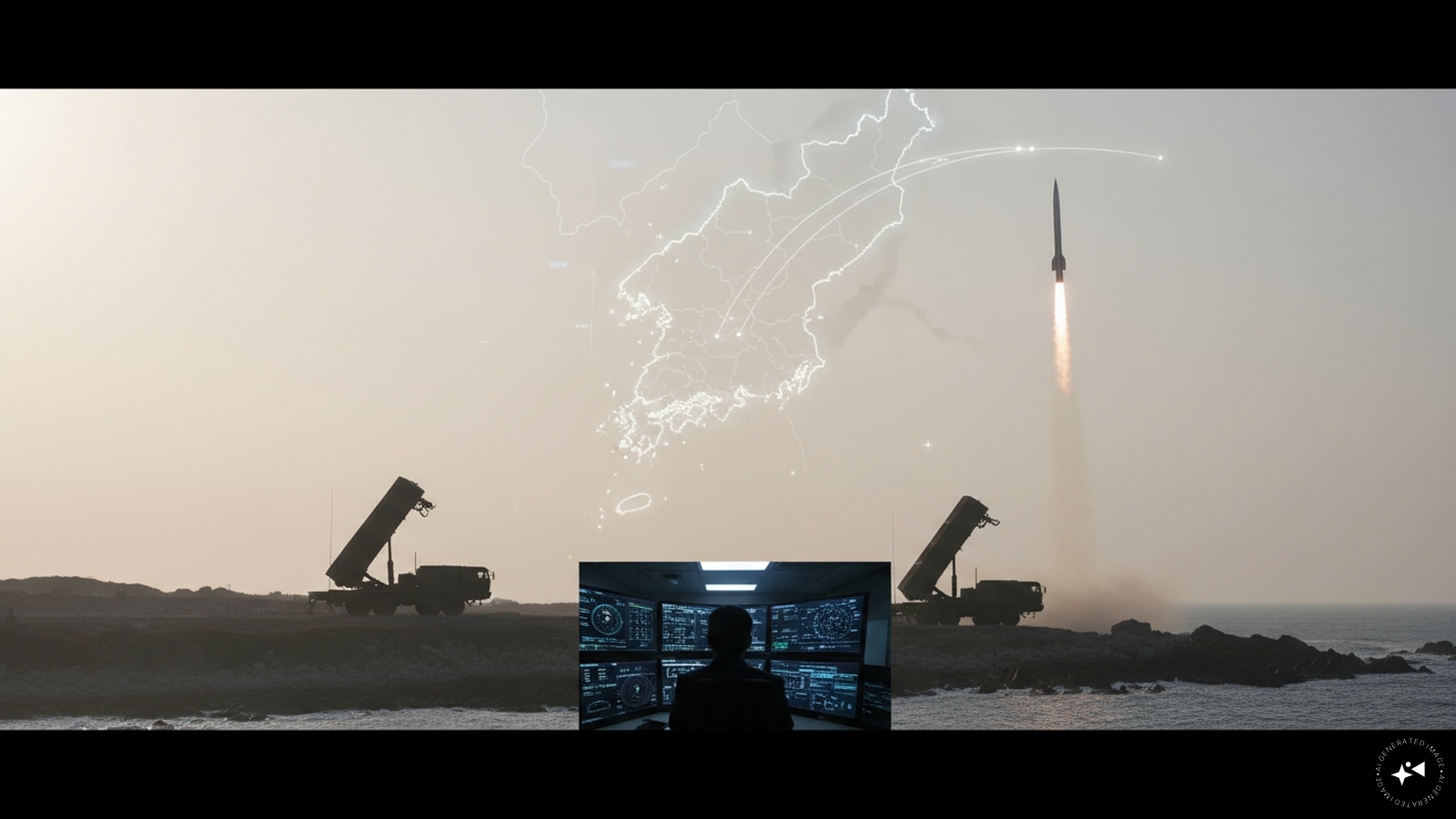
Defense planners across the Pacific are losing sleep over maneuverability, not raw speed. Standard interceptor batteries like the US-built Patriot or Aegis systems rely on intercept geometry calculated against ballistic arcs. When a warhead can execute sudden course corrections at low altitudes, it compresses the enemy's decision-making window to mere seconds.
The Hwasong-11Ma-1 represents a regional theater threat. It's engineered to put nearby neighbors like South Korea and Japan on immediate notice, bypassing conventional early-warning architectures that weren't built to track unpredictable glide paths. By coupling these systems with ongoing developments in AI-guided targeting and high-speed propulsion—similar to recent tests involving advanced tactical torpedoes and missile variants—Pyongyang is attempting to build a multi-layered capability that makes traditional interception extremely risky.
Separating Reality from State Narrative
You shouldn't take North Korean defense claims at face value, but you shouldn't ignore them either. Manufacturing a mock-up for an exhibition is one thing; mass-producing reliable guidance systems that survive the extreme thermal and aerodynamic stress of atmospheric reentry is an entirely different engineering hurdle. Sanctions and resource constraints still plague North Korea's industrial base.
Yet, every flight test provides engineers with real-world telemetry data. They learn what fails, what holds together, and how to tweak the aerodynamics for the next iteration. Dismissing these developments as mere bluster ignores how military technology actually matures through continuous trial and error.
Keep an eye on how regional defense spending adapts over the coming months. Seoul isn't sitting still—recent domestic counter-tests involving advanced maneuverable glide vehicles prove that an arms race in high-speed tactical propulsion is actively accelerating across the peninsula. The real story isn't the hype coming out of state television. It's the permanent shift in how air defense networks must now operate against unpredictable, low-flying threats.