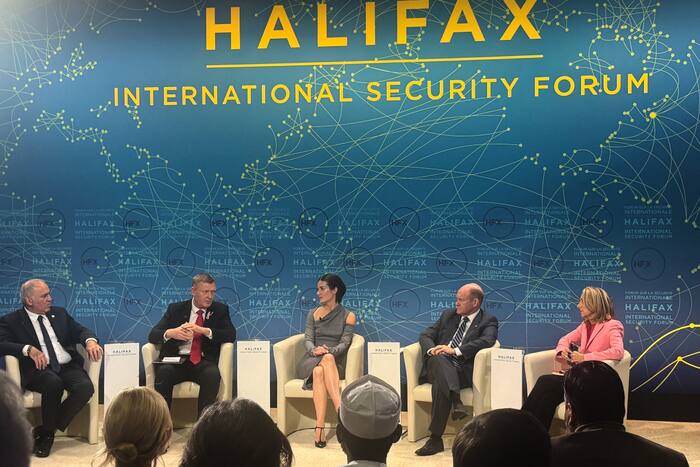
When headlines started swirling about Pentagon restrictions on Canada, you might have pictured warships turning around at the border or intelligence pipelines slamming shut overnight. That wasn't what happened at all. According to a US senator who addressed the dust-up directly, the actual restrictions target a much narrower slice of bilateral defense life—specifically think tanks and social events.
It sounds almost trivial until you understand how Washington and Ottawa actually get defense work done. For an alternative view, see: this related article.
Why Think Tanks and Social Events Actually Matter in Defense
If you've ever spent time around defense policy circles in Washington or Ottawa, you know the real groundwork rarely happens inside formal treaty rooms. It happens over bad coffee at policy roundtables, during off-the-record panels, and at evening receptions hosted by defense attachés.
When the Pentagon tightens rules on how U.S. defense officials engage with Canadian counterparts at think tanks and social gatherings, it isn't breaking the North American Aerospace Defense Command (NORAD). Joint air defense still runs around the clock. Radar stations still track incoming threats across the Arctic. Further reporting on this trend has been provided by The New York Times.
What changes is the informal connective tissue.
Defense policy analysts rely on those low-stakes conversations to test ideas before they become official memos. A Pentagon planner can float a procurement concern to a Canadian defense researcher at a Washington forum without triggering a diplomatic cable. Take away that casual access, and everything has to move through formal, slower bureaucratic channels.
The Optics vs. Reality Problem
Political headlines love drama. When news breaks that the Department of Defense has placed limits on interactions involving Canada, casual readers immediately assume a major diplomatic rupture.
The US senator's clarification cuts right through that noise. By pointing out that the restrictions focus on think tanks and social events, the statement draws a sharp line between operational military cooperation and informal diplomatic socializing.
Here is why that distinction matters:
- Operational readiness stays intact. Joint exercises, intelligence sharing under the Five Eyes alliance, and NORAD command structures operate under established bilateral agreements that don't depend on cocktail receptions.
- Public messaging shifts. Restricting attendance at think tank panels and social functions sends a visible political signal without sabotaging actual continental security.
- Bureaucratic friction increases. Even minor travel or event-attendance freezes force mid-level officials to seek extra sign-offs, slowing down routine coordination.
Honestly, it's a classic Washington move. You create visible friction at the margins while keeping the core machinery running underneath.
What Drives Pentagon Restrictions on Allied Engagement
To understand why the Pentagon would single out think tanks and social events in the first place, you have to look at how the Department of Defense manages budgets, optics, and political pressure.
First, there's the perennial scrutiny over defense spending and conference travel. Every few years, Pentagon leadership cracks down on official participation in external seminars, policy forums, and embassy receptions. Sometimes it's driven by fiscal austerity. Other times, it's about keeping uniform and civilian personnel focused on core duties rather than the Washington speaking circuit.
Second, bilateral friction between the U.S. and Canada tends to flare up around specific policy disagreements—most notably defense spending targets within NATO. For years, successive administrations in Washington have pressed Ottawa to meet NATO's benchmark of spending two percent of gross domestic product on defense.
When political frustration builds in Congress or the executive branch, restricting informal engagement is one of the easiest levers to pull. It doesn't require congressional legislation. It doesn't violate any treaty obligations. Yet it immediately gets the attention of diplomats, defense contractors, and policy institutes on both sides of the border.
How Think Tanks Fit Into U.S.-Canada Defense Relations
Think tanks in Washington and Ottawa act as unofficial bridges between the two governments. Organizations like the Center for Strategic and International Studies (CSIS) in Washington or the Canadian Global Affairs Institute in Ottawa regularly host bilateral dialogues on Arctic security, defense procurement, and continental defense modernization.
These events aren't just academic exercises. They're where mid-career military officers, civil servants, and industry leaders compare notes on shared problems. When Pentagon officials are restricted from attending or speaking at these forums, Canadian participants lose direct visibility into how Washington is thinking about upcoming policy shifts.
It also creates an asymmetry. Canadian officials and researchers still show up in Washington, still publish white papers, and still engage with congressional staffers. Without Pentagon voices in the room, though, the conversation becomes one-sided.
Separating Political Signals From Operational Reality
If you're trying to gauge the health of the U.S.-Canada defense relationship, watching who attends an embassy reception will mislead you every time.
Look instead at the structural pillars that actually define North American defense:
- NORAD Modernization. Both countries have committed billions of dollars to upgrading over-the-horizon radar systems and Arctic surveillance infrastructure. Those multi-year engineering projects don't pause because a defense official skipped a panel discussion.
- Five Eyes Intelligence Sharing. The intelligence partnership linking the U.S., Canada, the U.K., Australia, and New Zealand remains deeply integrated at the technical and operational levels.
- Defense Industrial Base Integration. Canadian manufacturers supply critical components for U.S. defense platforms, and Canadian firms are legally integrated into the U.S. National Technology and Industrial Base.
That doesn't mean the restrictions are harmless. Over time, starving the informal relationship of regular face-to-face contact breeds misunderstandings. Junior officers don't build the personal trust with their counterparts that pays off during actual crises.
I've watched how bilateral relationships drift when informal contact dries up. You don't see a sudden collapse. Instead, you see a slow rise in friction—more emails needed to solve simple problems, more hesitation before picking up the phone, and more reliance on rigid formal protocols.
What This Means for Policy Watchers and Defense Professionals
When a US senator steps forward to clarify that Pentagon restrictions on Canada center on think tanks and social events, pay attention to both parts of that message.
On one hand, it's reassurance. The foundational military alliance between the two neighbors isn't unraveling, and critical continental defense operations aren't being held hostage.
On the other hand, it's a warning sign about the political climate. Even the closest allies aren't immune to bureaucratic gatekeeping when broader political tensions spill over into defense administration.
If you work in defense policy, cross-border procurement, or international affairs, adjust your expectations accordingly. Expect fewer Pentagon speakers on bilateral conference agendas, plan for longer approval timelines when coordinating joint public events, and rely more heavily on established formal channels rather than informal networking to keep cross-border projects moving.


