You can't understand the current chaos in Yerevan by looking through a standard geopolitical lens. Western media likes to paint the upcoming June 2026 parliamentary election as a simple story. They see a democratic, Westward-leaning prime minister fighting off a wave of pro-Russian oligarchs. It sounds clean. It makes for an easy headline.
But it's mostly wrong.
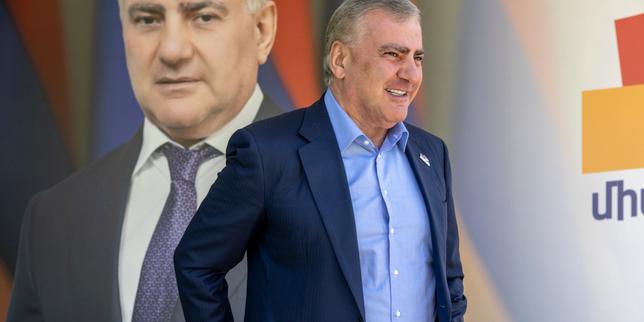
At the center of this storm is Samvel Karapetyan. He's a billionaire who built a massive real estate and energy empire in Russia through his Tashir Group. Now, he wants to run Armenia. His newly minted political vehicle, the Strong Armenia party, has turned the election cycle into a high-stakes drama. Karapetyan isn't just dropping cash into a campaign; he's managing it while under house arrest in Yerevan. He faces serious state charges tied to allegations of trying to seize power.
This isn't just another post-Soviet billionaire looking for a retirement hobby. It's a calculated gamble that could fundamentally reshape the South Caucasus. To understand why he might actually pull it off, you have to look past the "Russian oligarch" label and see how deep his roots go into Armenia's basic infrastructure.
The Billionaire Who Owns the Grid
Most foreign observers miss the sheer scale of Karapetyan's leverage inside Armenia. He didn't just show up with a suitcase full of rubles when the political crisis hit. He owns the literal switches that keep the lights on.
His conglomerate, Tashir Group, bought the Electric Networks of Armenia back in 2015. Think about that for a second. Every time an Armenian turns on a light, charges a phone, or runs a factory, they are putting money into Karapetyan's ecosystem. He also owns major shopping malls in Yerevan, luxury hotels, and key pieces of the country's energy infrastructure. In 2021, he promised a $600 million modernization plan for the country's energy sector.
That kind of domestic footprint changes the math. When Prime Minister Nikol Pashinyan's government goes after Karapetyan, they aren't attacking an outsider. They're targeting the nation's biggest employer and infrastructure kingpin.
Karapetyan built this fortune by leaving his hometown of Kalinino—which he later renamed Tashir—in the early 1990s. He moved to Russia, secured lucrative logistics contracts with state giants like Gazprom, and conquered the Moscow commercial real estate market. Forbes pins his net worth at around $4.1 billion. In a country with a GDP of roughly $25 billion, a single billionaire with that much local equity wields absurd amounts of gravity.
Red Tape and Renounced Passports
Running for Prime Minister of Armenia isn't easy if you've spent the last thirty years in Moscow. The legal hurdles are brutal. Armenian law states that a candidate must have been a citizen of only Armenia, and a permanent resident of the country, for the preceding four years.
Karapetyan didn't care. He launched the Strong Armenia party anyway, taking the chairman seat in February 2026. To prove he was serious, he officially renounced his Russian and Cypriot passports in April.
But the residency issue remains a massive roadblock. To actually take the Prime Minister's seat, Karapetyan needs a two-thirds majority in parliament to alter the legal requirements. It's a classic chicken-and-egg dilemma. He needs power to change the law, but he needs the law changed to legally hold power.
The government isn't waiting around to see if he can pull off the legislative gymnastics. The rhetoric from Pashinyan's camp has turned incredibly hostile. Government officials recently warned that diaspora voters arriving from Russia on charter flights to vote for "Samo from Kaluga" could be immediately drafted into 25-day military training camps. If they refuse, they face prosecution. It's a bare-knuckle tactic designed to scare away Karapetyan's base of support before they even reach the ballot box.
The Church, the Kremlin, and the Opposition Split
Karapetyan’s political rise didn't happen in a vacuum. It was triggered by the total collapse of Armenia's security architecture after Azerbaijan seized Nagorno-Karabakh. The trauma of that loss left a massive opening for anyone promising strength and stability.
He's running a platform that aligns tightly with the Armenian Apostolic Church, which has been leading anti-government protests for two years. Church leaders argue that Pashinyan’s attempts to align with the West are unnatural and dangerous. They want a return to the traditional security umbrella provided by Moscow. Karapetyan is the money and the corporate muscle behind that ideology. He's also one of the largest financial benefactors the Church has ever had.
But the opposition has a glaring weakness. It's completely fragmented.
Instead of uniting behind one anti-Pashinyan figure, the pro-Russian vote is split across three camps:
- Samvel Karapetyan and his Strong Armenia party.
- Robert Kocharyan, the former president whose massive bail was partially paid by Karapetyan in 2020.
- Gagik Tsarukyan, another home-grown oligarch leading the Prosperous Armenia party.
They are all fighting each other for the same slice of the electorate. Western intelligence and local pollsters suggest that while Pashinyan’s party leads with around 30% of the vote, Karapetyan is trailing somewhere around 10%. Because the opposition can't get out of its own way, the incumbent government maintains a shaky but real advantage.
What Happens on Election Day
If you're watching this situation closely, don't look for a clean democratic transition or a textbook coup. Watch the streets of Yerevan and watch the courtroom.
Karapetyan's trial and his current house arrest status mean that a political explosion could happen at any moment. If his party outperforms expectations in June, the legal case against him becomes a ticking time bomb. The government will either have to double down on prosecuting the leader of a major legislative bloc or back off and signal weakness.
For regular citizens and regional investors, the immediate step is to track the voter turnout of the Russian-Armenian diaspora. If thousands of dual citizens brave the government's military draft threats to fly in and vote, the polling data we see now won't matter. Watch the daily court rulings on Karapetyan's detention in Yerevan. Those court dates will tell you exactly how close Armenia is to a total political breakdown long before the first ballot is cast.