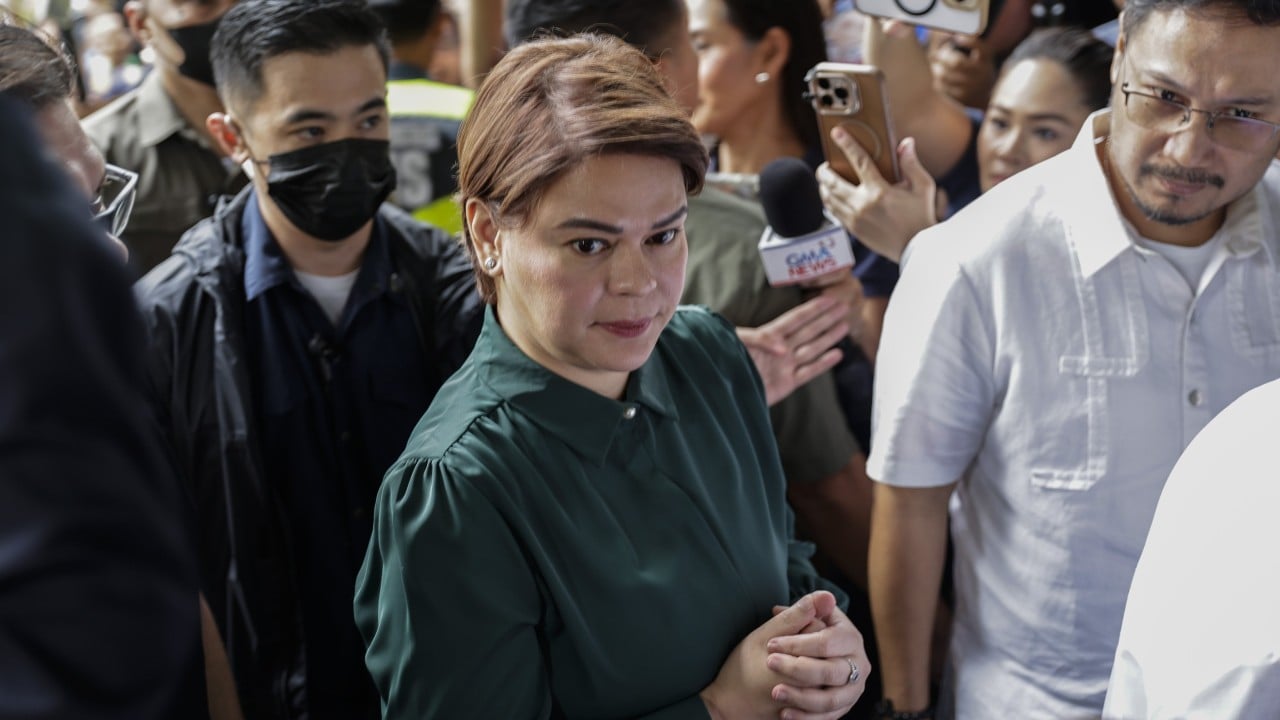
Most casual observers watching the Philippine Senate impeachment proceedings think this case is still about confidential funds. It isn't. In a major strategic shift in October 2026, House prosecutors dropped three of the four impeachment articles against Vice President Sara Duterte, putting every single chip on Article II: unexplained wealth.
And the numbers at the center of that lone charge are staggering. According to testimony presented by prosecution forensic financial analyst and lawyer Alexander Cabrera, the alleged unexplained wealth tied to Duterte and her husband, lawyer Manases "Mans" Carpio, reaches at least P817.87 million—with some courtroom estimates floating even higher depending on how corporate inflows are calculated.
Right now, in November 2026, the trial has entered its most volatile phase. The prosecution has rested its case, declaring its documentary trail sufficient. The defense has taken the floor, only to make a sudden move that left courtroom watchers scrambling to interpret what happens next.
Why Prosecutors Narrowed the Case to Unexplained Wealth
If you've ever followed high-profile political trials in Manila, you know they usually die a slow death by procedural delay. House lead prosecutor Rep. Gerville Luistro and her team clearly saw that coming. Rather than getting bogged down litigating four separate articles across months of technical objections, the prosecution stripped the case down to the one charge backed by hard paper trails: Duterte's Statements of Assets, Liabilities, and Net Worth (SALNs) from 2022 to 2025.
Why does Article II carry so much legal weight? Because under Philippine law—specifically Republic Act No. 6713 and the 1987 Constitution—public officials don't just have to avoid stealing money. They have to accurately disclose what they own. When bank records, tax filings, and corporate registries contradict a sworn SALN, prosecutors don't need a smoking-gun bribe on video. The discrepancy itself becomes the constitutional violation.
According to Philstar's trial recaps, the prosecution spent weeks calling bank executives, land registrars, Securities and Exchange Commission (SEC) representatives, and Anti-Money Laundering Council (AMLC) officials before bringing in Cabrera to tie the math together.
Breaking Down the P817.87 Million Figure
When headlines throw around a number like P817.87 million, it's easy for the public to tune out. Let's look at how the prosecution actually built that figure, because the breakdown reveals where the real legal vulnerability lies.
Cabrera's forensic summary didn't rely on a single bank account. Instead, he aggregated several distinct buckets of alleged discrepancies:
- Undeclared bank balances: According to Cabrera's testimony cited by Philstar, undeclared balances belonging to Duterte and Carpio ranged between P23.17 million and P80.70 million annually during the period under review, with the bulk sitting in Carpio's accounts. Separate reports noted that the Bank of the Philippine Islands (BPI) also informed the Senate impeachment court that the Vice President held dollar accounts at the bank.
- Income versus deposits: Between 2022 and 2025, bank deposits classified as income totaled P174.96 million. Yet the couple's tax returns reported only P63.11 million in declared income over that same stretch.
- Omitted properties and policies: Prosecutors flagged undeclared real estate, firearms, business stakes, and 17 insurance policies. In a particularly sharp blow to the defense's credibility, prosecution records also showed that Duterte's SALNs listed property located in a nonexistent barangay in Davao del Norte.
- Corporate inflows and GenCorp: This is the largest single driver of the P817.87 million total. Prosecutors examined corporate records tied to GenCorp, Cale 88 Foods Corp. (a banana chip exporter linked to Carpio), and Metro City Chow Foods.
The numbers surrounding GenCorp caught the immediate attention of senator-judges. During hearings, Sen. Panfilo Lacson pointed out that GenCorp reported P520.67 million in 2025 sales while paying just P777,093 in income tax. Meanwhile, Sen. Francis "Kiko" Pangilinan highlighted a massive gap in the company's 2023 books: audited financial statements listed an ending balance of P924,695, whereas actual bank records showed P46.19 million sitting in the account at year-end.
Overall, Cabrera testified that GenCorp left over P1 billion in bank inflows off its books between 2023 and 2025. He attributed roughly 20 percent of that alleged undeclared corporate income to Duterte—an estimate he explicitly described on the stand as conservative.
The GenCorp Contradiction and the Defense's Sudden Pivot
Here is where the trial took a bizarre turn in mid-November 2026.
In her SALN, Duterte listed GenCorp as a company in which she held shares. Yet GenCorp's official corporate filings with the SEC do not list her as a stockholder. That contradiction alone prompted legal analysts—as reported by Philstar—to describe her SALN entry as a potential "Freudian slip".
Things grew even murkier when GenCorp's legal counsel, Suzette Balucanag-Punay, took the witness stand. According to reports from the Philippine Daily Inquirer, Balucanag-Punay testified that GenCorp disbursed P2,142,369.14 to Duterte between 2022 and 2025 as a "return of capital" from what she called the Vice President's "loose investments"—even though Duterte held no official stockholdings or corporate position in the firm.
House prosecution spokesperson Rep. Zia Alonto Adiong immediately pounced on that admission. Why? Because GenCorp won 19 government contracts in Davao City between 2022 and 2026 while Duterte's brother, Sebastian "Baste" Duterte, served as mayor. Under the Philippine Constitution, a sitting Vice President is barred from having any direct or indirect financial interest in government contracts. Calling the payout a "loose investment" didn't clear Duterte—it handed prosecutors a fresh conflict-of-interest argument.
Then came the defense's surprise retreat. After initially announcing plans to call up to 25 witnesses, Duterte's legal team abruptly withdrew all 15 to 16 bank officials they had subpoenaed to testify about her banking records and requested the cancellation of the November 13 hearing.
In courtroom strategy, dropping your own bank witnesses is a massive tell. Usually, defense lawyers pull bank executives off the witness list for one reason: cross-examination by House prosecutors and questioning by senator-judges risks exposing even more damaging account details than the records already admitted into evidence.
What the Defense Is Arguing—and Where Their Case Has Teeth
It would be a mistake to assume the prosecution has an automatic slam dunk. The defense team has raised genuine legal arguments that carry real weight in a Senate impeachment court, where senators act as both judges and jurors.
First, there is the corporate veil doctrine. Defense lawyers have hammered home a foundational rule of Philippine corporate law: a corporation has a separate legal personality from its shareholders or investors. Even if GenCorp or Cale 88 Foods underreported sales or left bank inflows off audited statements, that is a corporate tax compliance issue for the Bureau of Internal Revenue (BIR)—which confirmed it is auditing the companies under letters of authority—not automatic proof of personal unexplained wealth belonging to the Vice President.
Second, spousal asset attribution is messy. Mans Carpio is a practicing lawyer with independent corporate clients and business ventures. Many of the flagged bank balances sit in Carpio's personal or business-linked accounts rather than Duterte's. While Philippine SALN rules require public officials to declare the assets and liabilities of their spouses, the defense argues that prosecutors are unfairly lumping Carpio's legitimate professional earnings and corporate transactions into a single "unexplained" pot.
Third, impeachment is a political trial, not a criminal court. Unlike a Sandiganbayan graft trial where guilt must be proven beyond a reasonable doubt, impeachment requires a two-thirds vote of the Senate—16 out of 24 senators—to convict. Technical accounting disputes over whether a "loose investment" counts as a declarable share give undecided senators plenty of legal cover if they are looking for a reason to acquit.
Common Misconceptions About How This Trial Works
If you're trying to follow the daily news cycles without getting misled by partisan spin on social media, keep three realities straight:
- Dropping three articles wasn't a sign of prosecution weakness. Critics claimed House prosecutors abandoned the other charges because their evidence collapsed. In reality, Senate impeachment rules allow conviction on a single article. Winning on Article II carries the exact same constitutional penalty—removal from office and perpetual disqualification from holding public post—as winning on all four.
- The BIR tax audit runs on a completely separate track. During the trial, a BIR official confirmed that Duterte, Carpio, and Cale 88 Foods Corp. are under active tax audit covering up to 20 years of returns. Even if the Senate acquits Duterte tomorrow, those tax investigations and potential criminal tax evasion or perjury charges don't vanish.
- The Senate gag rule limits what leaks out between hearings. On November 5, 2026, the impeachment court formally admitted the prosecution's bank, tax, corporate, and property records into evidence while restoring its gag rule. If you see viral posts claiming "secret new bank transfers" surfaced on a non-hearing day, treat them with heavy skepticism unless they come directly from sworn floor testimony.
How to Track the Final Stretch of the Trial
With House private prosecutor Benjamin "Jay" Tolosa Jr. confirming that the prosecution won't present rebuttal witnesses unless necessary, the timeline now rests entirely on how quickly the defense wraps up its remaining eight to ten witnesses—likely stretching into early December 2026.
If you want to cut through political noise and watch what actually decides the verdict, focus on three specific developments over the next few weeks:
- Watch the cross-examination of Davao accountants and corporate officers. Senator-judges have already aggressively grilled defense witnesses like Davao City accountant Vingelin Bajan over ties to Duterte-linked firms. Pay closer attention to the questions asked by swing-vote senators than the speeches made by partisan allies.
- Track how the defense explains the P111.85 million gap between declared tax income and bank deposits. Legal technicalities around corporate personality can shield Duterte from GenCorp's books, but explaining away personal bank deposits that nearly triple declared income from 2022 to 2025 is much harder.
- Follow the Senate's procedural rulings on witness attendance. Prosecutors have already warned that if more defense witnesses withdraw or refuse to testify, scheduled trial days could stall. How the Senate presiding officer enforces deadlines will tell you whether leadership wants a final vote before the year ends.
Check the official Senate livestream transcripts or reliable daily court recaps from outlets like GMA News Online and Philippine Daily Inquirer rather than clipped social media soundbites. In an impeachment trial decided by 24 politicians weighing public pressure against legal proof, the exact wording of the documentary exhibits admitted on November 6—not the press conferences outside the session hall—will determine whether Sara Duterte survives in office.