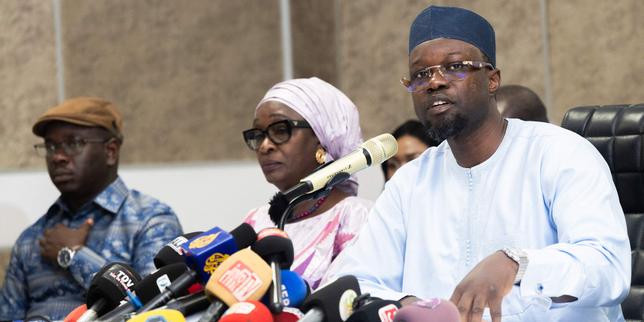
The political landscape in Senegal just experienced its biggest earthquake since the 2024 presidential election. If you thought the alliance between President Bassirou Diomaye Faye and his Prime Minister Ousmane Sonko was unbreakable, think again. The theoretical "two-headed executive" that promised to transform Senegal has shattered. Sonko is out of the primature, dismissed by the very man he put in power.
For months, rumors of a cold war at the top of the state swirled around Dakar. Now, the mask is entirely off. With Sonko's formal removal from his post as Prime Minister, the African Patriots of Senegal for Work, Ethics, and Fraternity (Pastef) is doing exactly what it does best when backed into a corner. It is locking arms, building a defensive wall around its historical leader, and waging an all-out war against those it labels as "traitors."
This is not a minor political disagreement. It is a fundamental battle for the soul and control of Senegal's ruling movement.
The Myth of the Perfect Political Marriage
Many observers bought into the romantic narrative of the 2024 election. Sonko, disqualified from running, pointed his finger at his loyal lieutenant, Bassirou Diomaye Faye, and declared "Sonko mooy Diomaye" (Sonko is Diomaye). The slogan worked like magic, propelling Faye to a first-round victory with over 54% of the vote.
But power does not split cleanly down the middle.
The trouble started when the daily realities of governance set in. You cannot have a head of state trying to govern an entire nation while his Prime Minister treats him like a subordinate who owes him his seat. Insiders note that Sonko repeatedly criticized Faye's lack of authority publicly and privately. The tension reached a boiling point over appointments, international coalitions, and who actually holds the mandate of the Senegalese people.
When Faye decided to assert his constitutional authority and take charge of his administration, Pastef militants did not see a president coming into his own. They saw an act of supreme betrayal.
Why Pastef is Circling the Wagons Around Sonko
For the Pastef faithful, the hierarchy has always been clear. Bassirou Diomaye Faye might sit in the presidential palace, but Ousmane Sonko is the undisputed leader of the project. This was on full display at the party's recent national congress, where Sonko was re-elected to the head of Pastef without a single voice of dissent.
Militants from the 19 communes of Dakar have flooded the streets, chanting Sonko's name and sporting t-shirts with his face. The messaging from the ground is fierce, direct, and uncompromising. To them, anyone who distances themselves from Sonko—including the President himself—is a traitor.
The party machine is now executing a scorched-earth strategy against any internal dissenters. Here is how Pastef is enforcing strict loyalty across its ranks
- Enforcing the "Sonko is the Party" Doctrine: Party officials are openly reminding everyone that Faye was a default choice born out of emergency prison conditions in late 2023. Without Sonko's blessing, Faye would still be a senior tax inspector.
- Mass Digital Cleansing: Supporters have launched aggressive campaigns on social media, actively unfollowing Faye’s official accounts and isolating his remaining allies online.
- Purging Local Alliances: Pastef structures are actively vetting coalitions, making it clear that anyone who does not pledge absolute allegiance to Sonko will be excluded from future electoral lists.
This strategy is designed to isolate the President. If Faye wants to build his own political base through the "Diomaye President" coalition, Pastef intends to make sure he does it entirely alone, without the party machinery that built his career.
The Danger of the Traitor Narrative in Dakar
Calling the sitting President a traitor is a high-stakes gamble. In Senegalese politics, the term carries heavy weight. It isolates the leader from the very base that elected him and paralyzes state institutions.
If you look at how Pastef operates, this rhetoric is a classic defensive mechanism. Whenever the party faces an internal or external crisis, it consolidates power by identifying an enemy. During the Macky Sall years, the enemy was the old regime. Today, the enemy is within the palace walls.
But this leaves Senegal in an incredibly volatile position. We now have a President who holds the legal and constitutional power to govern, issue decrees, and command the armed forces, pitted against a highly organized popular movement that holds the street and controls the legislative majority. It is a recipe for institutional paralysis.
What Happens Next for Senegal's Executive Power
If you are trying to understand where Senegal goes from here, stop looking for a peaceful reconciliation. That ship has sailed. The political reality requires watching how both men leverage their remaining assets.
President Faye still holds the ultimate weapon of the state: the power of appointment, control over public funds, and the ability to reshape his cabinet without Pastef’s permission. He can reach across the aisle, co-opt moderate factions, and try to build a governing technocratic coalition.
On the other side, Sonko holds the hearts of the youth and an unmatched ability to mobilize the masses. By maintaining total control over Pastef, he can effectively block any major legislative initiatives and turn the public against the presidency before the next major electoral cycle.
For everyday citizens in Dakar, the optimism of 2024 has quickly turned into anxiety. The promised structural reforms, economic overhauls, and judicial cleanups are taking a backseat to an ugly, public divorce at the highest level of government. The next few months will show whether Senegal's institutions can survive a civil war within its own ruling class, or if the country is headed straight toward an early constitutional crisis.