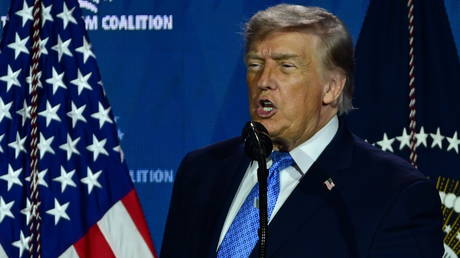
Donald Trump just threw another massive wrench into global trade. In an explosive Truth Social post on June 26, 2026, the US president threatened an immediate 100% tariff on any country that imposes a digital services tax on American technology firms. He explicitly stated that these duties will override any existing or signed trade agreements.
If you think this is just standard political bluster, you're missing the bigger picture. This isn't a minor disagreement over corporate tax rates. It's a fundamental clash over economic sovereignty, and it risks igniting a full-blown transatlantic trade war.
The Collision Course Over Big Tech Revenues
The underlying conflict has been brewing for years. European nations look at giants like Alphabet, Amazon, Apple, and Meta making billions from their citizens without paying what they consider a fair share of local corporate taxes. Because these tech giants operate digitally, they can easily funnel profits through low-tax jurisdictions like Ireland.
To fix this, countries designed the Digital Services Tax (DST). It bypasses traditional corporate profit taxes by levying a direct fee on revenues earned from local digital advertising, online marketplaces, and user data. France has run a 3% levy since 2019 on companies with over €750 million in global revenue and €25 million locally. The UK levies a 2% tax on social media platforms, search engines, and online marketplaces, pulling in more than £800 million over the 2024-2025 fiscal year. Italy and Spain run similar setups.
From Washington's perspective, these taxes look like a targeted shakedown. Because the revenue thresholds are set so high, the laws almost exclusively hit American firms. Trump has long maintained that these rules are discriminatory, designed specifically to drain cash from America's most successful innovation sector.
Breaking Trade Deals to Protect Silicon Valley
What makes this latest threat incredibly disruptive is the timing and the scale. Just a day before Trump's announcement, European Union nations finally gave the green light to a hard-fought trade agreement with the US. That deal capped U.S. tariffs on European imports at 15% in exchange for the EU slashing industrial tariffs on American goods to zero. The EU scrambled to meet a July 4 deadline set by the White House to implement the changes.
Trump's new proclamation tears up that playbook. He made it clear that the 100% tariff would supersede that agreement, whether signed or not.
Earlier this month, Trump used a similar playbook against France. He threatened to hit French wine and champagne with 100% duties unless Paris abandoned its 3% digital tax. While Canada caved to similar strong-arm tactics last year and dropped its planned tech levy, European leaders are digging in their heels. French President Emmanuel Macron told reporters at the recent G7 summit that France will not back down under pressure. Following Trump's latest post, the European Commission fired back, stating that the EU has a sovereign right to regulate its economy and will respond swiftly to defend its regulatory autonomy.
The Legal Hurdle Trump is Trying to Sidestep
You have to look at the legal mechanics to see how this actually plays out. Trump loves using tariffs as a tool for leverage, but his executive authority has hit some major roadblocks recently. The U.S. Supreme Court previously curbed the administration's ability to issue sweeping reciprocal tariffs, ruling that the International Emergency Economic Powers Act didn't give the White House the right to unilaterally assign country-specific rates.
Trump tried to bypass that restriction by invoking Section 122 of the Trade Act of 1974 to set a baseline 10% global tariff. However, Section 122 has a massive flaw: those duties expire automatically after 150 days unless Congress steps in to extend them.
Trying to slap a targeted 100% tariff on specific nations like France or the UK over a digital tax will almost certainly spark an immediate domestic legal battle. Importers will sue, and the administration will have to find a rock-solid statutory footing. The U.S. government has previously used Section 301 of the Trade Act of 1974 to investigate digital service taxes, which gives the executive branch power to retaliate against unfair foreign trade practices. But actually executing a 100% tax on all goods from a major ally is uncharted, legally fragile territory.
What Happens to Your Wallet Next
If Trump goes through with this, consumers will bear the brunt of the damage immediately. Companies don't absorb 100% import tariffs; they pass them directly to buyers.
A trade war on this scale won't just affect high-end French wine or British luxury goods. It means everything from European automotive parts to industrial machinery, chemicals, and consumer electronics entering the US will see prices skyrocket. The EU will inevitably retaliate with its own massive tariffs on American agricultural products, aircraft, and manufactured goods.
For businesses navigating this environment, sitting around waiting for political clarity is a losing strategy. You need a concrete plan to protect your margins from a sudden tariff shock.
- Audit your supply chain immediately: Map out exactly where your inventory and raw materials originate. If you rely heavily on suppliers in the UK, France, or Western Europe, you are exposed.
- Identify alternative sourcing regions: Look for backup suppliers in countries that aren't targeting US tech companies and aren't on Washington's radar for retaliatory duties.
- Review your contracts: Check the Incoterms in your shipping agreements. Figure out right now whether you or your supplier is legally responsible for paying customs duties when goods clear US ports.
- Build a pricing cushion: Model how a sudden spike in landing costs affects your cash flow. Figure out how much of a price increase your customers can tolerate before you start losing them to domestic competitors.