Everyone calls the Shenzhen sit-down historic. They're right about the optics, and dead wrong about the results.
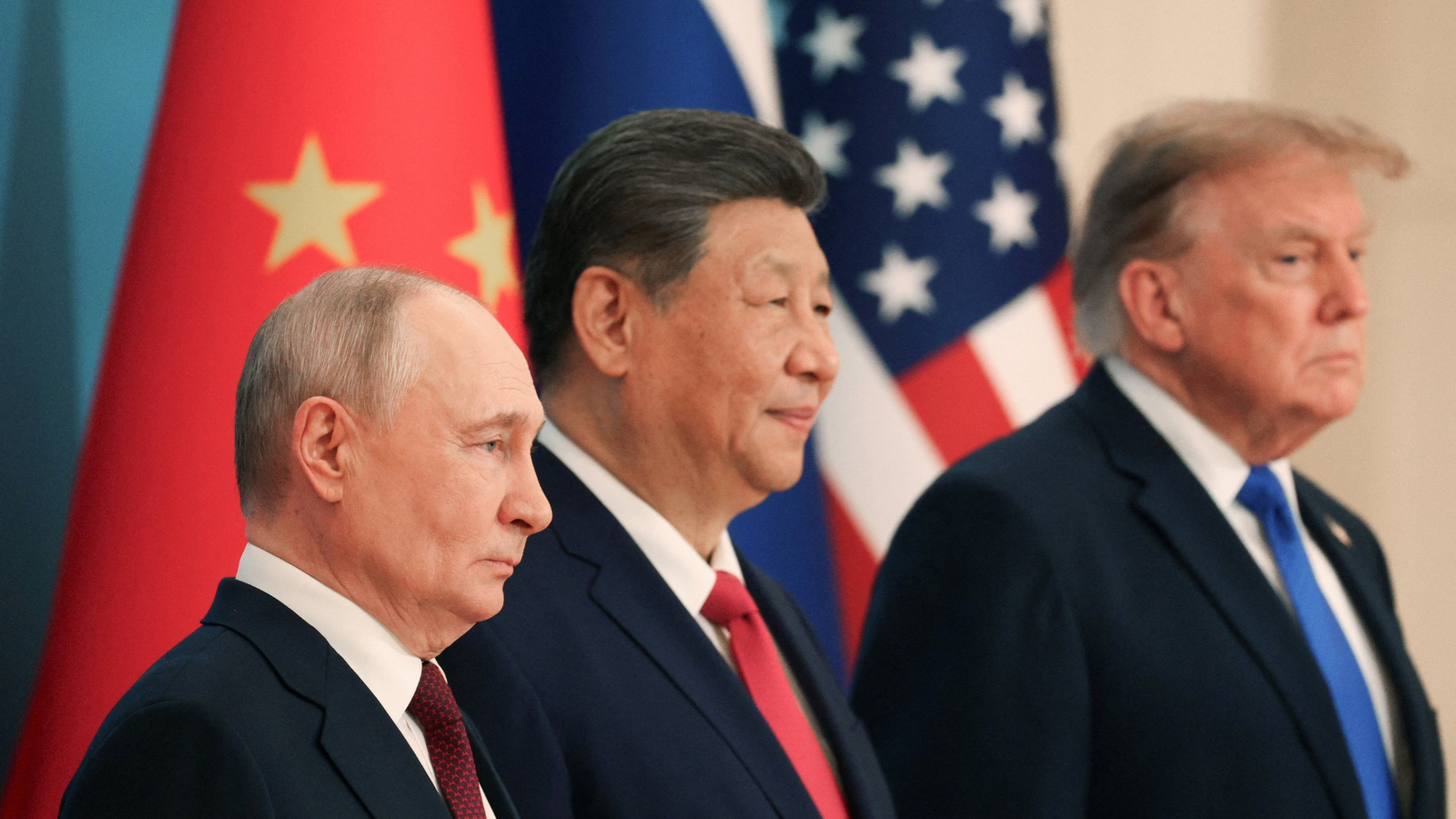
When Donald Trump, Xi Jinping, and Vladimir Putin pulled their chairs up to a round table on November 19, 2026, on the sidelines of the Asia-Pacific Economic Cooperation summit, the political world lost its collective mind. No sitting U.S. president had ever held a dedicated trilateral meeting with the leaders of both China and Russia. Cameras flashed. Trump rated the 90-minute session a "12 out of 10". German Chancellor Friedrich Merz dismissed it as a "photo op". If you liked this piece, you should read: this related article.
Both men missed the real story.
If you're looking for a signed treaty ending the war in Ukraine or halting Iranian strikes in the Middle East, you won't find one in the summit paperwork. That doesn't mean nothing happened inside that hillside resort. It means the real victories were quiet, structural, and tilted heavily toward Beijing and Moscow. For another angle on this development, check out the latest coverage from USA Today.
The Four-Point Declaration and What Actually Got Signed
Strip away the pageantry, the soldiers, and the two-hour delay before the doors even closed. What did the Trump Xi Putin summit produce on paper? A joint "peace declaration" built around four broad pillars.
First, the three leaders pledged to reform the United Nations. Second, they agreed to boost global supplies of refined petroleum products. Third, they promised to open a dialogue on reducing nuclear risks and preventing nuclear proliferation. Fourth, they issued a joint warning that the International Criminal Court and similar international bodies "must not abuse their jurisdiction".
Notice what's missing. Timetables. Enforcement mechanisms. Hard numbers.
I've watched diplomatic communiqués get drafted for years, and there's a simple rule of thumb: when diplomats use the word "dialogue" instead of "negotiations," nobody is ready to give an inch. Look at that third point on nuclear risks. The last major U.S.-Russia arms control framework has already lapsed, and Beijing has spent years flatly refusing to join three-way arms reduction talks. Getting Xi into a room to talk about nuclear risk reduction isn't nothing. Yet Xi made zero commitment to cap or shrink China's rapidly growing arsenal.
Why the ICC Clause Matters More Than the Peace Talk
Most casual observers skimmed right past the fourth bullet point about the International Criminal Court. That's a mistake. That single clause explains why Trump and Putin found instant common ground.
Putin has been living under an active ICC arrest warrant for alleged war crimes in Ukraine, which severely restricts where he can travel without risking detention. Meanwhile, the Trump administration has actively fought to dismantle the court's authority, largely in opposition to the ICC's arrest warrant against former Israeli Prime Minister Benjamin Netanyahu. By signing a joint statement declaring that state officials must enjoy immunity from prosecution against "jurisdiction abuse", Trump handed Putin something priceless: American validation that the international legal net closing around Moscow is illegitimate.
Who Actually Won in Shenzhen
Here's where most pundits get tripped up. They grade summits like sports games, looking for a single trophy. In great-power diplomacy, wins are measured in leverage.
- Vladimir Putin walked away with diplomatic rehabilitation. Putin hadn't attended an APEC summit since 2017. For years, Western capitals tried to turn him into a global pariah. Sitting shoulder-to-shoulder with the American president in Shenzhen shattered that isolation overnight. As Xi escorted him to his car afterward, Kremlin cameras caught Putin saying, "I don't think anyone even expected things to go so well". He wasn't exaggerating. He gave up zero territory in Ukraine and walked away looking like an indispensable global statesman.
- Xi Jinping cemented Beijing as the world's diplomatic switchboard. Xi played the gracious host, rolling out the exact kind of grand spectacle that Trump openly admires. By convening both Washington and Moscow on Chinese soil, Xi projected an image of China as the stabilizing adult in a chaotic world. Even better for Beijing, the joint statement stayed completely silent on Taiwan. Xi got global prestige without conceding a single syllable on Beijing's territorial claims.
- Donald Trump got his headline, at a steep price. Coming off Republican setbacks in the U.S. midterm elections and mounting crises abroad, Trump wanted to prove he could break diplomatic deadlocks where traditional presidents wouldn't even take the meeting. "No peace was ever forged by declining opportunities for engagement," he argued afterward. He's right in theory. In practice, analysts like Dr. Samuel Ramani at the Royal United Services Institute noted that the summit delivered heavy optics with remarkably thin statecraft.
The Elephants Left Outside the Room
If you want to understand the limits of personal chemistry between strongmen, look at what the declaration ignored.
Ukraine wasn't mentioned in the text. Neither was Iran.
Putin confirmed the three leaders discussed Ukraine behind closed doors, yet he immediately signaled that Kyiv and Europe were "not ready" to compromise. That's diplomatic code for: Russia isn't softening its demands. While U.S. envoy Jared Kushner suggested Putin might be comfortable with NATO-style security guarantees for Ukraine, European leaders meeting in Berlin that same day sounded the alarm. Chancellor Merz warned against a "Yalta format" where big powers carve up smaller nations behind closed doors.
The silence on Iran was just as telling. Trump stated afterward that all three leaders agree Iran cannot obtain a nuclear weapon. Saying you don't want a nuclear Iran is easy. Getting Moscow and Beijing to cut off economic and military lifelines to Tehran while Iranian strikes rattle U.S. allies in the Middle East is another matter entirely. Trump secured zero concrete commitments from Xi or Putin to help rein in Tehran.
Why Traditional Allies Are Nervous
You don't have to be a foreign policy hawk to see why capitals from Brussels to Tokyo are sweating.
As experts at the United States Studies Centre pointed out following the talks, Xi and Putin were in power long before Trump's first term, and they plan to remain in power long after he leaves the White House. They play a multi-decade game. Trump operates on a dealmaker's clock, hungry for immediate breakthroughs and visible respect. When you put those two timelines across a table without strict preconditions, the autocrats can afford to wait you out while pocketing the legitimacy of the meeting itself.
Three Benchmarks to Watch Before Calling It a Success
Don't fall for the spin from Washington, Beijing, or Moscow. Whether the Shenzhen summit becomes a genuine turning point or an expensive diplomatic trap comes down to three concrete tests over the next few weeks.
- Check for a real nuclear calendar. Watch the diplomatic wires for named negotiators, a city, and a date for those promised nuclear risk talks. If we hit January without a working-level meeting on the books, that pillar of the peace declaration was pure theater.
- Watch who sits at the table for Ukraine. Follow-up talks on the Russia-Ukraine war are moving fast, following earlier U.S.-mediated sessions in Abu Dhabi. If Ukrainian and European officials are physically in the room when terms are drafted, Shenzhen's backchanneling worked. If Washington tries to broker a deal bilaterally with Moscow and hand Kyiv a fait accompli, expect a massive fracture inside NATO.
- Keep your eyes on the Miami G20. The United States hosts the G20 in Miami this December, and Trump has already extended an invitation to Putin despite the ICC warrant and fierce European pushback. If Xi, Putin, and Trump hold a second trilateral sit-down on American soil, we're witnessing the birth of an informal "G3" that bypasses traditional alliances. If Putin stays home or the trio doesn't meet, Shenzhen was just a one-off show.
Track those three signals, ignore the victory laps, and judge the diplomacy by what actually changes on the ground.
Watch Key highlights from Xi, Putin and Trump's trilateral summit in China for direct footage of the leaders' remarks and the diplomatic choreography inside the Shenzhen meeting.