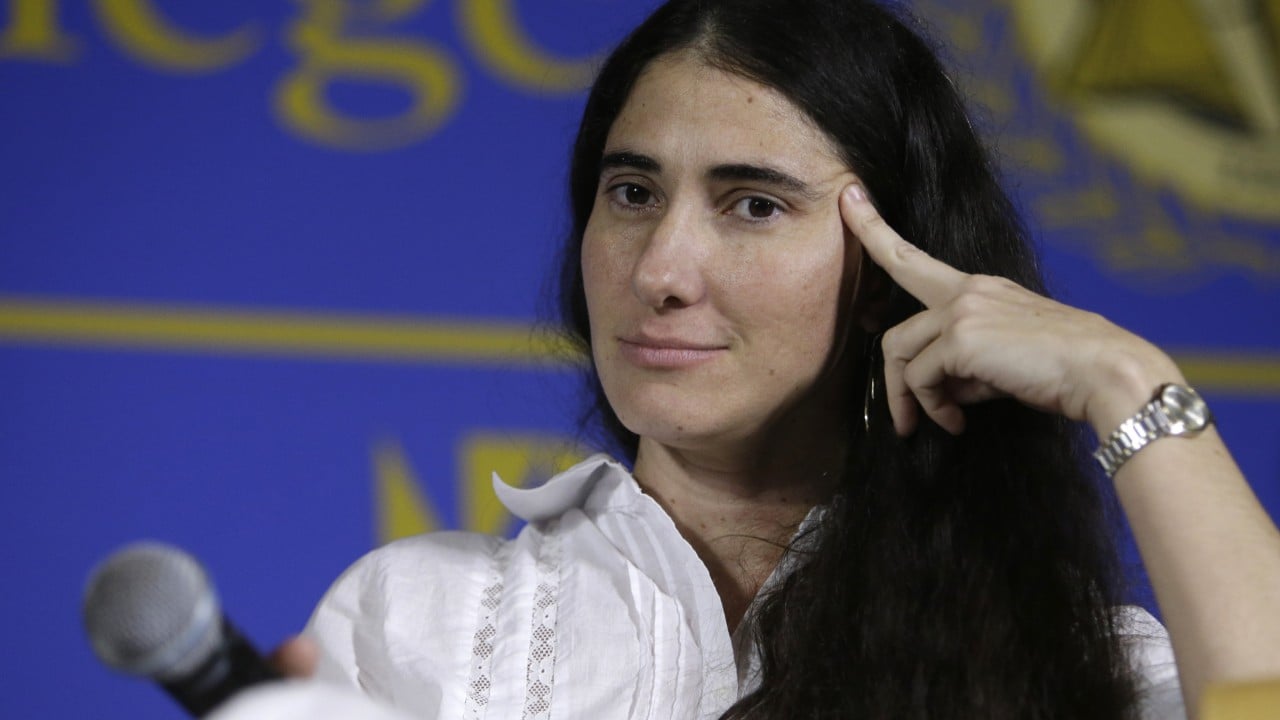
When Cuban State Security grabbed Yoani Sanchez outside her home in Havana on November 5, 2026, international headlines treated it like a sudden flare-up. It wasn't. If you actually track how Havana polices independent media, you know that detaining the 51-year-old founder of 14ymedio wasn't a random act of paranoia—it was a calculated warning shot during an active crackdown on reporters across the island.
She walked out of her apartment building in Nuevo Vedado heading toward a local market. Ten minutes later, she managed to fire off a quick text alert to her newsroom before going dark for more than nine hours. Witnesses watched plainclothes agents force her into a patrol car while she shouted that she was being kidnapped. By the time authorities released her later that evening, she wasn't just shaken up. She had been formally accused of undermining the constitutional order. Don't forget to check out our earlier article on this related article.
Most casual readers see a quick nine-hour detention and assume the story ended when she unlocked her front door. That's the exact trap Havana's security apparatus wants international observers to fall into.
Why Cuba Detained Yoani Sanchez Right Now
Timing tells you everything in Cuban politics. You don't arrest the country's most recognizable independent journalist—someone who won the Ortega y Gasset Prize and landed on Time magazine's list of the 100 most influential people—just to hold her for an afternoon unless you're trying to send a message to everyone else holding a notebook or a smartphone. To read more about the history of this, NPR offers an excellent breakdown.
Look at the week surrounding her arrest. Sanchez wasn't an isolated target. She was the third independent journalist detained in Cuba during that single week in November. Just days earlier, on November 2, agents detained CubaNet contributor Adelth Bonne Gamboa. Around the same time, authorities picked up Camila Acosta—who reports for CubaNet and the Spanish daily ABC—holding her at the Playa police station before slapping her and her husband, writer Angel Santiesteban, with vague accusations of "assault". Meanwhile, Henry Constantin, director of La Hora de Cuba, remained locked up.
For months leading up to November, 14ymedio had been relentlessly documenting the things Havana doesn't want exported abroad. Chronic blackouts. Severe water shortages. Neighborhood protests boiling over in the dark. A collapsing public health system where people struggle to find basic fever medication. When the state can't fix the power grid, it goes after the people documenting the outages.
The Anatomy of a Modern Havana Detention
If you've never followed how Cuban State Security operates on the ground, you might picture dramatic midnight raids and years-long show trials for every dissident. Honestly, the modern playbook is much colder and far more bureaucratic. They use short-term arbitrary detentions, house arrests, and legal limbo to exhaust reporters without creating martyrs who draw sustained global outrage.
Consider what happened to Sanchez in the months leading up to her November arrest:
- March 2026: A plainclothes agent blocked her from leaving her building without showing a badge, giving a name, or presenting any legal warrant.
- September 2026: Security forces confined her and her husband, fellow journalist Reinaldo Escobar, to their home alongside other activists simply to stop them from attending an event at the U.S. diplomatic mission in Havana.
- November 5, 2026: Agents escalated from blocking her doorway to physically bundling her into a squad car on the street, holding her incommunicado for over nine hours while Escobar was out of the country in Madrid visiting their exiled daughter, Luz.
Notice the escalation pattern. First, you restrict movement. Next, you isolate the target from diplomatic contact. Finally, you pull them off the street and attach a heavy criminal label—undermining the constitutional order—that hangs over their head indefinitely.
The Cuban Observatory of Human Rights documented more than 3,000 repressive actions across the island during 2026 by October alone. Sanchez's detention wasn't an outlier in that data. It was the highest-profile data point in a year defined by systematic harassment.
The Myth of the Harmless Short-Term Arrest
Here's what most commentary gets wrong about brief detentions in authoritarian states. People hear "released after nine hours" and breathe a sigh of relief. They shouldn't.
When Yoani Sanchez posted on X after getting home, she thanked supporters for spreading the word, writing that international solidarity was what slid back the bolts and opened the bars. She's right about her own case. High visibility acts like a bulletproof vest in Havana. State Security knows that holding a globally recognized editor overnight triggers immediate statements from the Committee to Protect Journalists, Reporters Without Borders, the Inter American Press Association, and the U.S. government.
Even Sanchez pointed out the real tragedy in her statements following her release. She explicitly highlighted the pain and total lack of protection faced by ordinary Cubans and lesser-known provincial reporters who don't have international wire services tracking their every move.
When an unknown citizen or a local blogger outside Havana gets hauled into a station, nobody trends on social media. There are no diplomatic cables demanding their whereabouts. They face steep fines, confiscated phones, threats against their families, and quiet prison sentences under Cuba's Penal Code. Sanchez's arrest was meant to terrify those lower-profile voices. The unspoken logic from State Security is brutal and clear: If we can snatch Yoani off the street in broad daylight, imagine what we can do to you.
How Independent Journalism Survives Inside Cuba
Running a newsroom like 14ymedio inside Cuba requires operational security that most Western reporters never have to think about. Since founding the outlet in 2014 after years of writing her groundbreaking blog Generacion Y, Sanchez and her team have operated in a legal gray zone where independent journalism is treated as a crime against the state.
The government blocks 14ymedio's main domain inside the country. Readers on the island have to rely on proxy servers, VPNs, mirror links, email newsletters, and offline distribution networks—like the famous El Paquete Semanal—just to read reporting about their own neighborhoods.
Reporters working for 14ymedio, CubaNet, or La Hora de Cuba can't walk into government ministries with press passes. They can't verify official statistics through public records requests. Every interview carries risk for both the journalist and the source. If a doctor speaks on the record about missing antibiotics, or a neighbor films a pot-banging protest during a twelve-hour blackout, State Security treats that act of basic reporting as subversion.
By slapping Sanchez with an accusation of undermining the constitutional order, authorities gain leverage. Under Cuban law, they don't have to put her on trial tomorrow. They can leave an open investigation sitting on a prosecutor's desk, summon her for interrogations whenever political tensions rise, and use the threat of formal prosecution to restrict her movement across Havana.
International Pushback vs Reality on the Ground
Following the November 5 detention, condemnation poured in quickly. The Inter American Press Association—where Sanchez serves on the Board of Directors—denounced the escalating repression. The Organization of American States' Special Rapporteur for Freedom of Expression condemned the systematic harassment. Reporters Without Borders demanded guarantees for her safety. U.S. officials called out Havana's reliance on arbitrary arrests to silence independent voices.
Does international pressure actually work? Yes, in the short term, and only for people with global name recognition. It gets the cell door unlocked after nine hours instead of nine months.
It doesn't stop the surveillance vans parked outside apartment buildings. It doesn't restore internet access when State Security cuts mobile data to a journalist's phone right before an arrest. And it certainly doesn't dismantle the legal framework Havana uses to criminalize dissent.
What You Can Actually Do to Support Press Freedom in Cuba
Watching headlines scroll past about press crackdowns in Cuba often leaves readers feeling like passive spectators. If you care about keeping independent reporting alive on the island, skip the empty social media outrage and focus on actions that actually protect reporters on the ground:
- Read and share primary Cuban independent outlets directly. Don't just wait for major U.S. or European networks to pick up a story once every six months. Follow 14ymedio, CubaNet, El Toque, and La Hora de Cuba directly so their reporting gets sustained traffic and visibility between crises.
- Amplify lesser-known regional reporters. When organizations like the Committee to Protect Journalists (CPJ) or Article 19 publish alerts about provincial correspondents, share those names. Visibility is the single strongest shield against prolonged detention in Cuba.
- Support digital circumvention tools. Independent Cuban media relies heavily on encrypted messaging and censorship-circumvention tech to publish and reach domestic audiences. Supporting open-source internet freedom projects directly helps Cubans bypass state firewalls.
- Track ongoing legal cases, not just arrest days. Keep an eye on what happens weeks after a release—especially when authorities leave charges like "undermining the constitutional order" or "assault" hanging over reporters like Yoani Sanchez and Camila Acosta. Sustained attention raises the political cost for Havana if prosecutors try to quietly move those cases forward later.


