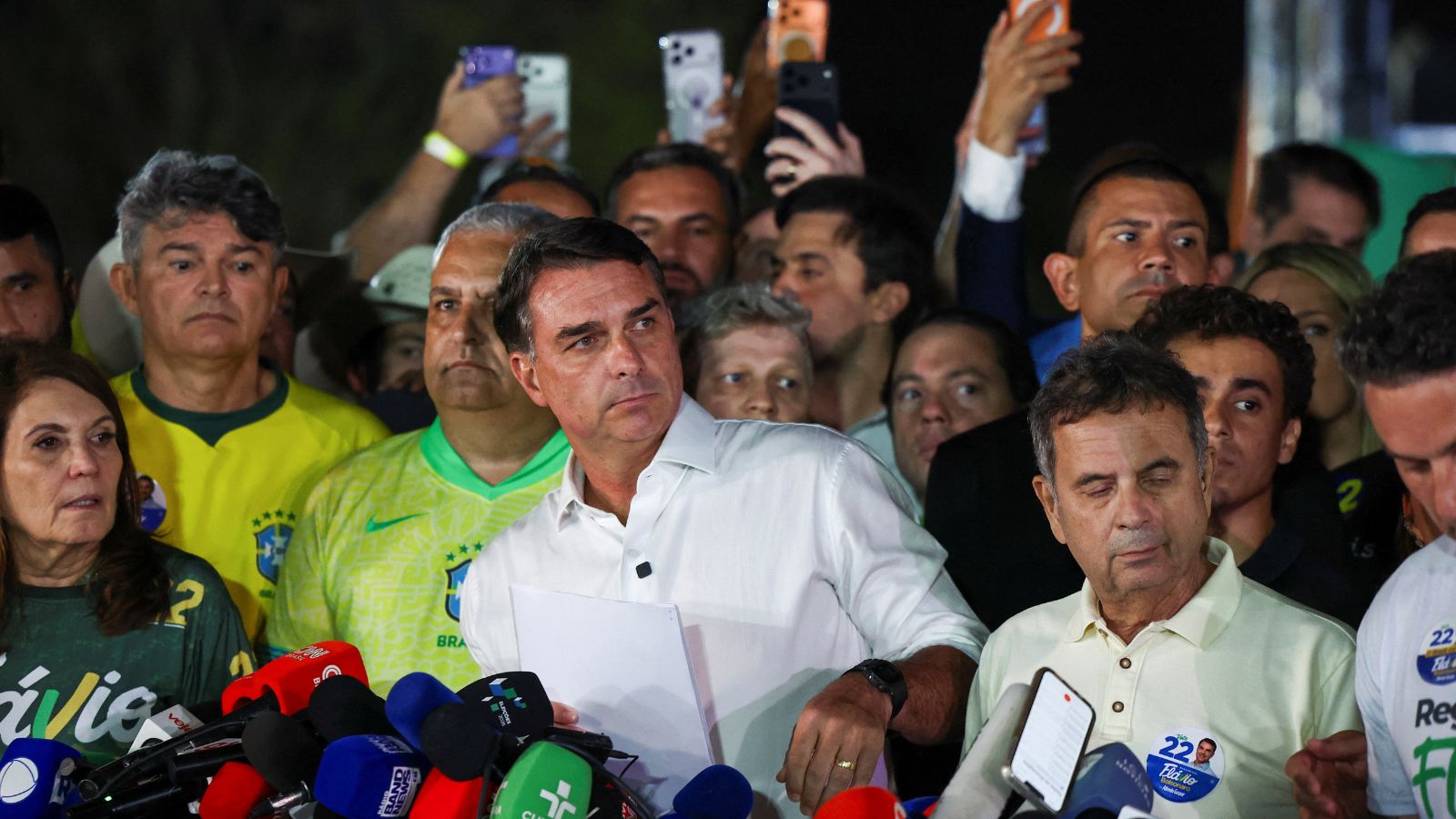
You don't cross an international bridge into Argentina, dodge a Supreme Court passport seizure, and suddenly land in Florida with fresh U.S. visas unless the exit was planned months in advance. Yet that's exactly what happened right after Brazilian Senator Flavio Bolsonaro lost the October 25, 2026 presidential runoff to Luiz Inácio Lula da Silva.
When a senior U.S. State Department official confirmed on October 27 that Washington would issue entry visas to Flavio Bolsonaro and his family, most headlines treated it like a routine diplomatic courtesy. It isn't. The decision sits right on top of a massive judicial showdown in Brasilia, an active criminal investigation into a $905 million money-laundering scheme, and a rapidly deteriorating relationship between the White House and the Brazilian government.
Why Washington Stepped In So Fast
To understand why the State Department moved within 48 hours of Brazil's election to grant Flavio Bolsonaro and his family visas, you have to look at the political math in Washington. President Donald Trump publicly stated that he would approve of Bolsonaro coming to the United States, calling the Bolsonaro family "fine people" while dismissing Brazil's election as "very strange".
Trump insisted he hadn't formally taken sides during the runoff. Still, his rhetoric mirrors his long-standing defense of Flavio's father, former President Jair Bolsonaro, whom Trump has repeatedly described as a victim of judicial persecution.
Granting these visas sends a clear signal. Washington is willing to offer a soft landing to key allies of the Brazilian right, even when those allies are actively defying court orders back home.
For the State Department, issuing entry visas after an applicant has already departed their home country—and while their domestic passports are under a cancellation order—is far from standard procedure. Typically, consular officers require valid, unencumbered travel documents and run strict admissibility checks when an applicant faces active criminal inquiries. Here, political alignment clearly outweighed bureaucratic friction.
The Escape Route and the 24-Hour Passport Deadline
The timeline of Flavio Bolsonaro's exit reads more like a border thriller than a post-campaign vacation.
Minutes after the October 25 runoff results showed Lula winning a fourth term with more than 64 million votes—roughly 4.4 million ahead of Bolsonaro—Supreme Court Justice Alexandre de Moraes issued a sealed order requiring Flavio to surrender both his regular and diplomatic passports. The court cited flight risk and his "significant financial resources" in connection with a federal police investigation into an alleged money-laundering network tied to betting companies.
Bolsonaro was served the notice on Monday, October 26, right outside the residence where his father is serving a 27-year sentence under house arrest for plotting a coup after the 2022 election. He had 24 hours to hand over the documents.
In a social media video posted shortly after receiving the order, Bolsonaro sounded defiant. "I never thought about leaving the country," he told followers. "I will hand over my passports and I will defend myself from this aberration".
He didn't.
Instead of showing up at the federal police headquarters by Tuesday's deadline, Bolsonaro and his family crossed the Tancredo Neves International Bridge into Argentina's Misiones province. Because Bolsonaro has held Italian citizenship since 2023 and reportedly carries an Italian passport, a canceled Brazilian travel document wasn't enough to physically stop him at every border. By Tuesday afternoon, sources close to the family confirmed they had already touched down in Florida.
The Bolsonaro Playbook for Losing Elections
If this feels strangely familiar, that's because it is. Leaving Brazil immediately after a bitter defeat at the ballot box has become a family tradition.
- Jair Bolsonaro (2022): After losing the presidency to Lula in October 2022, Jair Bolsonaro skipped his successor's inauguration and flew to Florida, remaining in the U.S. for three months before returning to face the investigations that eventually landed him under house arrest.
- Eduardo Bolsonaro (2026): Flavio's younger brother has been living in Texas after being convicted in absentia in June 2026 of illegally lobbying the Trump administration, a conviction that carried a four-year prison sentence and an active arrest warrant.
- Flavio Bolsonaro (2026): Just weeks before the October runoff, Eduardo openly told U.S. podcaster Steven Crowder that if Flavio lost, he should leave Brazil immediately.
Once he landed in the United States, Flavio didn't retreat into quiet exile. He rejected the election results without presenting evidence, claimed he left "for the sake of Brazil," and even declared himself the country's rightful leader from Miami.
Meanwhile, his own Liberal Party broke ranks on Monday and formally acknowledged Lula's victory, leaving Flavio isolated from the institutional machinery of his own coalition back in Brasilia.
What Happens to US-Brazil Relations Now
Lula didn't hold back when reporters asked him about his opponent's sudden disappearance. Speaking in Brasilia on his 81st birthday, the re-elected president called the departure "shameful".
"Those who are not liable do not fear," Lula said. "A fellow that secretly leaves his country, that's because he is liable for something". He went further, accusing the Bolsonaro family of treating Brazil as their second homeland while "licking American boots".
This isn't just domestic political theater. It's a direct collision between the two largest democracies in the Western Hemisphere.
Lula has already accused Washington of meddling in Brazilian politics to help restore the Bolsonaro movement to power. Now, from Brasilia's perspective, the U.S. State Department is actively facilitating the stay of a sitting Brazilian senator who bypassed a Supreme Court travel ban while under criminal investigation.
Legal and Diplomatic Consequences to Watch
If you're tracking how this standoff unfolds over the coming weeks, keep your eye on three specific pressure points:
- The December 18 Certification Deadline: To legally challenge Lula's 4.4 million-vote margin, Flavio Bolsonaro's legal team must submit concrete proof of fraud to Brazil's eight-member electoral court before results are certified on December 18. Operating from Florida while his own party has already conceded makes that legal long shot virtually impossible.
- Extradition and Interpol Requests: Brazilian prosecutors investigating the $905 million betting and money-laundering case could push for preventive detention orders now that Bolsonaro has violated judicial restrictions. However, with the White House openly sympathetic to his claims of judicial persecution, any U.S. cooperation on extradition is dead on arrival.
- Senate Seat and Congressional Immunity: Flavio Bolsonaro isn't just a defeated candidate; he is an active senator. Prolonged absence from Brasilia without official leave opens the door for ethics proceedings in the Brazilian Senate, which could strip him of his mandate and the remaining parliamentary protections tied to his office.
How to Follow This Story Without Falling for Spin
Because both camps are weaponizing social media to control the narrative, tracking real developments requires filtering out the noise.
Skip the partisan commentary on X and watch official filings from Brazil's Superior Electoral Court (TSE) and Supreme Federal Court (STF) ahead of the December 18 certification. Watch whether the U.S. State Department clarifies the exact visa classification granted to Bolsonaro and his family—a detail that will reveal whether Washington intends to treat him as a standard visitor or extend broader diplomatic protection. Finally, pay attention to Brazil's Liberal Party leadership in Congress; their willingness to negotiate with Lula's fourth-term administration will tell you immediately whether Flavio Bolsonaro still holds real political power from Miami, or if his influence ended the moment he crossed the bridge out of Brazil.